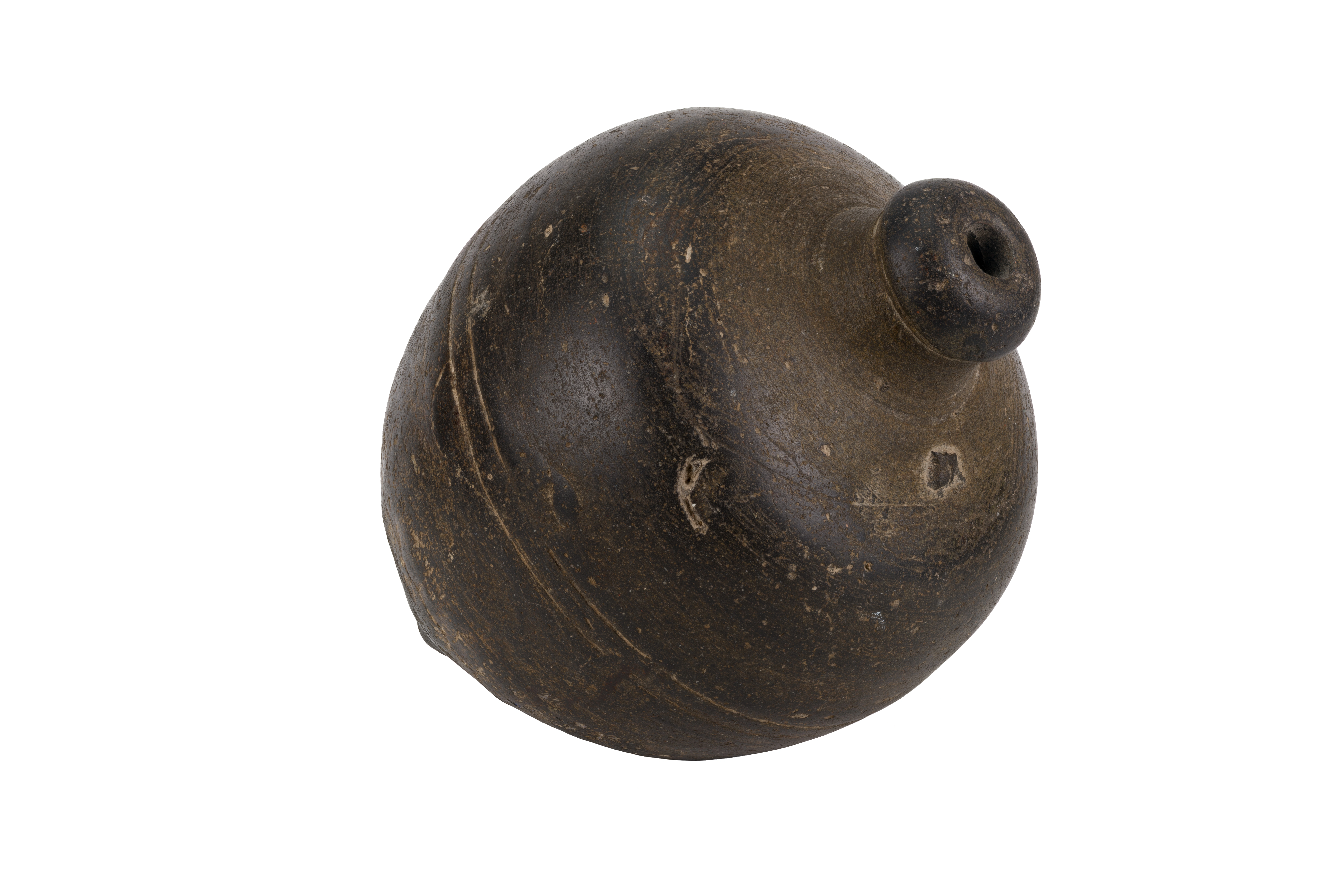
Vessel for mercury
9th–10th centuries СЕ. Samarkand. Ceramic. 12.9 × 9.5 cm
Audio guide
Description
This object is a mercury vessel, used for storing and handling mercury in a controlled manner. Such containers were essential in medical, alchemical, and craft practices of Central Asia during the 9th–10th centuries.
The vessel originates from Samarkand, a major intellectual and commercial center of the region. Its rounded body, narrow neck, and dense ceramic fabric reflect practical design requirements: mercury demanded secure containment and careful use.
As Islam spread across Central Asia, it was accompanied by the growth of scientific knowledge, particularly in medicine and the natural sciences. Substances like mercury were part of learned practice and required specialized material culture.
Subtle surface abrasions and traces of long-term handling indicate sustained use. This vessel illustrates the applied dimension of early scientific knowledge, where theoretical learning was closely linked to hands-on practice.