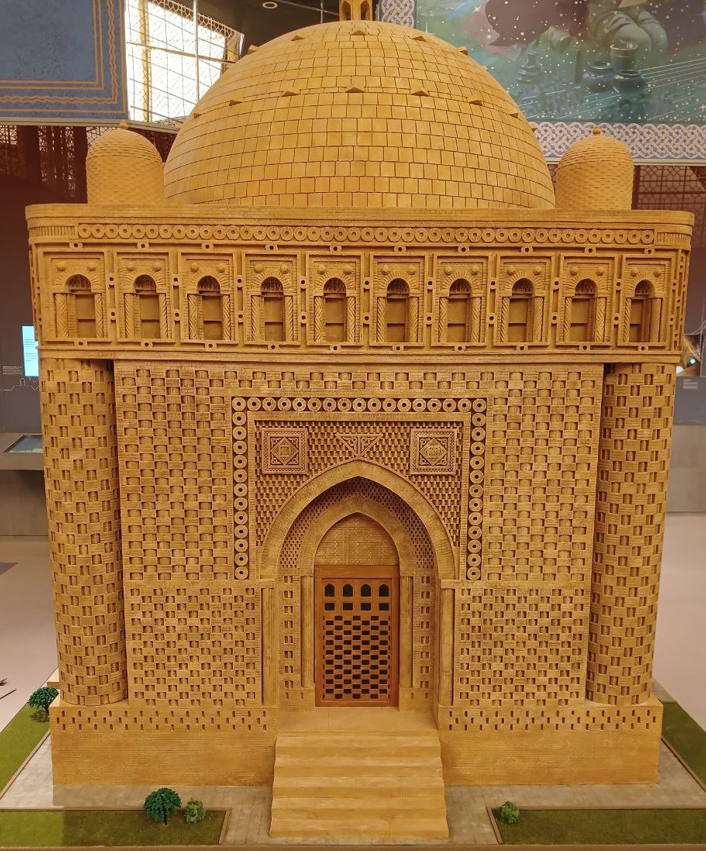
Samanid Mausoleum
10th century CE. Bukhara. 150 × 98 cm. Model
Audio guide
Description
This is a model of the Samanid Mausoleum in Bukhara, one of the oldest surviving monuments of Islamic architecture in Central Asia.
Built in the 10th century from fired brick, the structure is distinguished by its precise masonry. The decorative effect is achieved not through applied ornament, but through the patterned arrangement of bricks, which creates a dynamic surface under changing light.
The architectural composition is based on clear geometry: a cubic base crowned by a dome. The transition from square to circle is achieved through squinches—arched elements in the corners that transform the square into an octagon. This solution became fundamental for later Islamic domed architecture.
The building has four identical facades oriented to the cardinal directions, giving it a sense of balance and completeness.
The model highlights the structural clarity and proportional harmony that define this monument.