Video available in: UZ
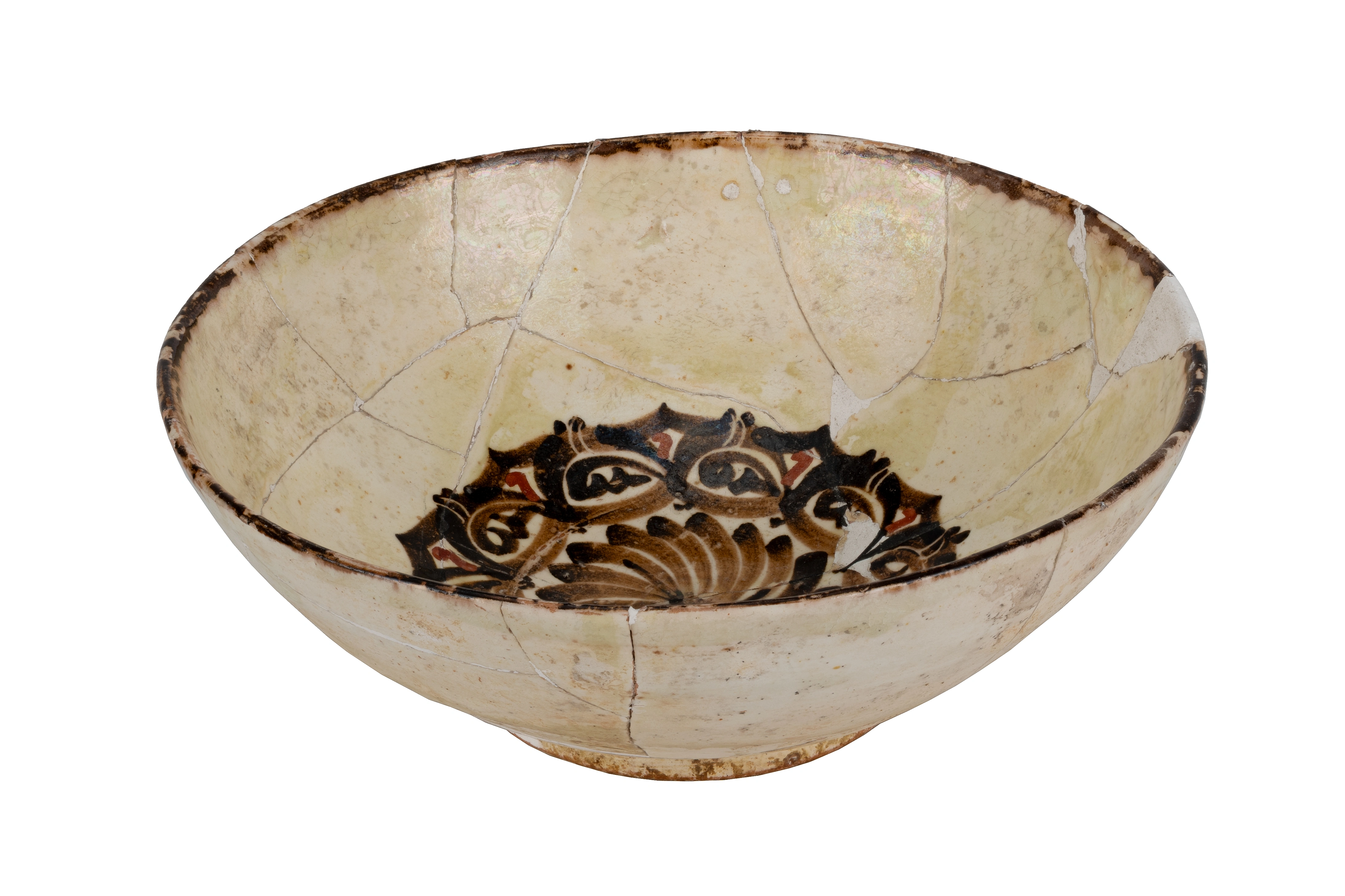
Bowl
11th century CE. Tashkent . Ceramic, slip and glaze. 6.7 × 18.3 cm
Audio guide
Description
Sometimes a single object can reflect the artistic spirit of an entire era. This bowl dates to the eleventh century and represents the flourishing ceramic tradition of the Tashkent oasis, historically known as Shash or Binkat.
The vessel is made of ceramic and coated with a light slip, or engobe, which created a smooth surface for painting. Over this background, the design was applied and then covered with a transparent lead glaze. This process gave the bowl its glossy finish and made it watertight.
At the center of the decoration is a so-called “whirling rosette.” The dynamic motif resembles a rotating flower or a stylized sun. Such compositions were widely used in ceramics from Samarkand and Tashkent during the eleventh century and may symbolize movement, vitality, or the cycle of life.
Surrounding the central element is a decorative band of stylized vegetal forms and colored accents. These patterns combine Islamic artistic aesthetics with older ornamental traditions that trace back to Sogdian culture.
Similar bowls have been discovered during archaeological excavations at ancient settlements near Tashkent, including Ming-Urik and Kanka. They demonstrate the high level of craftsmanship achieved by potters along the Silk Road.