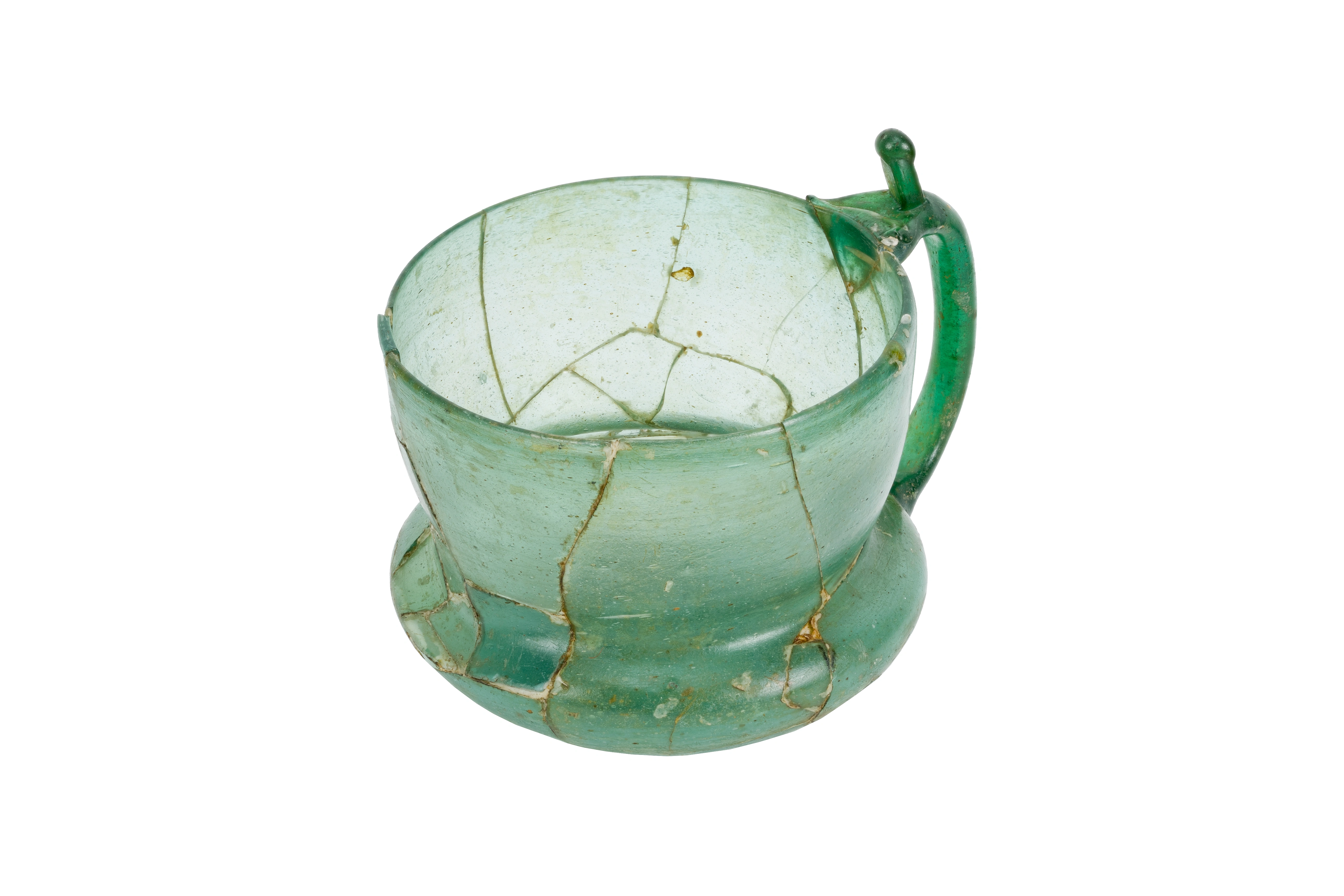
Cup
9th–12 centuries CE. Central Asia. Glass. 9.9 × 10.8 cm
Audio guide
Description
This glass cup dates from the ninth to the twelfth centuries and originates from Central Asia, during a period often described as the Islamic Renaissance. At that time, cities along the Silk Road became major centers of craft production and cultural exchange.
The vessel is made of thin glass with a characteristic greenish tint. This color results from natural impurities in the sand–particularly iron oxides–which early glassmakers could not always fully remove.
The cup was produced using the technique of free-blowing. The artisan gathered molten glass on the end of a blowpipe and shaped it by blowing and manipulating the material with simple tools, without the use of a mold. This method allowed craftsmen to create light and delicate vessels of elegant form.
A particularly interesting detail is the handle. At its upper part there is a small protruding knob that served as a thumb rest, allowing the cup to be held securely with one hand.
Such designs reflect the meeting of artistic traditions along the Silk Road, combining elements inherited from Roman glassmaking with local Central Asian craftsmanship.
The cracks visible on the surface have been stabilized by conservators. They remind us of the fragility of glass and the rarity of objects that have survived nearly a millennium.