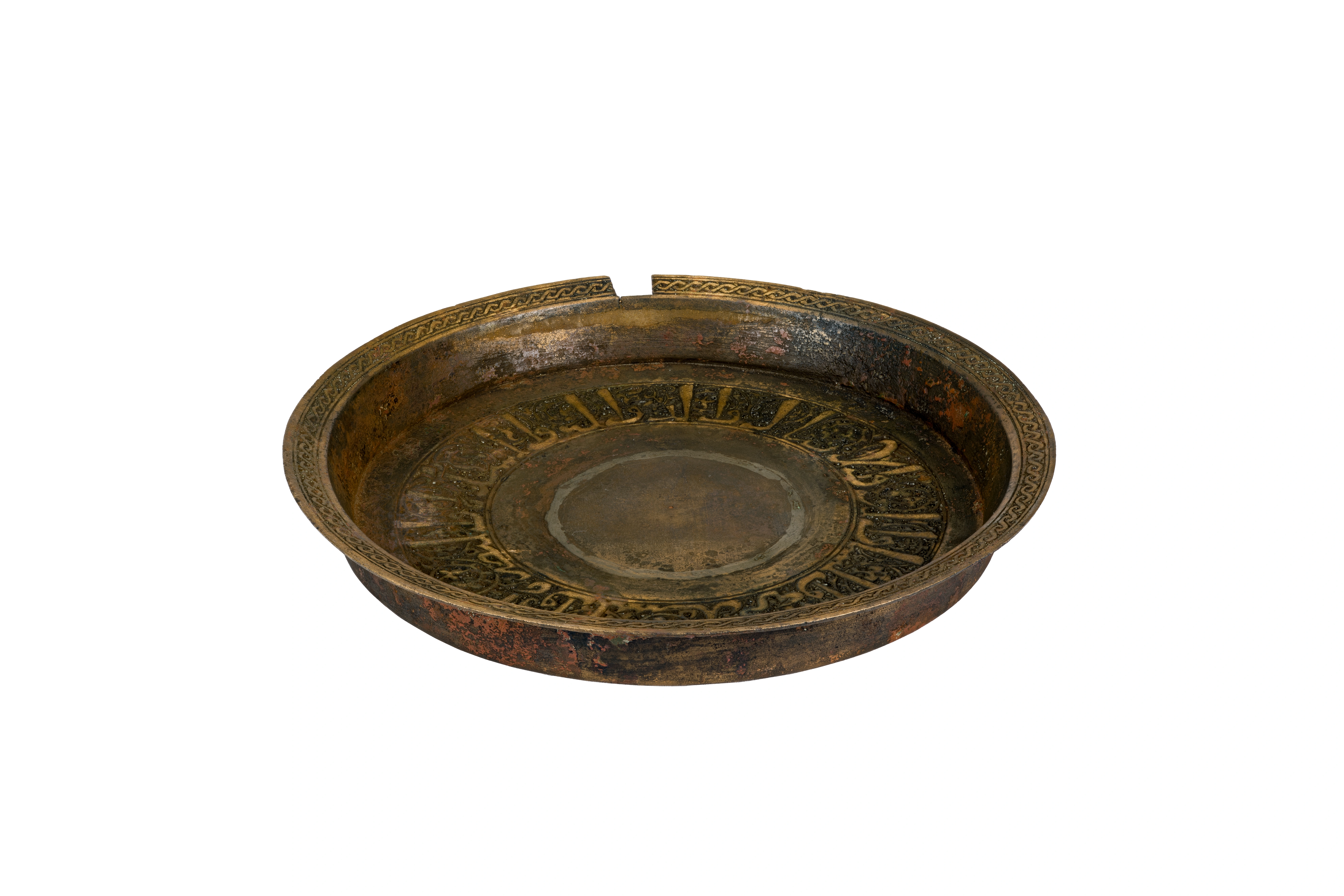
Small Plate
10th–11th centuries CE. Mawarannahr. Brass. 2.5 × 19 cm
Audio guide
Description
This brass dish dates to the tenth–eleventh centuries and originates from Mawarannahr, the historical region between the Amu Darya and Syr Darya rivers. During this period, Central Asian cities flourished as important centers of craftsmanship, scholarship, and trade.
The interior of the dish is decorated with an engraved circular inscription executed in Kufic script–one of the earliest forms of Arabic calligraphy. This angular and geometric style was widely used in the decorative arts of the Islamic world.
Inscriptions on everyday objects often carried messages of blessing and good fortune. They typically expressed wishes for prosperity, happiness, longevity, and well-being for the owner. As a result, such objects combined practical use with symbolic meaning.
The dish is made of brass, an alloy of copper and zinc. Medieval artisans valued this material for its durability, warm golden color, and ease of engraving.
A small notch can be seen along the rim of the vessel. Such features may have served a practical function–perhaps allowing the object to be hung or handled more easily.
This dish reflects the high level of metalworking achieved in Mawarannahr , where even modest household items were transformed into refined works of craftsmanship.