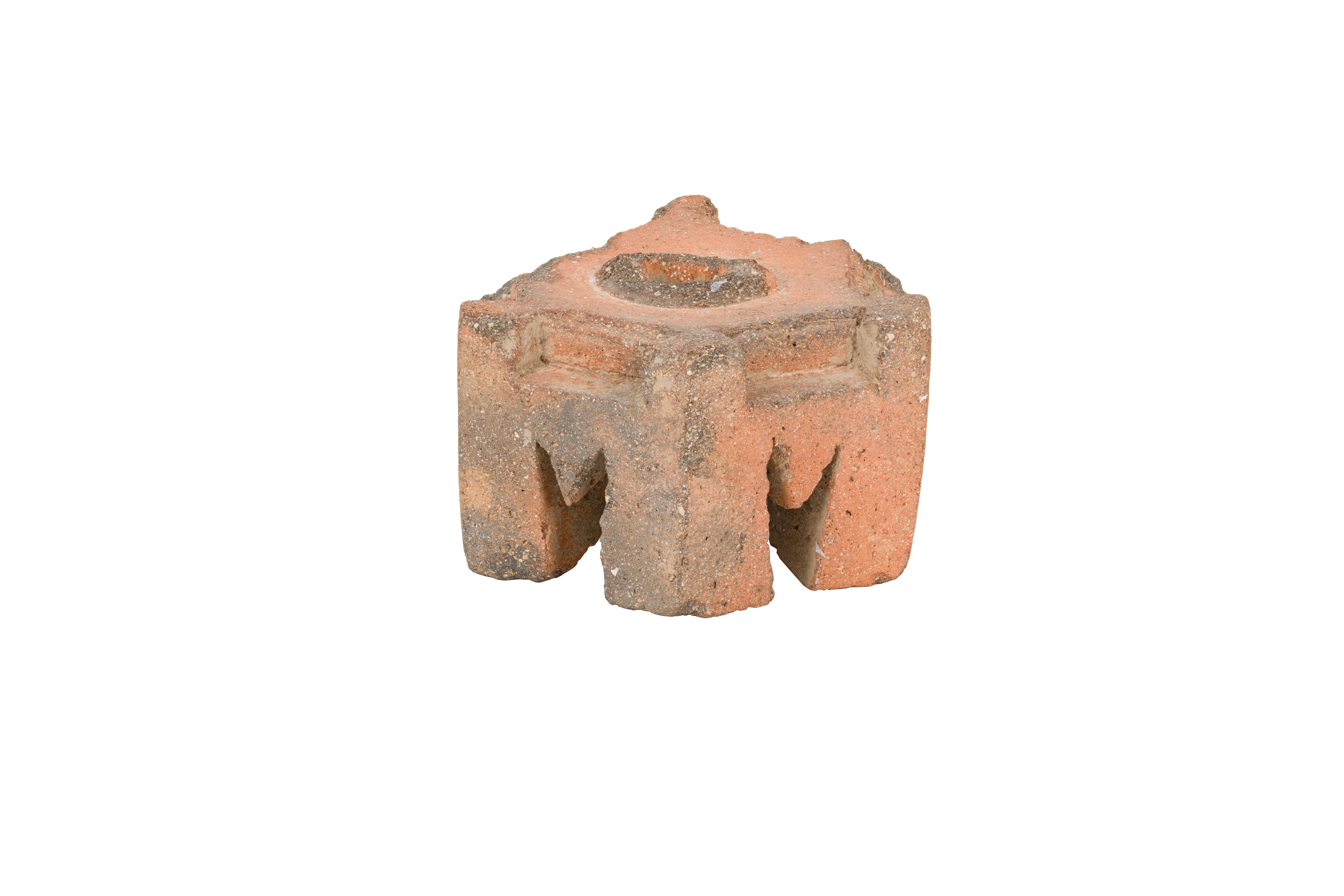
Incense Burner
9th–10th centuries CE. Fergana. Ceramic. 6.8 × 12.5 cm
Audio guide
Description
This object is an incense burner dating to the ninth–tenth centuries and produced in the Ferghana Valley, one of the important cultural regions of Central Asia.
Such vessels were used for burning aromatic herbs, resins, and incense. In domestic settings the fragrant smoke purified the air and created a pleasant atmosphere. In ritual contexts it was also believed to cleanse and protect the surrounding space.
In Central Asia one of the most commonly burned plants was harmala, locally known as isiriq. Its smoke was believed to protect the household from illness and the “evil eye.” For this reason, vessels of this type became known as isiriqdon, meaning a container for burning isiriq.
The vessel is made of fired clay. Its compact and stable shape allowed it to stand securely while the aromatic materials slowly smoldered inside. Openings in the upper structure helped air circulate, keeping the embers alive.
Objects like this are frequently discovered in houses, workshops, and occasionally religious settings. They reveal how scent, purification rituals, and protective traditions formed an important part of everyday life in medieval Central Asian communities.