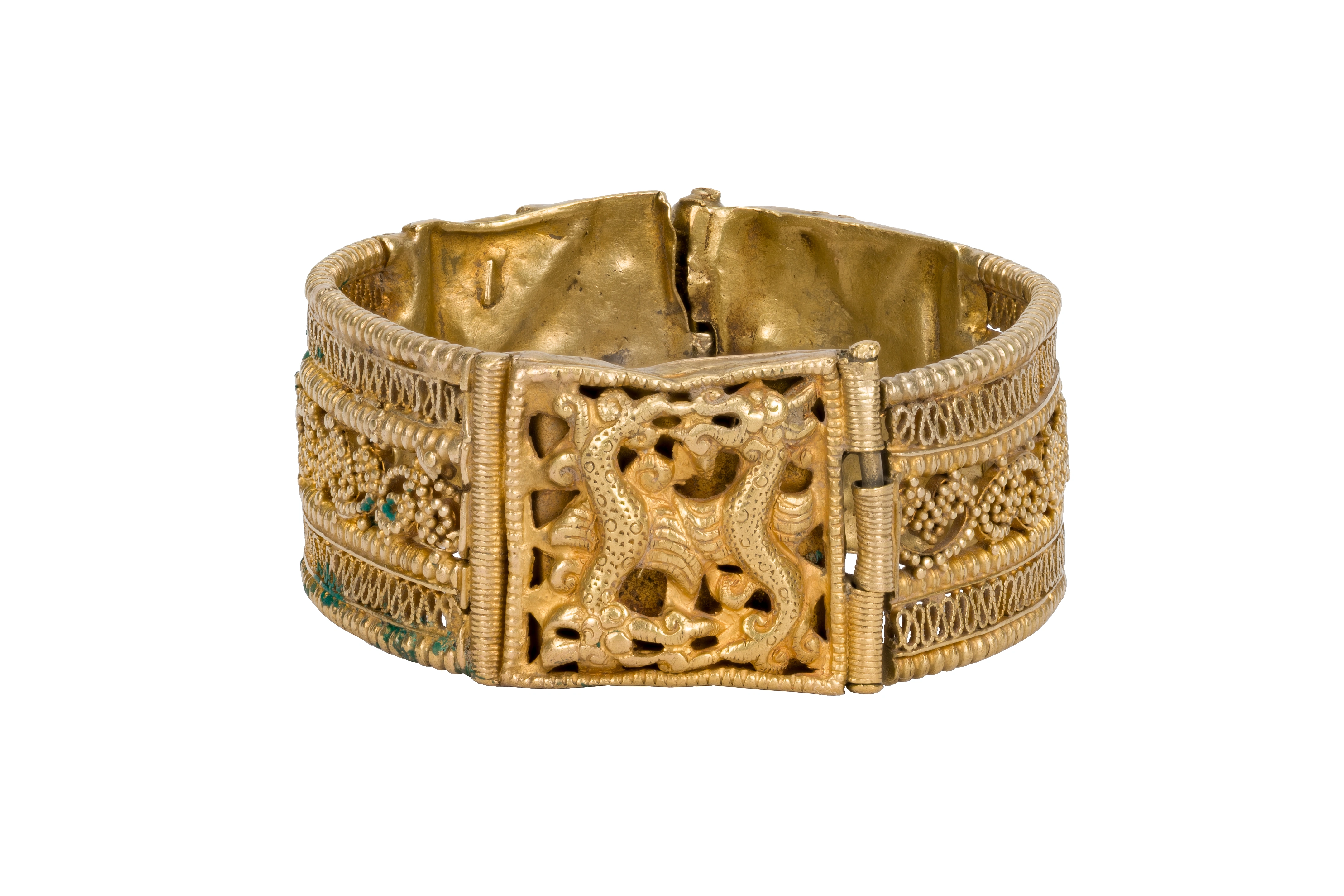
Bracelet
12th – early 14th century CE. Central Asia. Gold. 3.1 × 6.4 cm. Weight: 130.281
Audio guide
Audio available in: UZ
Description
This massive gold bracelet dates from the 12th to the early 14th century, a period of major political transformations in Central Asia associated with the Khwarazmshahs.
Jewelry of this type served not only as adornment but also as a form of stored wealth. Its substantial weight suggests it may have functioned as portable capital, particularly valuable in periods of mobility and political instability.
The central clasp features stylized fantastic animals. Such zoomorphic imagery reflects earlier artistic traditions of the Eurasian steppe, here reinterpreted within the decorative language of Islamic art and combined with geometric ornament.
The bracelet also demonstrates remarkable technical sophistication. Goldsmiths employed granulation and filigree – techniques using tiny gold beads and fine wires to create intricate ornamental surfaces. These methods are associated with highly developed urban craft traditions.
This object reflects the cultural synthesis characteristic of the Silk Road era, where nomadic traditions, Islamic urban culture, and transregional artistic influences merged into a shared visual language.