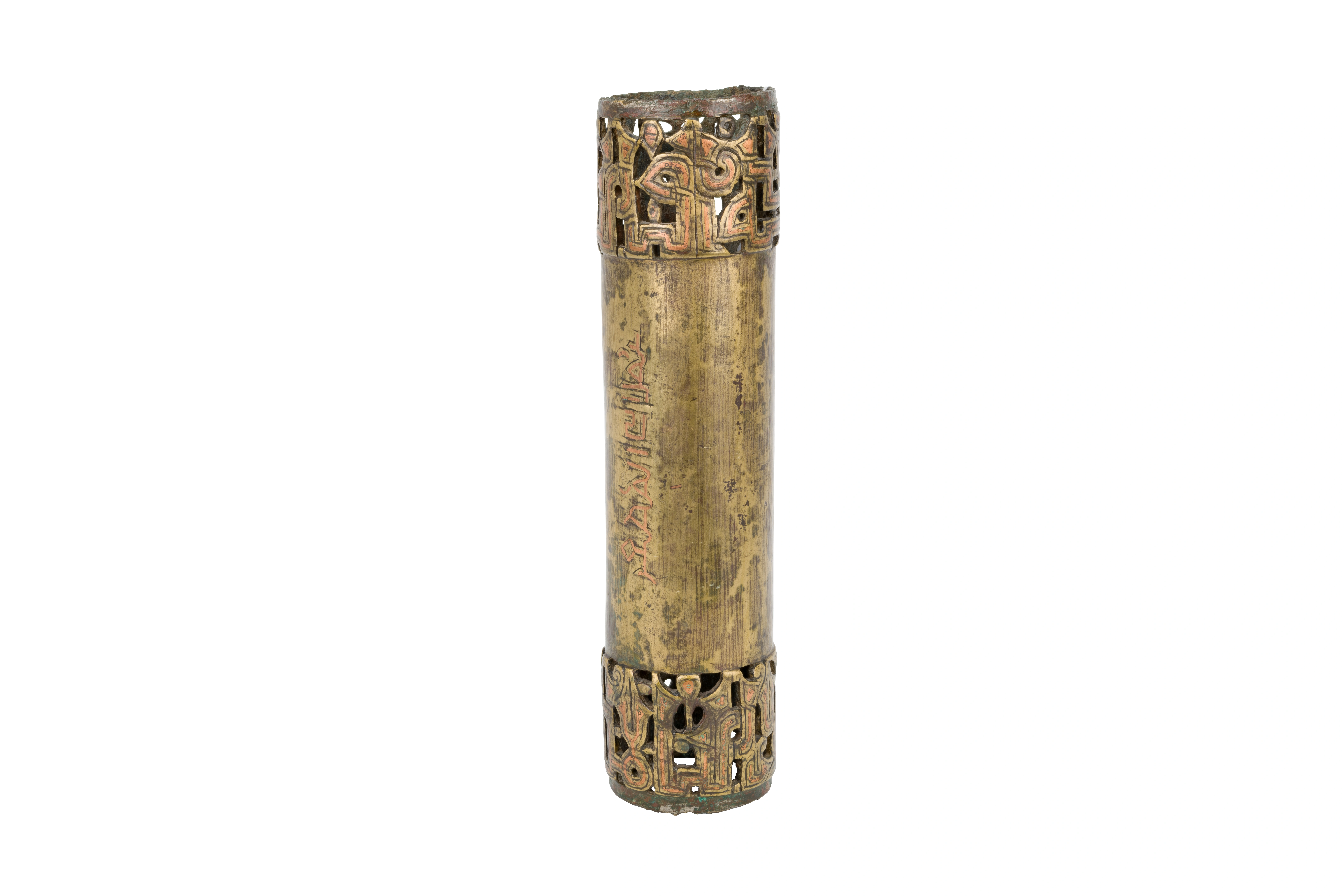
Incense Burner
11th–12th centuries CE. Central Asia. Bronze; casting. 33.6 × 8 cm
Audio guide
Description
This tall bronze incense burner dates to the 11th–12th centuries and comes from Central Asia. Such vessels were widely used to burn fragrant substances: resins, herbs, or wood on glowing embers placed inside the hollow body.
Perforations near the top allowed the scented smoke to rise slowly, filling interiors with a gentle aroma. Incense played an important role in daily life, religious settings, and possibly Sufi practices, where fragrance was associated with purification, focus, and spiritual presence.
The elongated, symmetrical form of the burner reflects careful design, while its surface decoration combines geometric and calligraphic elements typical of Islamic metalwork. The bronze made it possible to withstand high temperatures and ensured the durability of the object.
More than a utilitarian item, this incense burner expresses a key idea of Islamic material culture: scent as a bridge between the physical environment and the inner, spiritual state of a person.