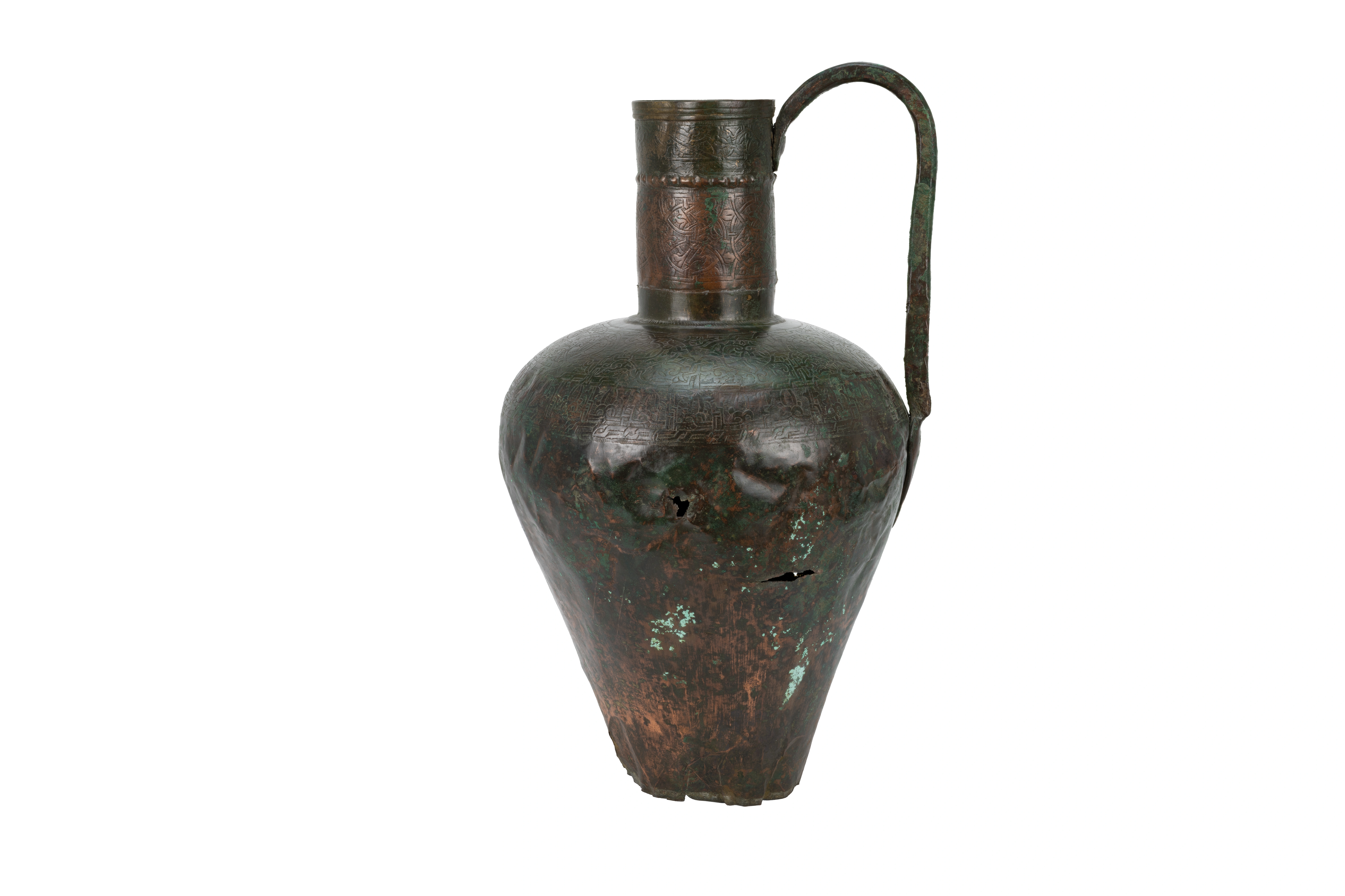
Kumgan (Ablution Jug)
10th–11th centuries CE. Fergana Valley. Copper; chasing. 48 × 27.5 cm
Audio guide
Description
This object is a kumgan, a traditional water vessel widely used in Central Asia during the 10th–11th centuries, particularly in the Fergana Valley. Its tall neck, elongated body and large arched handle indicate a design optimized for carrying and pouring water.
In Islamic civilization, water holds both practical and spiritual significance. The kumgan was used for the ritual ablution before praying, as well as for everyday washing. As a result, such vessels were essential items in households, madrasas, caravanserais, and mosque complexes.
This vessel is made of copper and chasing techniques. The surface is covered with repeating vegetal and geometric motifs that follow the vessel’s contours. The ornamentation enhances the object visually without interfering with its function, reflecting the balance between utility and aesthetics.
Signs of wear, deformation, and patina indicate prolonged use. The kumgan exemplifies how daily objects in the medieval Islamic world combined functionality, religious practice, and refined craftsmanship.