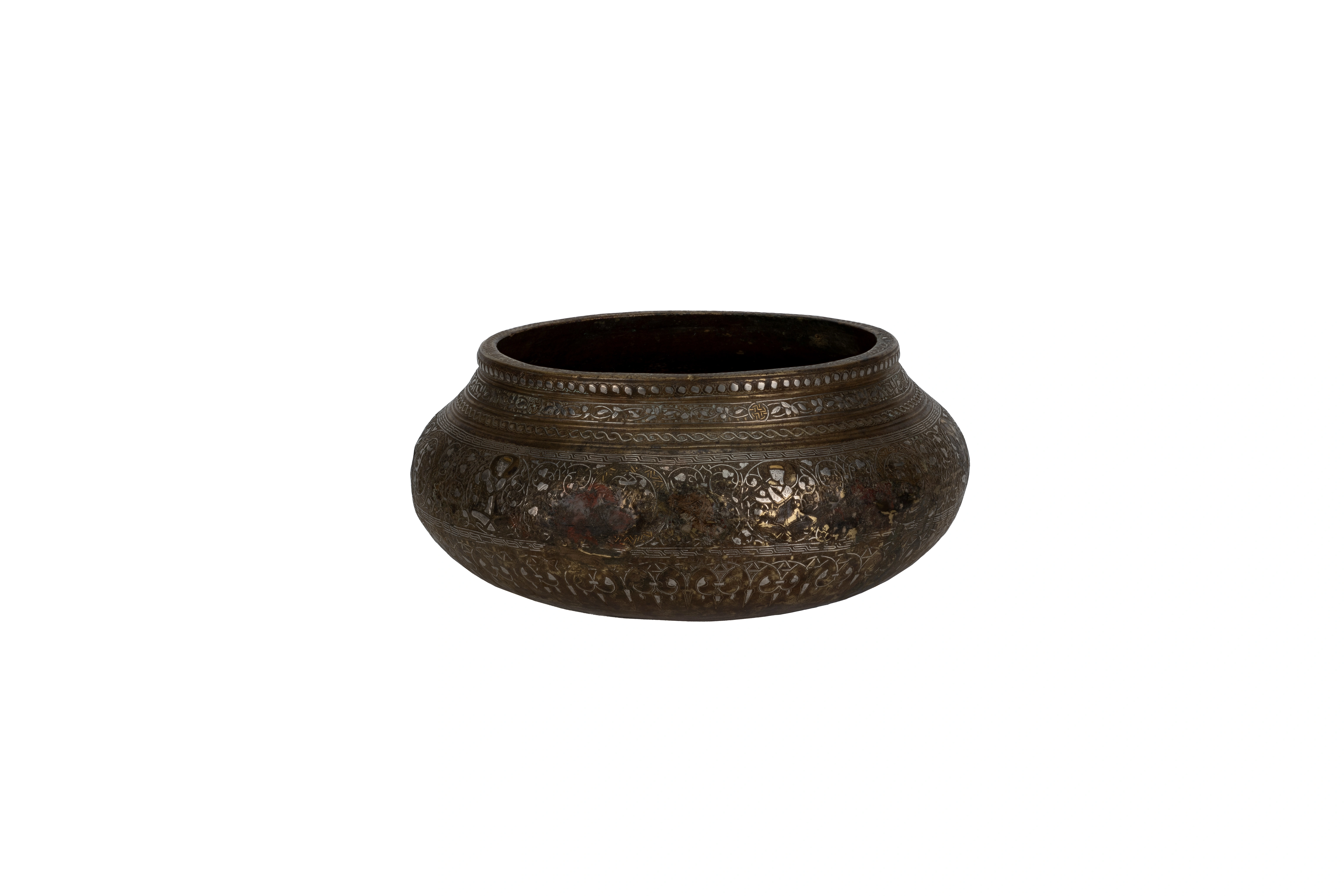
Water vessel
12th-13th centuries СЕ. Bronze. 8.2 × 17 cm
Audio guide
Audio available in: UZ
Description
This bronze water vessel was made in Central Asia during the 12th–13th centuries, in the period of the Khwarazmshahs, an era marked by urban growth and advanced metalworking traditions.
Its form is restrained and functional: a rounded body, low walls, and a wide opening made the vessel practical for storing water and for everyday domestic or ritual use. In Islamic culture, water held both practical and spiritual significance, closely associated with cleanliness and purification.
The surface of the bronze is decorated with delicate engraved vegetal motifs. These ornaments do not dominate but gently follow the contours of the vessel, reflecting an aesthetic principle where beauty enhances function rather than overwhelming it.
Traces of wear, softened edges, and interior patina indicate prolonged use. This was not a ceremonial object, but a familiar item of daily life, present in homes, religious spaces, and places of travel.
Similar vessels were used at home, in mosques, and caravanserais, recalling the central role of water in Islamic culture as a symbol of purification, order and life.