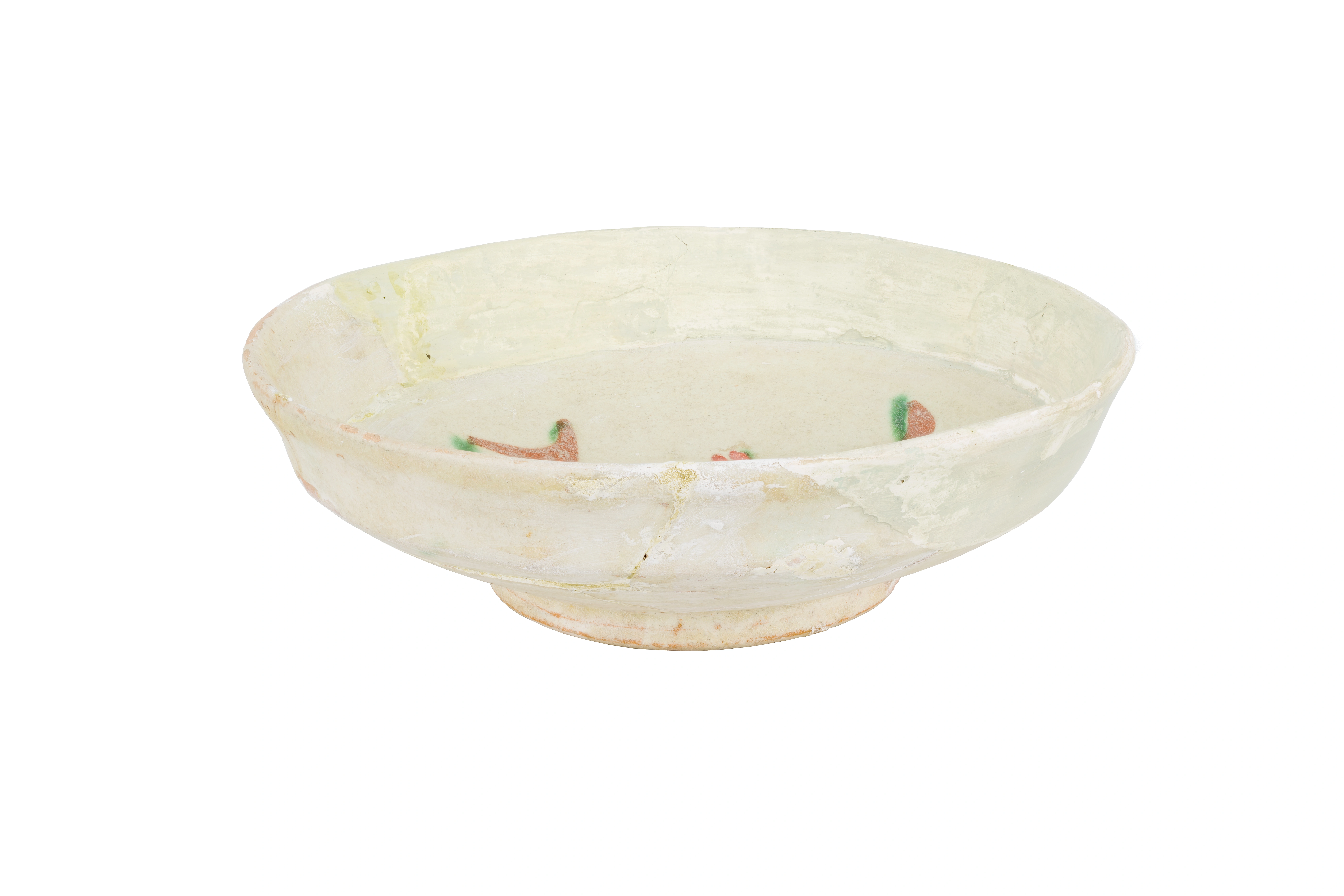
Bowl
10th century CE. Central Asia. Ceramic; engobed. 7 × 21.2 cm
Audio guide
Description
Here the decoration reads like a line of narrative. Small colored elements are arranged along the inner surface of the bowl, appearing to form a continuous sequence.
This bowl dates to the 10th century, a period when ceramics in the cities of Central Asia actively incorporated figurative and symbolic motifs. During the time presented as the First Renaissance, craftsmen explored new ways of conveying meaning through simple forms and clear compositions. Such bowls were used in everyday life as part of the domestic setting.
The surface is covered with a light slip, creating an even background for the decoration. The ornament is executed in reddish and green tones and applied freely, without strict symmetry. The line moves across the inner field, linking individual elements into a single visual rhythm and emphasizing the circular form of the vessel.
Cracks and losses visible on the surface testify to long use. This bowl offers insight into the 10th century through a lively and direct decorative approach, where an everyday object becomes a site of artistic exploration.