Video available in: UZ
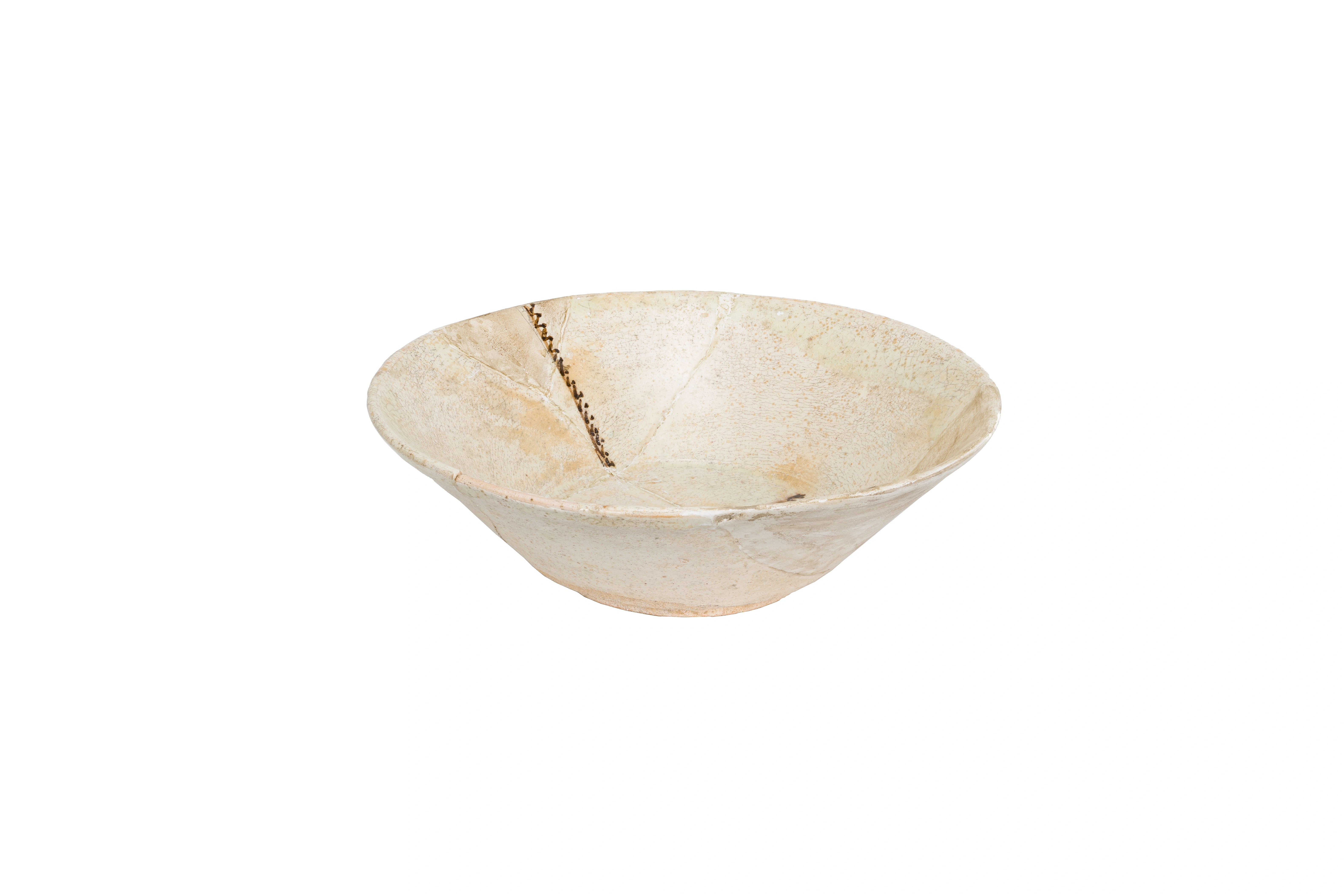
Bowl
10th–11th centuries CE. Central Asia. Ceramic; engobe. 7 × 22.2 cm
Audio guide
Audio available in: UZ
Description
This ceramic bowl dates to the Samanid period, a time of urban prosperity and artistic innovation in Central Asia.
Such vessels are known as Samanid epigraphic ceramics. Their defining feature is the use of calligraphy as the primary decorative element. Within Islamic artistic traditions, where figural imagery was often limited, calligraphy became one of the most important visual forms of artistic expression.
The inscriptions on such bowls usually contained ethical sayings or good wishes rather than religious quotations. Words expressing happiness, prosperity, or generosity transformed everyday objects into carriers of moral values.
The white surface was achieved using an engobe – a liquid white clay applied before firing. This technique allowed local craftsmen to imitate the highly prized Chinese porcelain imported through Silk Road trade networks.
Visible repairs on the surface also form part of the object’s history, demonstrating the value such items held and the care taken to preserve them.
This bowl illustrates how the aesthetics of writing, central to the manuscript culture of the Islamic world, also shaped everyday material culture.