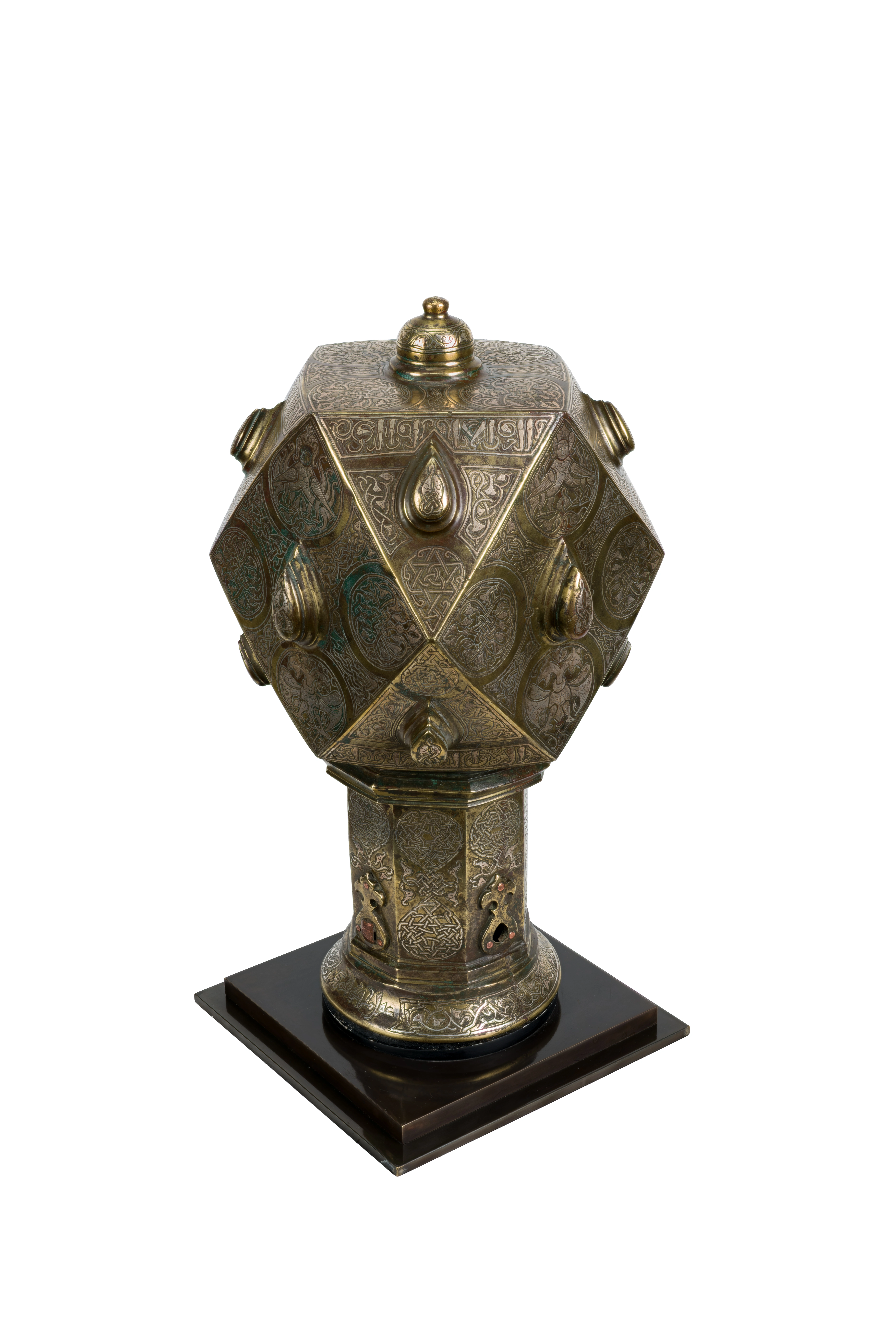
Finial. Symbol of Seljuk Rule
Double-Headed Eagle. 12th century CE. Central Asia. Bronze. 32.8 × 17.4 cm
Audio guide
Description
This 12th-century bronze finial represents a symbol of Seljuk sovereignty, prominently featuring the image of the double-headed eagle.
In Seljuk political iconography, the double-headed eagle symbolized supreme authority and the concept of dominion over East and West, as well as the unity of temporal and spiritual power. The motif has ancient Near Eastern origins and was reinterpreted within Islamic state ideology.
The object is distinguished by its complex form and intricate engraved decoration. Floral and geometric motifs frame medallions bearing the eagle, creating a carefully structured composition.
Finials such as this were typically placed at the top of standards, staffs, or architectural elements. They served not only as decorative features but also as visible expressions of authority and power.
The piece reflects both the high level of bronze craftsmanship and the ideological vision of the Seljuk state during the First Renaissance in Central Asia.