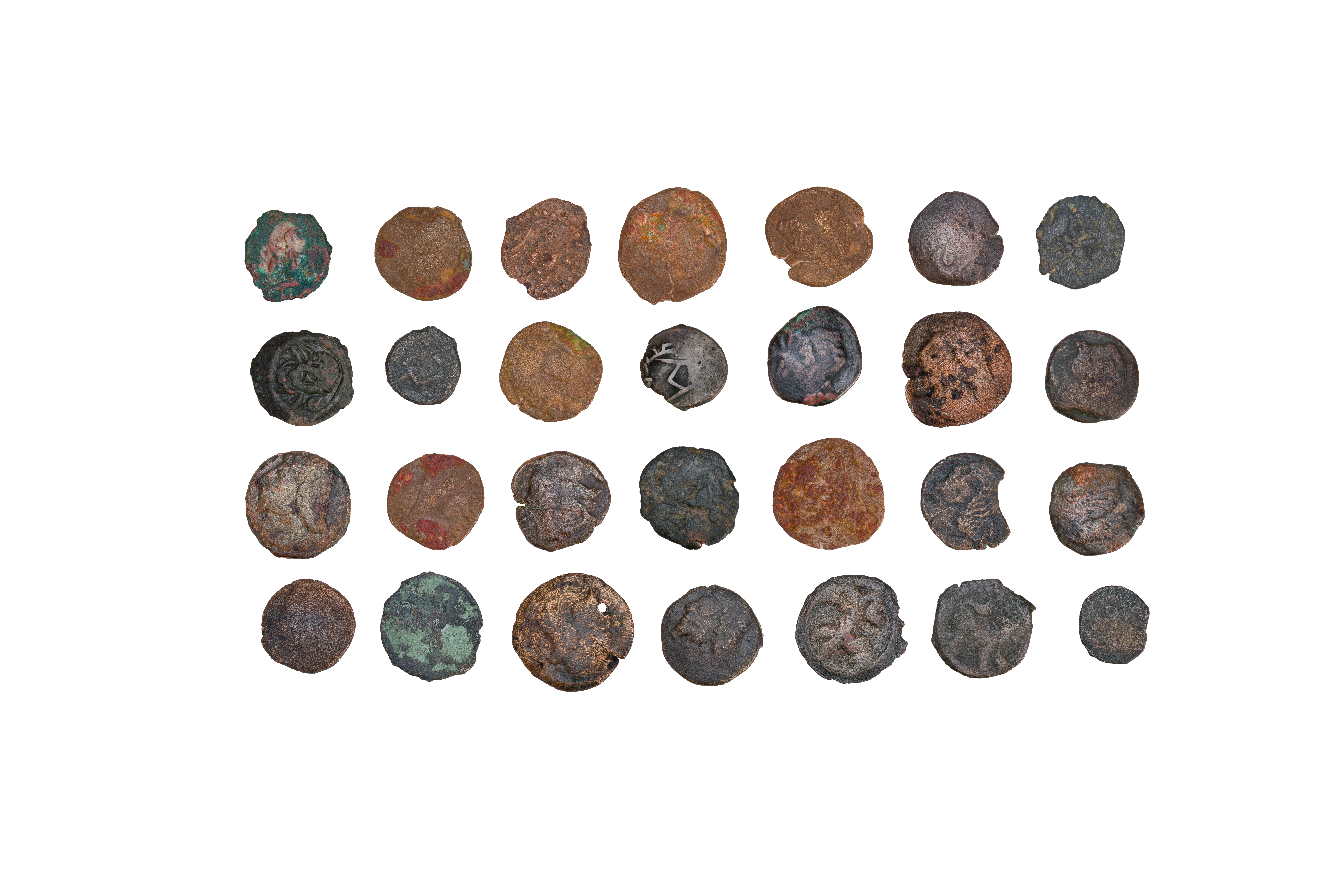
Coins of Kangju and The Western Turkic Khaganate (28 pcs)
3rd–8th centuries СЕ. Chach. Metal composition and dimensions vary
Audio guide
Audio available in: UZ
Description
This group of coins dates from the 3rd to the 8th centuries CE and originates from Chach. It reflects a transitional period between the Kangju polity and the Western Turkic Khaganate, illustrating political and cultural transformations in pre-Islamic Central Asia.
Observe the differences in imagery and symbols. Earlier coins associated with Kangju often imitate Greco-Bactrian and Iranian models, featuring simplified portraits or abstract motifs. Later examples from the Turkic period display more structured visual systems, particularly tamgas–dynastic emblems of ruling clans.
The tamga functioned not merely as decoration but as a political marker. It identified authority and validated the coin within a specific territory. Its form allows scholars to distinguish chronological and cultural phases of minting.
The use of copper or bronze indicates that these coins were intended for everyday transactions. They circulated in markets, workshops, and caravan hubs, demonstrating that a functioning monetary economy existed in Chach well before the Islamic era.
Technically, the coins were struck on cast blanks. Irregular shapes, off-center designs, and wear patterns indicate prolonged circulation and intensive use.
This collection documents a crucial stage in the development of regional statehood. By the time Islam arrived in the 8th century, Chach already possessed a stable monetary system. Rather than disappearing, it evolved–figurative imagery was gradually replaced by epigraphic designs, while the economic structure remained intact.
These coins therefore represent continuity, linking pre-Islamic traditions with the later Islamic civilization of Central Asia.