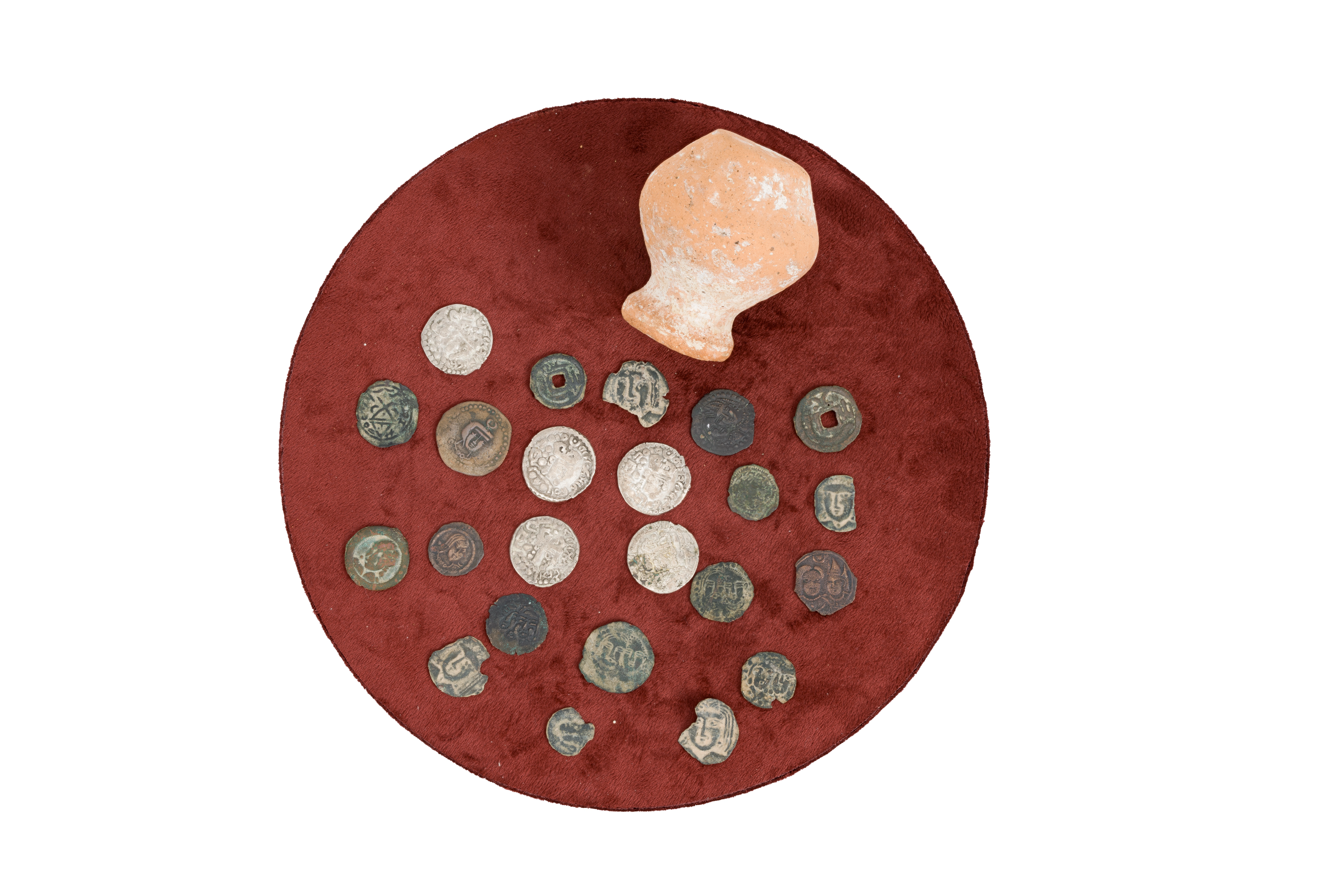
Coins and Seals of Chach and Sogd (23 pcs)
6th–8th centuries СЕ. Chаch. Metal composition and dimensions vary
Audio guide
Audio available in: RU
Description
This collection of seals and coins dates to the 6th–8th centuries and originates from Chach and Sogd – regions of Central Asia that played a crucial role in the economic networks of the Silk Road during the pre-Islamic period.
Note the diversity of forms and imagery. Some coins are round and feature portraits of rulers, while others have square central holes, reflecting the influence of the Chinese monetary system. However, the inscriptions and symbols were produced locally and represent Sogdian and Chach traditions.
On several coins, one can identify images of animals–most likely felines such as leopards or lions. In pre-Islamic Central Asia, such imagery symbolized power, protection, and divine favor. Equally important are geometric signs known as tamgas, which functioned as dynastic or political emblems and served as markers of authority.
The seals in this group provide further insight into administrative and commercial practices. They were used to authenticate goods and documents. Impressions in clay or wax ensured ownership and legitimacy, indicating a well-developed legal and trade system in the region even before the advent of Islam.
Technically, the objects were produced through striking, casting, and engraving. Despite their small size, they demonstrate a sophisticated tradition of metalworking associated with urban centers such as Sogd and Chach.
This collection reflects the complex cultural interactions of pre-Islamic Central Asia–combining Iranian traditions, Turkic political structures, and Chinese economic influence. It was within this environment that the foundations of the later Islamic monetary system were established.