Video available in: UZ
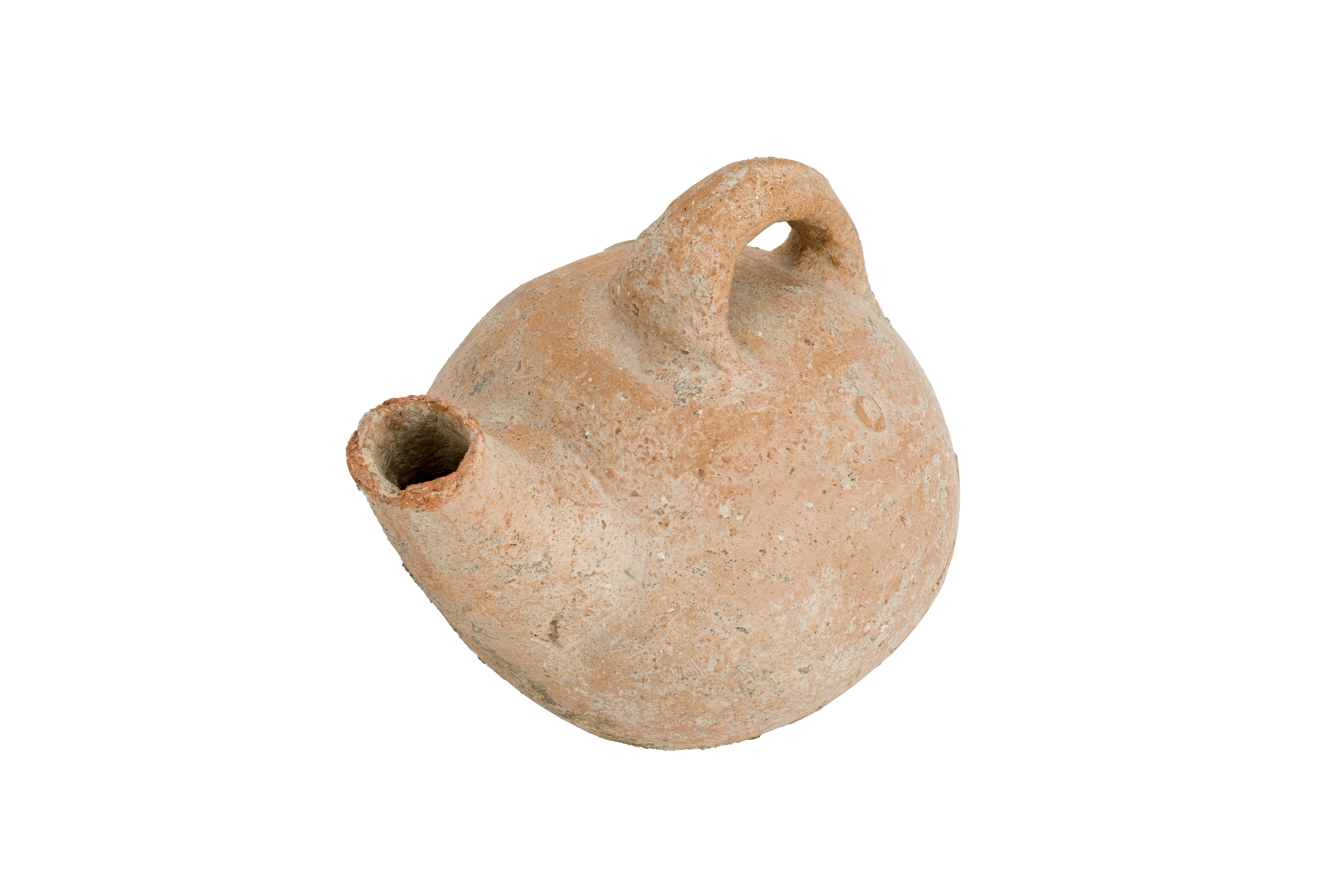
Teapot
8th–9th centuries СЕ. Central Asia. Ceramic. 18.9 × 17.1 cm
Audio guide
Description
This ceramic vessel, interpreted as a teapot, dates to the 8th–9th centuries CE, a period of significant cultural transformation in early medieval Central Asia.
Although displayed within the section devoted to pre-Islamic civilizations, it belongs to a transitional era in which established craft traditions continued under changing historical conditions.
The vessel is made of fired clay and features a rounded body, a short-slanted spout, and a solid arched handle. This construction demonstrates functional refinement, facilitating balanced handling and controlled pouring.
Such vessels were likely used for water or other heated beverages. During the 8th–9th centuries, the region maintained active trade and cultural exchanges, including contacts with China, where tea culture was already well established. However, the specific use of this vessel for tea remains hypothetical.
The object illustrates the continuity of local ceramic traditions in Shash and their adaptation within the evolving cultural landscape of Central Asia.