Video available in: UZ
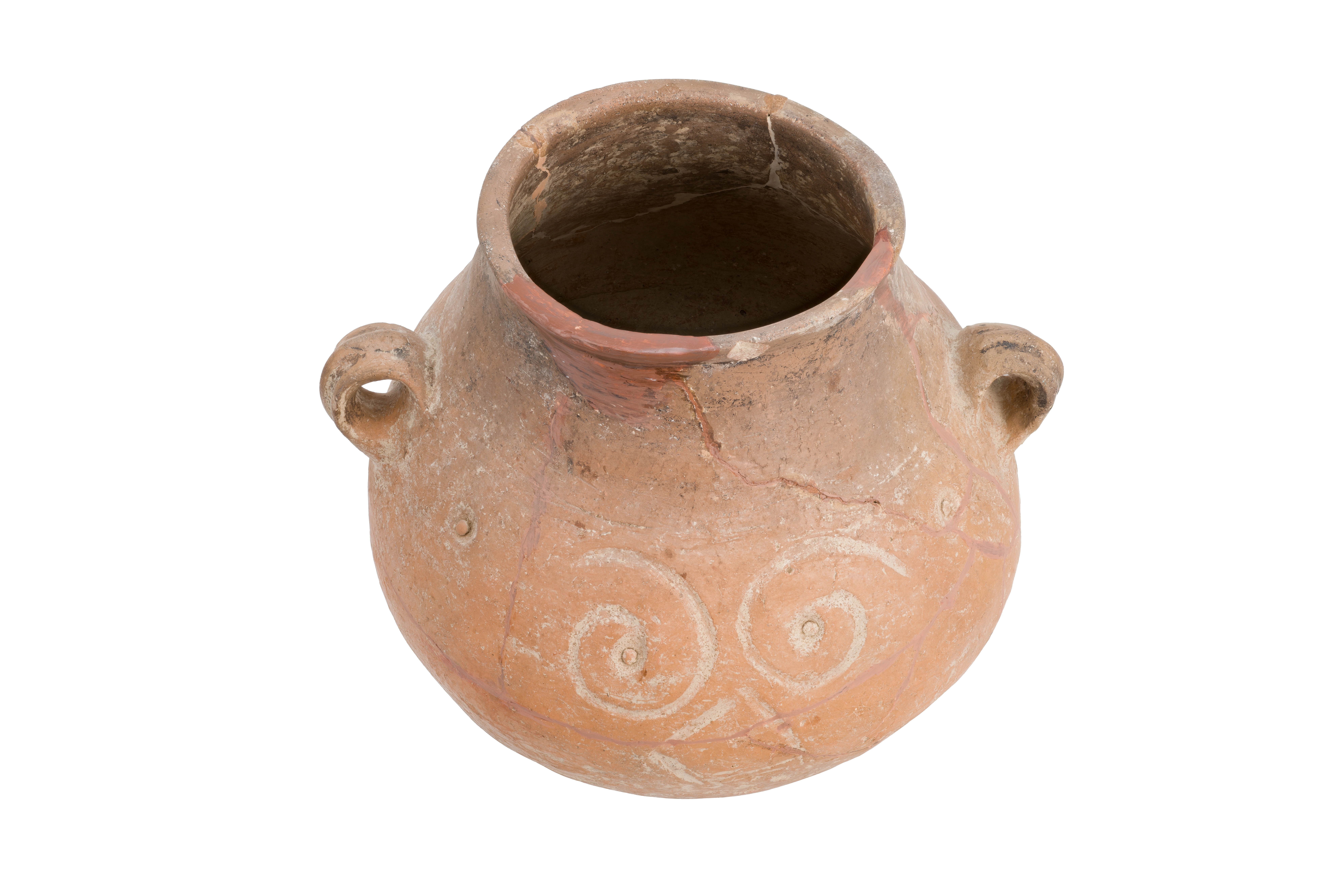
Ornamental Vessel with Handles
4th–6th centuries CE. Central Asia. Ceramic. 30.7 × 32.8 cm
Audio guide
Description
This large ornamental vessel dates to the 4th–6th centuries CE, a period of cultural development in the pre-Islamic civilization of Chach in the Tashkent oasis.
The vessel is made of fired clay and has a stable rounded form with two symmetrical handles. Its surface is decorated with light-colored spiral motifs applied over a reddish-brown ground. Such patterns are characteristic of the Kaunchin archaeological culture and reflect established regional decorative traditions.
The spiral motif is among the most widespread ornamental forms across Eurasia and is often interpreted in archaeological literature as a symbol of continuity or cyclical time. In this example, however, it primarily serves as a compositional device that accentuates the vessel’s rounded volume.
Vessels of this size were likely used for storing water, grain, or other household goods, possibly within fortified settlements of Сhaсh. Their production indicates the development of ceramic craftsmanship and stable technological traditions in a region positioned at the intersection of Central Asian cultural and trade routes.