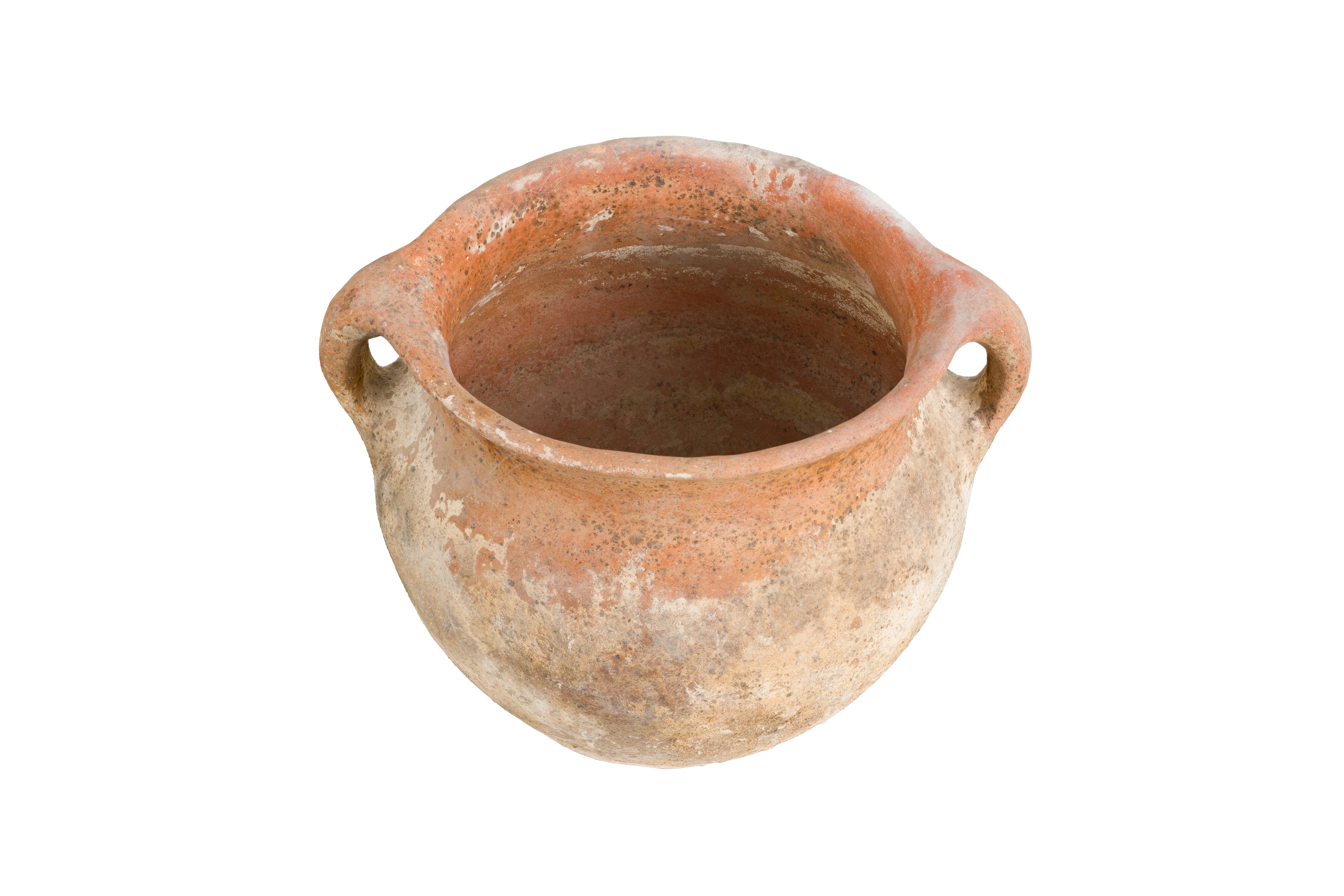
Vessel with Handles
2nd–4nd centuries CE. Tashkent. Ceramic. 23.9 × 28 cm
Audio guide
Description
The broad rounded body and two symmetrical handles define the stable silhouette of this vessel. Its proportions suggest storage and transport functions, while its substantial capacity indicates domestic utility.
Dating to the second-fourth centuries CE, the vessel originates from the region of Chach, in present-day Tashkent, during a period of growing urban development. At that time, the area stood at the crossroads of sedentary agricultural oases, steppe communities, and the Iranian cultural sphere.
The pottery was produced from local clay and fired to a light terracotta tone. The absence of glaze is typical of utilitarian ceramics. The horizontal handles ensured secure handling and controlled pouring of heavier contents.
Such containers were used for storing water, grain, or other everyday provisions. The form reflects continuity of craft tradition and constructive logic.
Within the exhibition narrative, this vessel embodies the practical foundations of early urban life in Central Asia, where durability and efficiency shaped material culture.