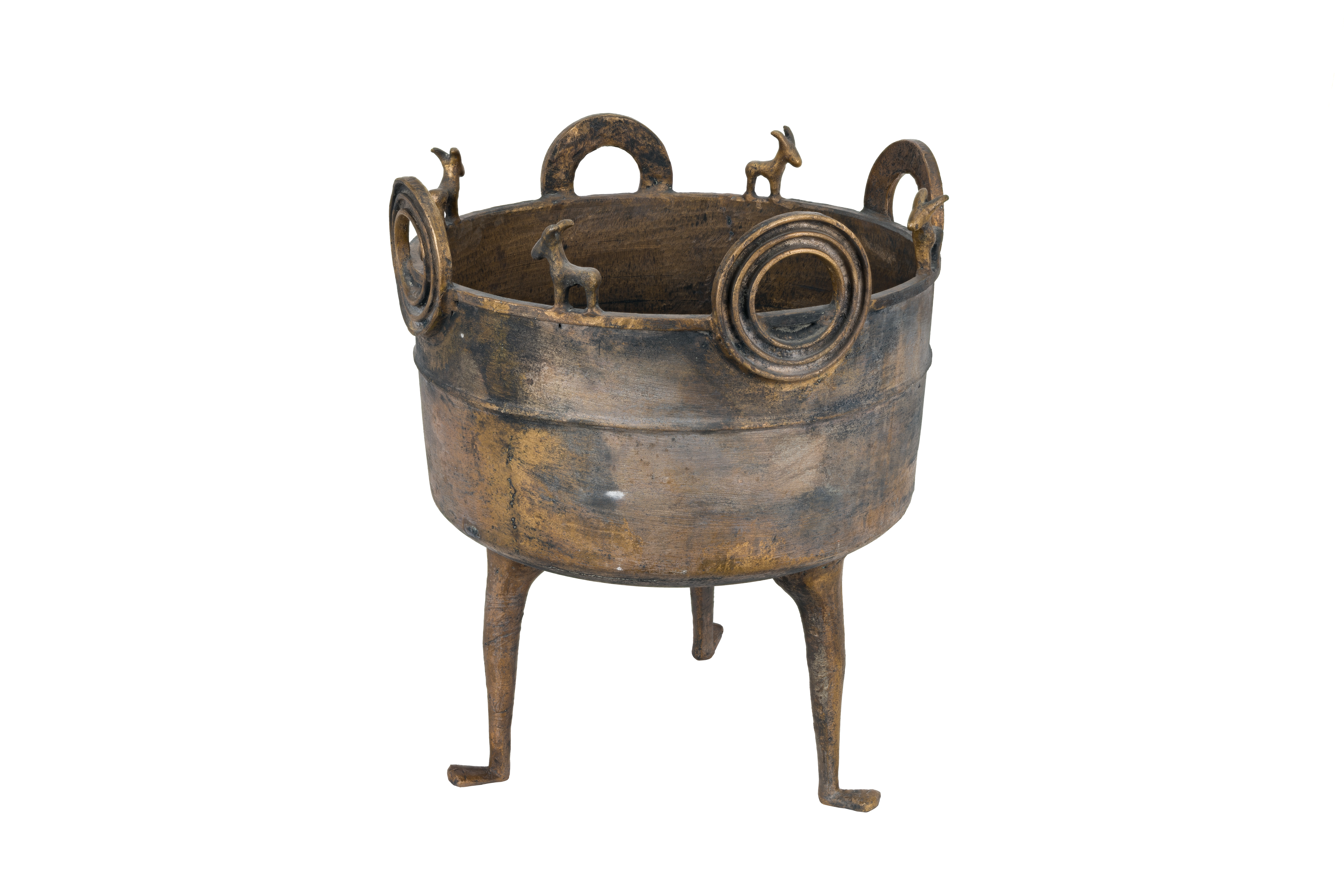
Sak Cauldron
4th–3rd centuries BCE. Fergana Valley. Bronze. 63 × 51 cm
Audio guide
Audio available in: UZ
Description
This large bronze cauldron represents a key object of nomadic culture, combining practical function with social significance.
Dating to the 4th–3rd centuries BCE, it is associated with the Saka tribes, part of the wider steppe cultural sphere of Eurasia. Its substantial size indicates use in collective contexts–preparing food or drink for groups.
The construction is technically remarkable. The vessel was cast as a single piece together with its legs, requiring advanced control of casting processes and mold design. This reflects a high level of metallurgical expertise.
Along the rim are small sculptural elements–stylized animal figures. Though simplified, they belong to the so-called “animal style,” a visual system characteristic of steppe cultures, associated with power, protection, and identity.
The three-legged form ensures stability over an open fire, a practical solution typical of mobile societies.
Such objects operated at the intersection of daily life and ritual practice, often used in communal feasting–an essential component of social cohesion in nomadic groups.
This cauldron provides insight into both the technological capabilities and the social structures of early Central Asian societies.