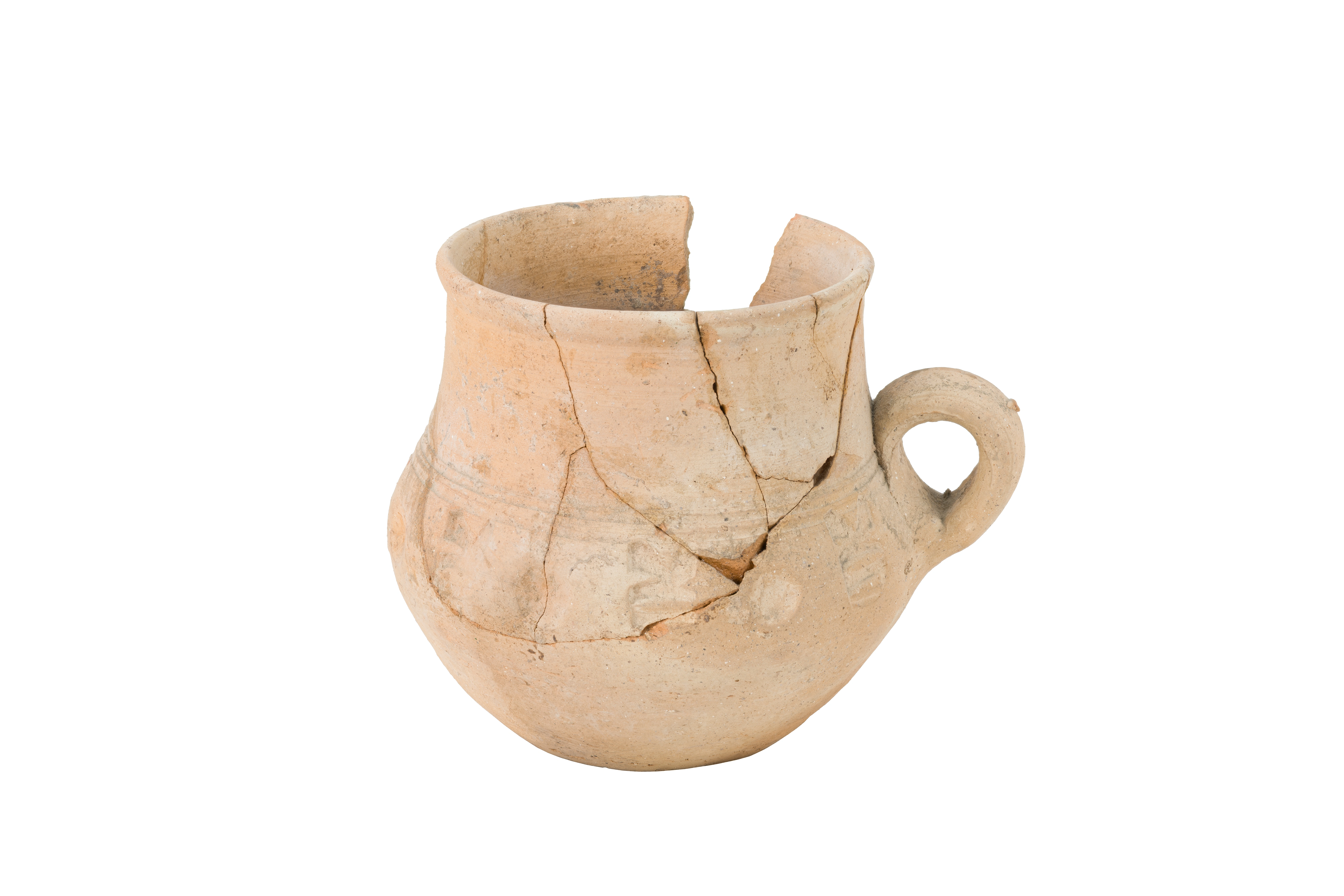
Small Jug with Handle
5th–7th centuries CE. Central Asia. Ceramic. 11.1 × 11.8 cm
Audio guide
Description
The compact proportions and thickened rim give this jug a sense of solidity and completion. Its small scale and rounded body indicate practical domestic use.
Dating to the fifth – seventh centuries CE, the vessel reflects the transitional phase from late antiquity to the early medieval period in Central Asia. It was produced from well-levigated light clay. The surface bears a shallow relief ornament, likely applied with simple stamping or incising techniques.
A single handle connects the shoulder to the upper body, ensuring functional stability. Such jugs were used for storing and pouring water, dairy products, or beverages. Though modest in decoration, the ornament demonstrates continuity of local artistic traditions.
This object belongs to the category of everyday utensils that accompanied daily life in homes, workshops, or rural settings.
Within the exhibition narrative, it marks a gradual shift from classical forms toward early medieval plastic expression, where craftsmanship adapted to evolving historical realities.