Video available in: UZ
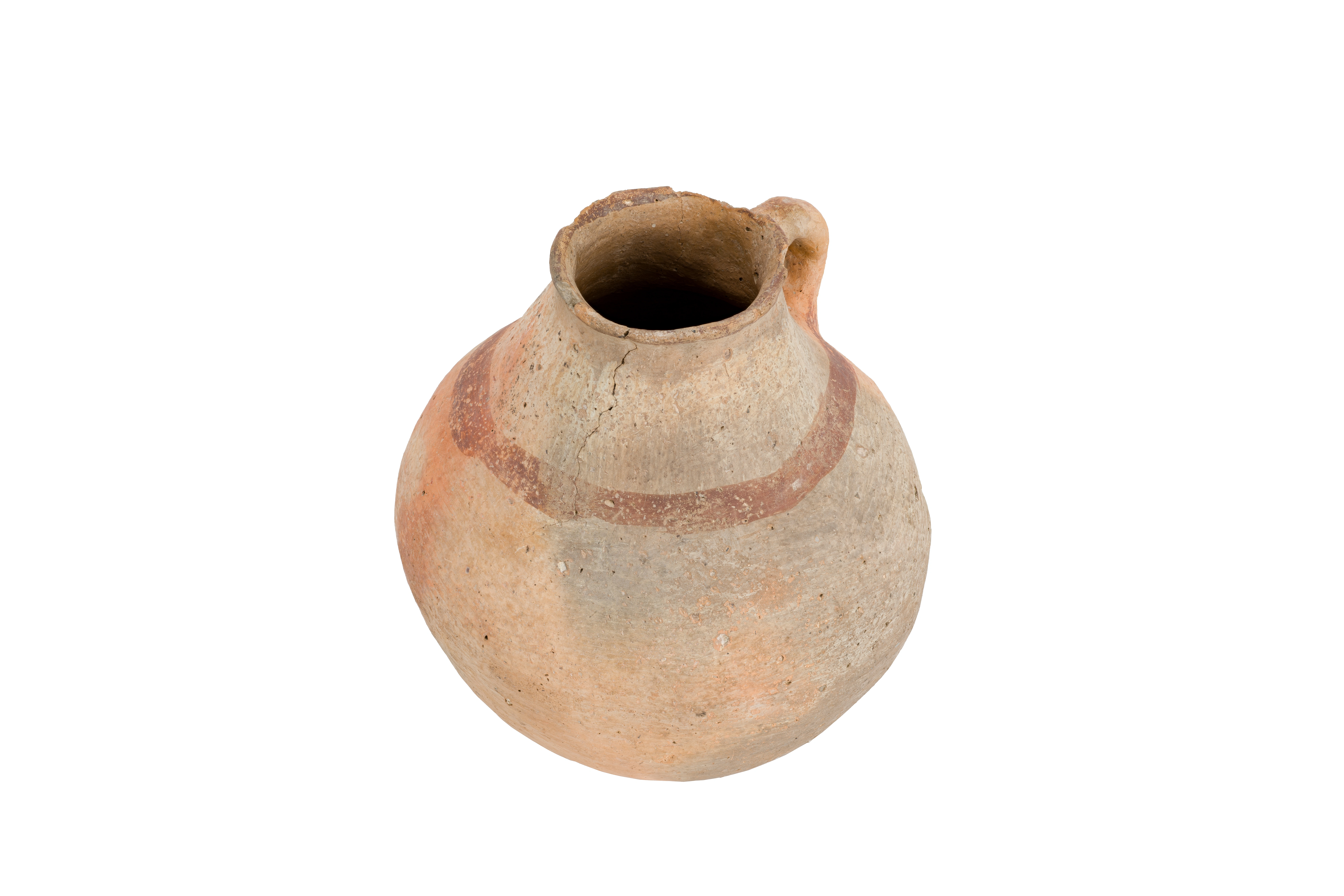
Jug
4th–1st centuries BCE. Fergana. Ceramic. 27,5 × 26 cm
Audio guide
Description
This ceramic jug from the Fergana Valley dates to the 4th–1st centuries BCE, a period marked by early processes of state formation and expanding trade networks in Central Asia.
Its form is balanced and functional, with a rounded body, short neck, and single handle. It was likely shaped on a fast potter’s wheel, a technology already well established in the oasis settlements of the region.
The clay was carefully levigated, the surface smoothed, and coated with a slip — a thin layer of liquid clay. A reddish band encircling the body was applied with mineral pigment prior to firing as a decorative accent.
Firing took place in a two-chamber kiln, where controlled airflow produced tones ranging from pale beige to terracotta.
Such vessels were used for storing water, wine, oil, or grain. They reflect the consolidation of settled agricultural life in the fertile Fergana Valley.
This jug illustrates the continuity of ceramic traditions in a region that later became an important corridor of the Silk Roads.