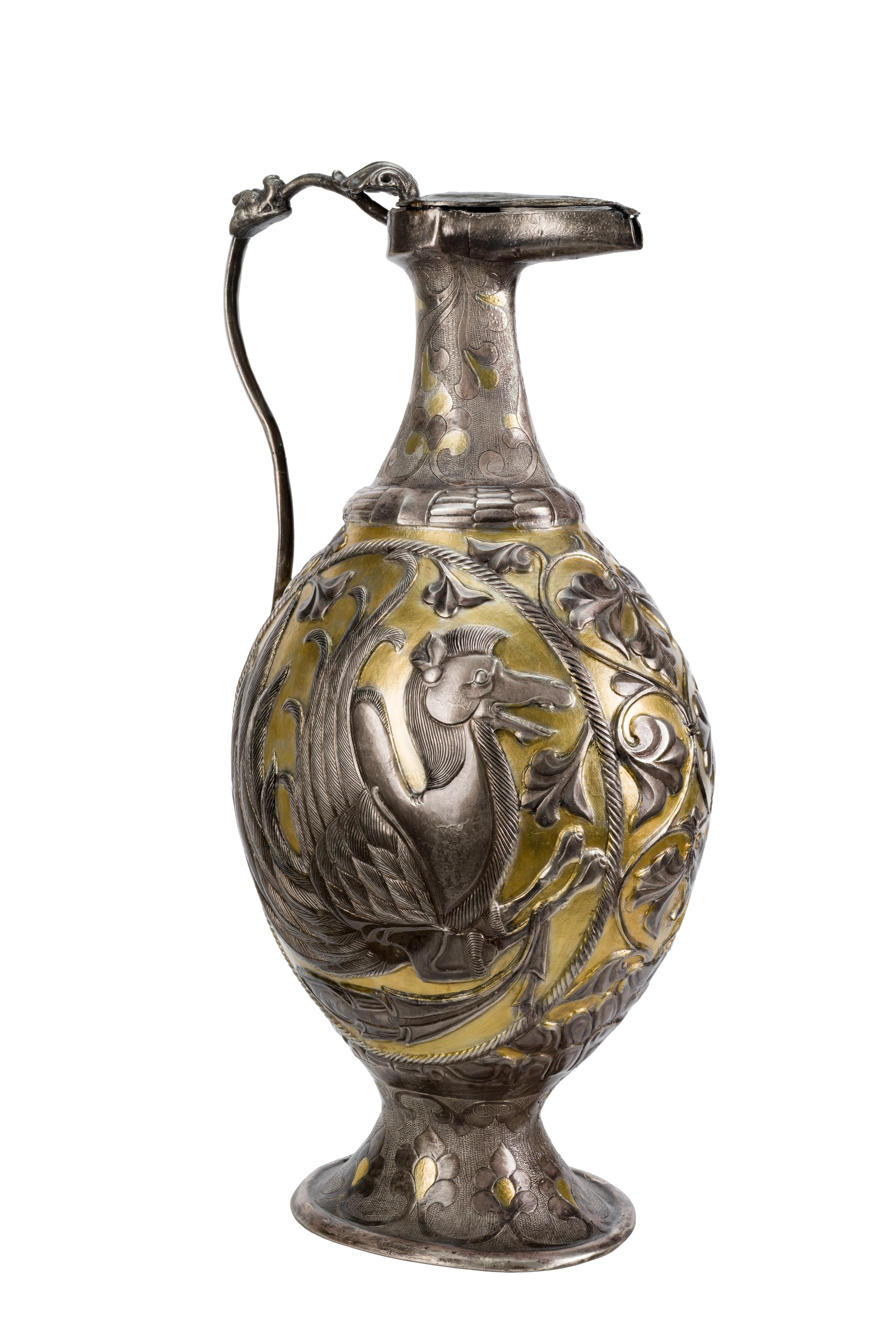
Ewer with Winged Сamel Design
8th century CE. Central Asia. 39.2 × 20.5 cmReplica
Audio guide
Description
This silver ewer dates to the 8th century CE, a period marked by significant artistic development in Central Asia.
Its elongated body, narrow neck, pronounced spout, and curved handle suggest use in ceremonial or elite contexts.
The central motif depicts a winged camel. The camel is commonly associated with caravan trade and the Silk Roads, while the addition of wings places the figure within a mythological register. Such imagery may have conveyed ideas of movement, protection, or symbolic transcendence.
The vessel was formed from hammered silver sheet and further refined through repoussé, chasing, and engraving. Gilded details enhance visual contrast and underscore its prestigious character. Works of this type reflect a synthesis of Sogdian, Iranian, and steppe artistic traditions.
This ewer illustrates the interconnected cultural networks of early medieval Eurasia, where commerce, mythology, and craftsmanship intersected within a shared visual language.