Video available in: UZ
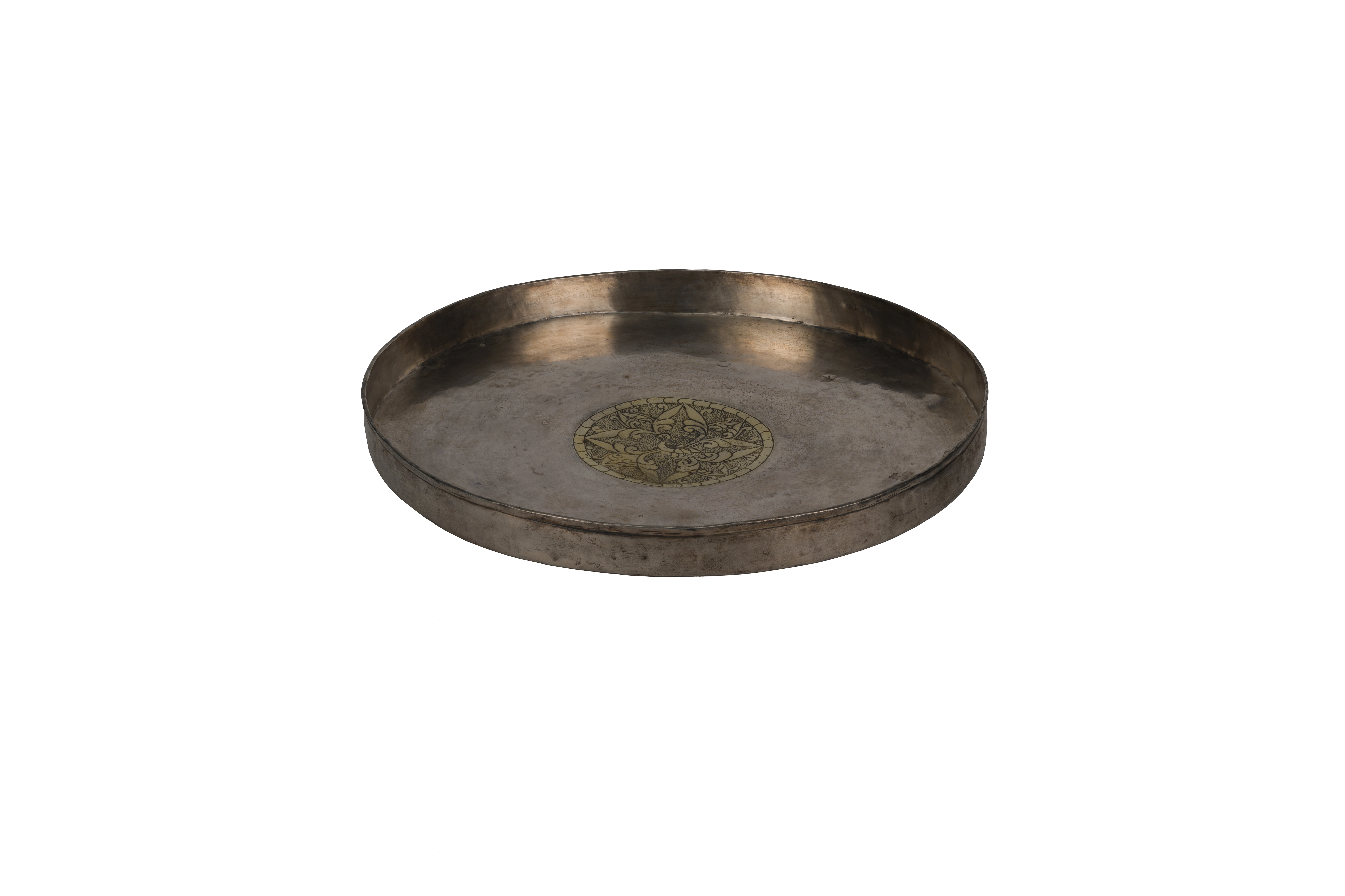
Lagan (Dish) with Ornament
5th–7th centuries CE. Central Asia. Silver. Diameter: 27 cm
Audio guide
Description
This silver dish, known as a lagan, was produced in Central Asia between the 5th and 7th centuries CE. Such objects functioned not merely as tableware but also as markers of prestige within Sogdian urban culture.
At the center, an ornamental medallion contains a symmetrical vegetal composition organized in a four-part scheme. This type of structured design is often associated with concepts of cosmic order in Iranian artistic traditions. The decoration was created through repoussé and refined by engraving, producing subtle contrasts of light and shadow.
The manufacturing process required advanced metalworking skills. A sheet of silver was hammered to the desired thickness, shaped over a form, and decorated using specialized chasing tools. Selected details may have been polished or partially gilded to enhance visual contrast.
Comparable Sogdian silver dishes have been discovered across a wide geographic area, from the Altai to the Volga region and from Eastern Turkestan to China. They circulated along the Silk Roads as luxury goods, diplomatic gifts, and prestigious banquet vessels.
This dish illustrates the artistic refinement and extensive transcontinental connections of early medieval Central Asia.