Video available in: UZ
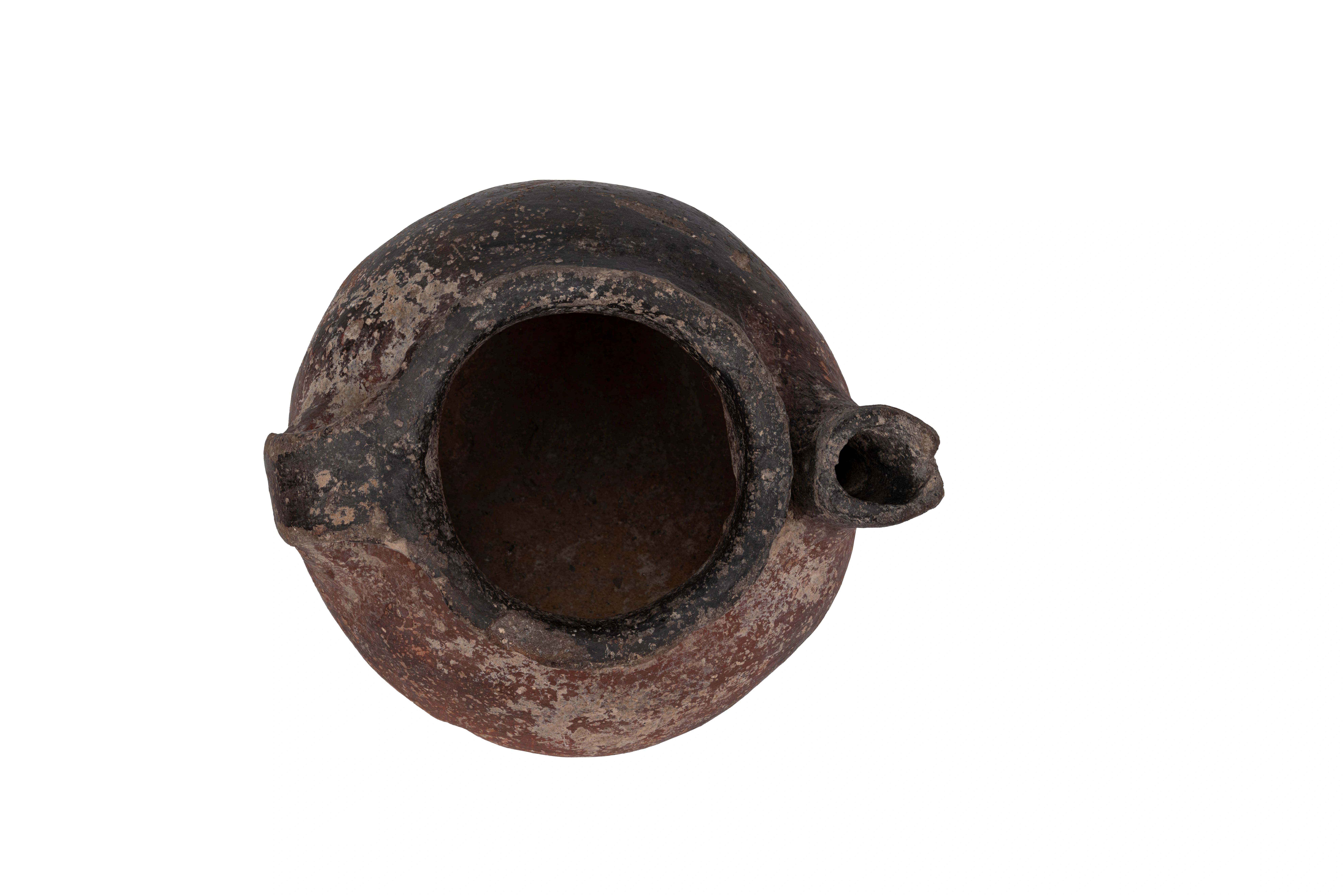
Jug with a Spout
2nd–4th centuries CE. Central Asia. Ceramic. 9 × 10.7 cm
Audio guide
Description
This small spouted jug dates to the 2nd–4th centuries CE.
Despite its modest size, it reflects the advanced level of ceramic production in ancient Central Asia.
The vessel’s form is carefully proportioned: a rounded body, a wide rim for filling, and an elongated spout designed for controlled pouring. Such features demonstrate a refined understanding of functionality and balance in ceramic design.
The jug was made from well-levigated clay and shaped on a potter’s wheel. After partial drying, the surface was burnished, and the vessel was fired in a kiln with regulated airflow. Variations in surface coloration suggest firing in a reduced-oxygen atmosphere, a technique widely used in ancient ceramic production.
Objects of this type were employed in domestic contexts, workshops, and possibly in ritual settings. They illustrate the continuity of ceramic traditions that circulated across Central Asia along early trade routes.