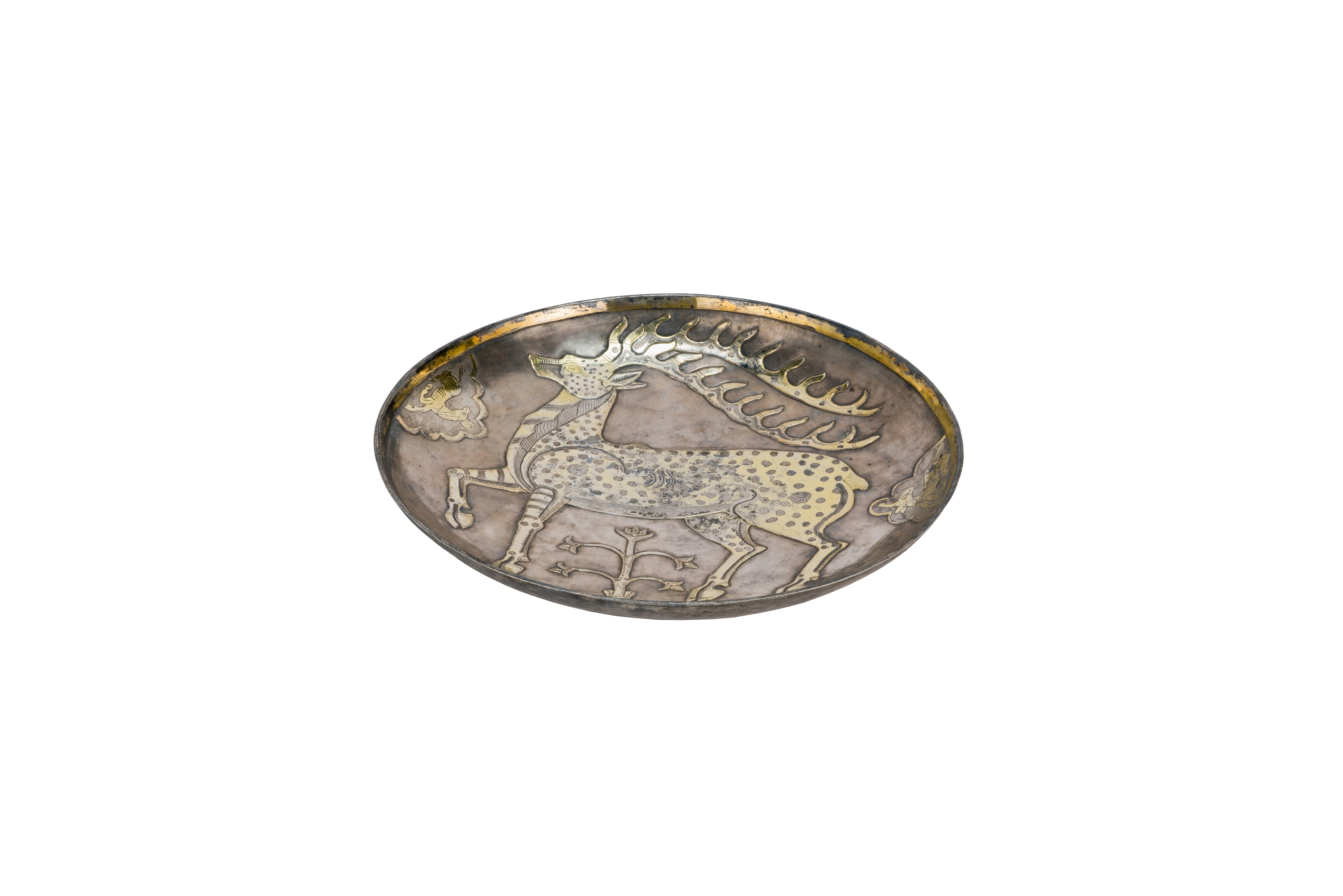
Рlate with a Deer Image
5th–8th centuries CE. Central Asia. Silver. 5.3 × 29 cm
Audio guide
Audio available in: UZ
Description
The circular form and thin silver surface of this plate immediately indicate its function as an object of prestige rather than everyday use. It represents the artistic tradition of Sogdiana in the early medieval period, when Central Asia developed as an independent cultural center prior to the spread of Islam.
At the center of the composition is a deer depicted in a dynamic pose, with one leg raised, an elongated body, and antlers rendered in an elaborate ornamental silhouette. This treatment reflects a synthesis of regional traditions, combining elements of nomadic animal style with Iranian decorative aesthetics.
The body is covered with a dotted pattern, enhancing both texture and visual richness. Beneath the animal appears a stylized vegetal motif interpreted as a tree of life – a key symbol in pre-Islamic Central Asian belief systems associated with renewal and continuity.
Cloud-like motifs surrounding the figure suggest wide cultural interactions, characteristic of early transregional exchange networks.
The plate was produced using repoussé, followed by engraving and partial gilding, demonstrating the high level of Sogdian metalworking.
Such objects functioned within elite contexts, used in ceremonial dining and gift exchange. The plate exemplifies the autonomous artistic system of pre-Islamic Central Asia, shaped by extensive cultural and technological interactions.