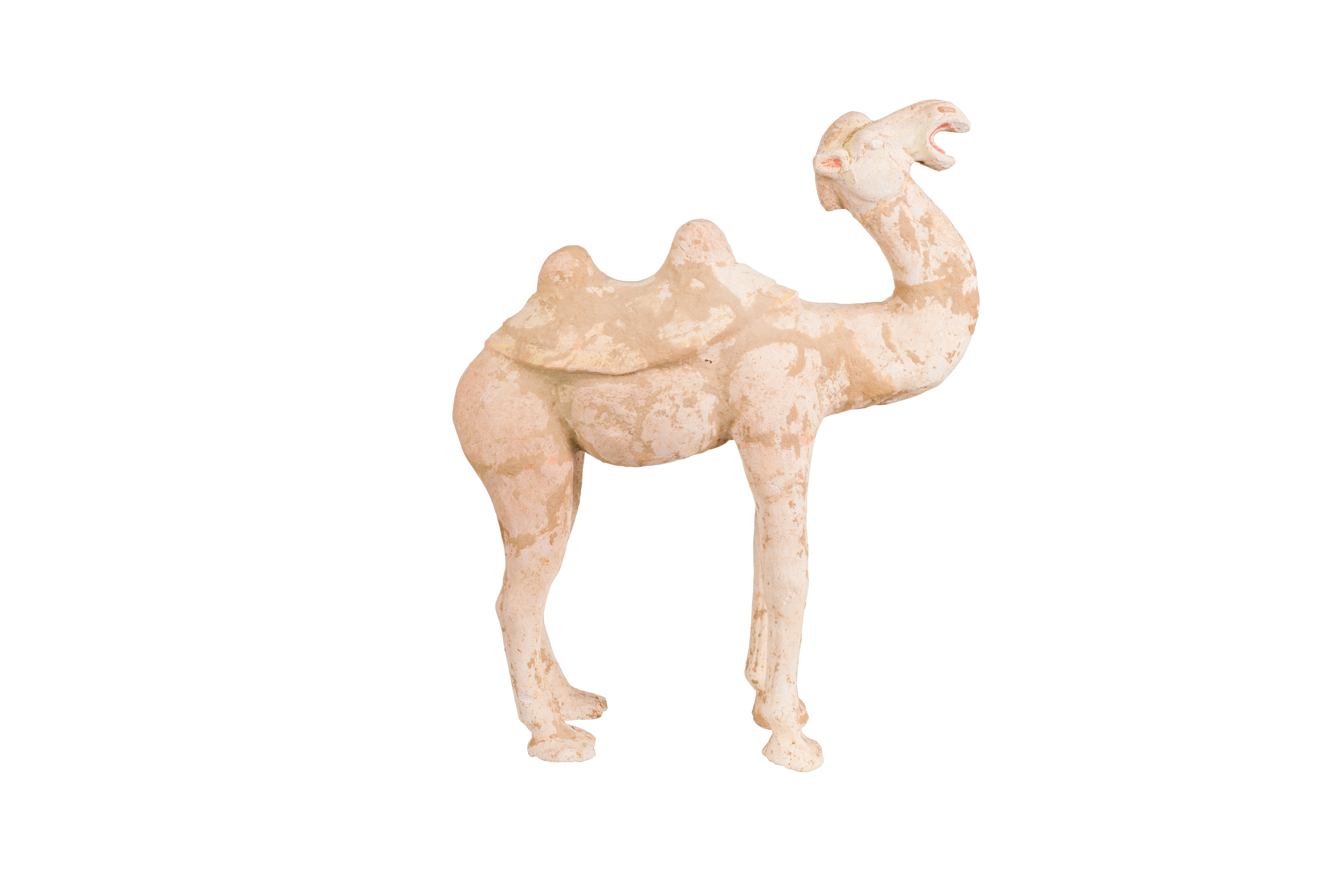
Bactrian Camel Figurine
7th century СЕ. Central Asia. Ceramic. 57 × 47 cm
Audio guide
Description
You are looking at a ceramic figurine of a Bactrian camel from 7th-century Central Asia.
The two-humped camel was a central symbol of caravan trade. It enabled long-distance exchange along the Silk Roads, linking China, India, Iran, and the Mediterranean world. Such animals transported silk, spices, metals, and other valuable goods across deserts and steppe landscapes.
The figurine is rendered with an expressive posture: the extended neck, raised head, and open mouth suggest movement and vitality. The two pronounced humps identify it as a Bactrian camel, a species well adapted to harsh climates and prolonged journeys.
Figurines of this type may have functioned as funerary offerings, ritual objects, or decorative items. They reflect the economic vitality of the region and its central role in intercultural exchange.
In this context, the camel serves not only as a representation of an animal but also as a visual symbol of mobility, commerce, and cultural interaction across Eurasia.