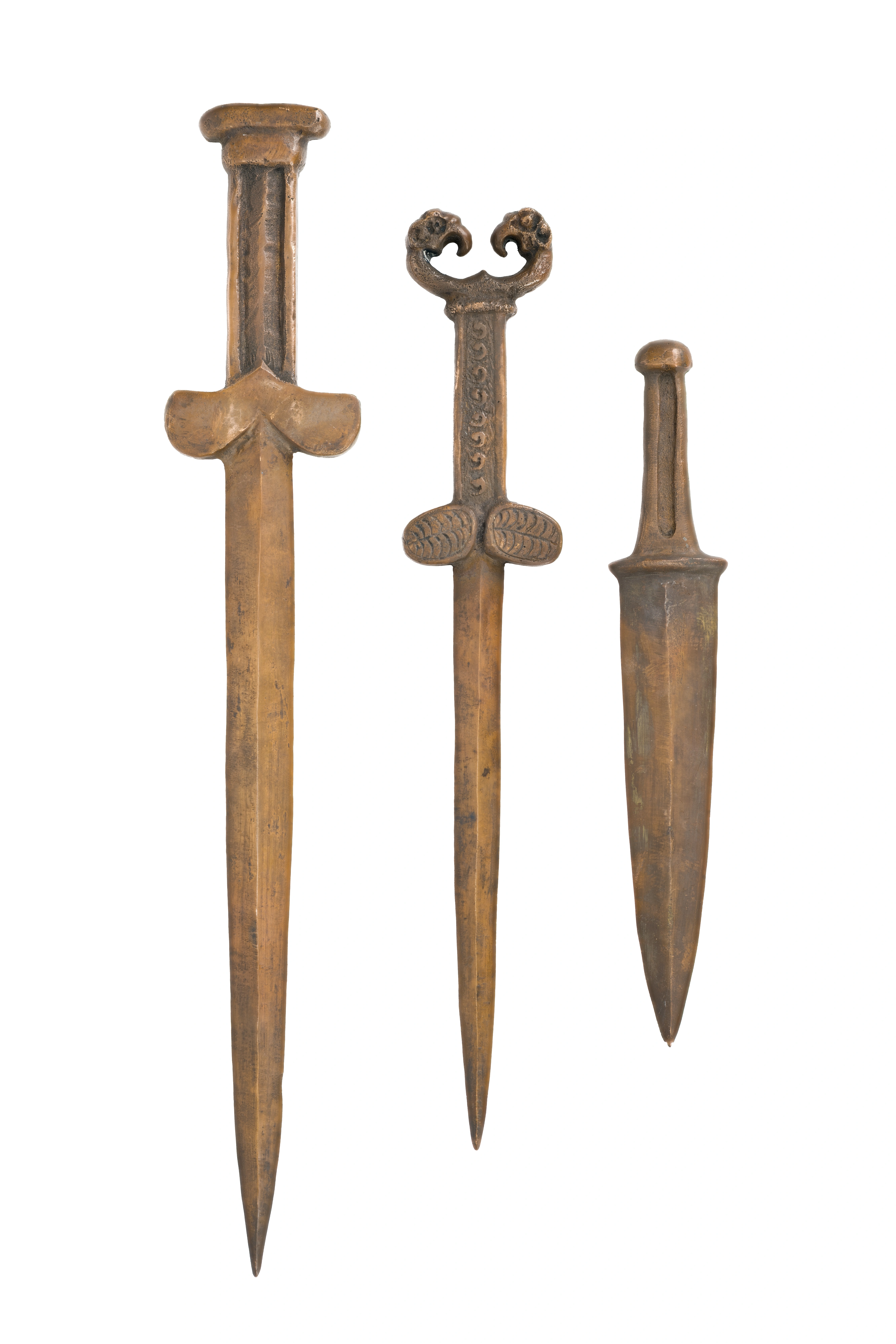
Weapons of the Sakа-Massagetae
6th–5th centuries BCE. Khorezm. Bronze. Akinak length: 43.5 cm; Sword length: 54 cm; Dagger length: 33 cm
Audio guide
Description
These objects represent examples of weaponry associated with the Saka-Massagetae, nomadic tribes of Central Asia in the 6th–5th centuries BCE.
These communities formed part of the broader Scythian–Saka cultural sphere that extended across the Eurasian steppes.
The short sword, known as the akinakes, was a characteristic weapon of Saka warriors. Its compact form made it well suited to mounted combat. The accompanying sword and dagger illustrate the range of bladed weapons employed in steppe warfare.
Cast bronze hilts with cross-guards and profiled pommels reflect a developed metallurgical tradition in the region, including areas of ancient Khorezm. Weapons of this type were frequently placed in warrior burials, underscoring their association with status and martial identity.
These objects provide insight into the military culture of steppe societies and their role in shaping the early historical landscape of Central Asia.