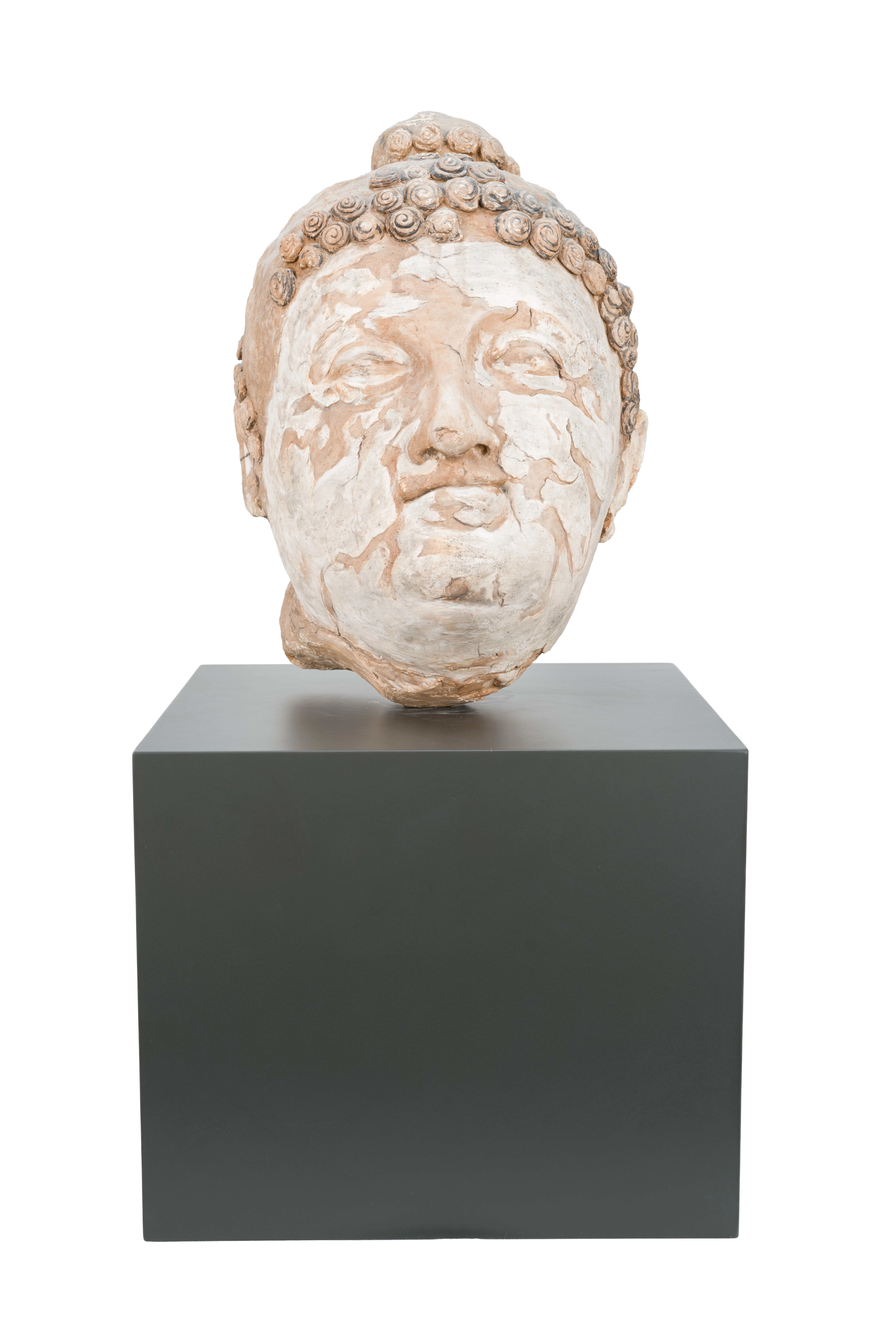
Head of Buddha
2nd–3rd centuries CE. Dalvarzintepa, Surkhandarya Region. 40 × 26 × 26 cm. Replica
Audio guide
Description
This head of the Buddha from Dalverzintepa originates from one of the major urban centers of ancient Bactria.
The original sculpture dates to the 2nd–3rd centuries CE, during the flourishing of the Kushan Empire, when Buddhism spread widely across Central Asia.
The sculpture is made of gypsum, a material commonly used in temple architecture and sculptural decoration. The face of the Enlightened One is modeled with soft features, half-closed eyes, and a composed expression. The hair is arranged in rhythmic curls gathered into a high knot—the ushnisha, a canonical symbol of spiritual wisdom.
Comparable images have been discovered in the Buddhist complexes of Dalverzintepa, within shrine halls adorned with statues of the Buddha, bodhisattvas, and lay patrons. These finds demonstrate Bactria’s integration into the broader cultural sphere of the Silk Road, where Indian, Iranian, and Hellenistic artistic traditions converged.
This image attests to the developed spiritual and artistic culture of ancient Bactria, where religion, philosophy, and visual expression formed an integrated cultural system.