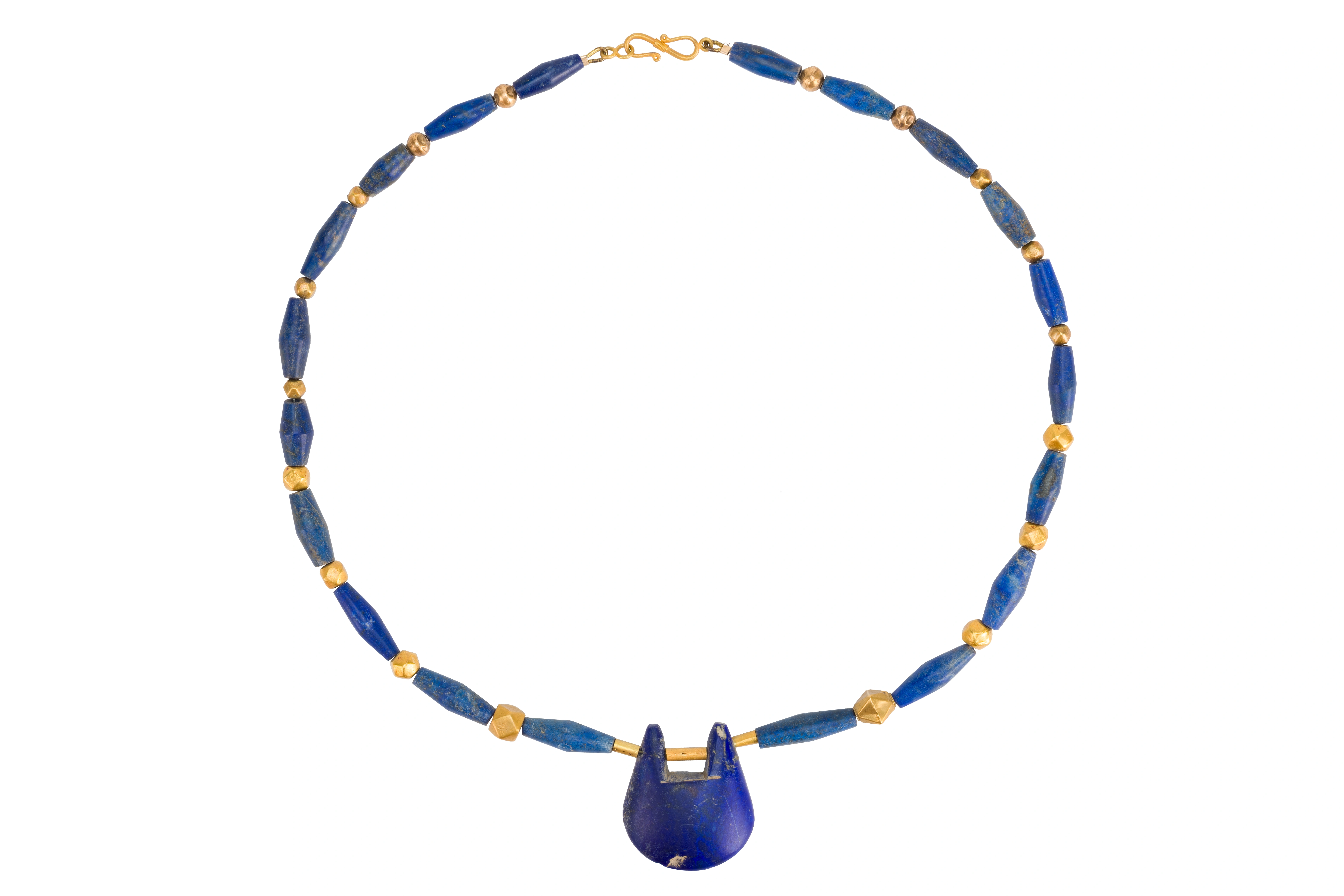
Necklace
2nd–4th centuries CE. Central Asia. Lapis lazuli. Length: 57.6 cm; Stone: 3.2 × 3.4 cm
Audio guide
Description
This necklace, composed of lapis lazuli beads, dates to the 2nd–4th centuries CE and originates from Central Asia.
Lapis lazuli—a deep blue semi-precious stone—symbolized power, nobility, and sacred authority for millennia. The region was shaped by intersecting trade routes and sustained cultural exchange.
Lapis lazuli was mined in areas near the Hindu Kush and within the Amu Darya basin. Through extensive ancient trade networks, it spread far beyond Bactria, reaching Mesopotamia, Iran, and the Indian subcontinent. Archaeological evidence indicates that such ornaments are frequently found in elite burials and cult complexes, where they served not only decorative but also status-related and possibly ritual functions.
In this necklace, elongated lapis beads alternate with gold elements. The contrast between deep blue stone and warm gold accentuates the wealth and social standing of its owner. This combination also reflects connections with distant regions that supplied precious materials.
These beads attest to a high level of craftsmanship and the extensive international networks that linked ancient Central Asia with the wider world.