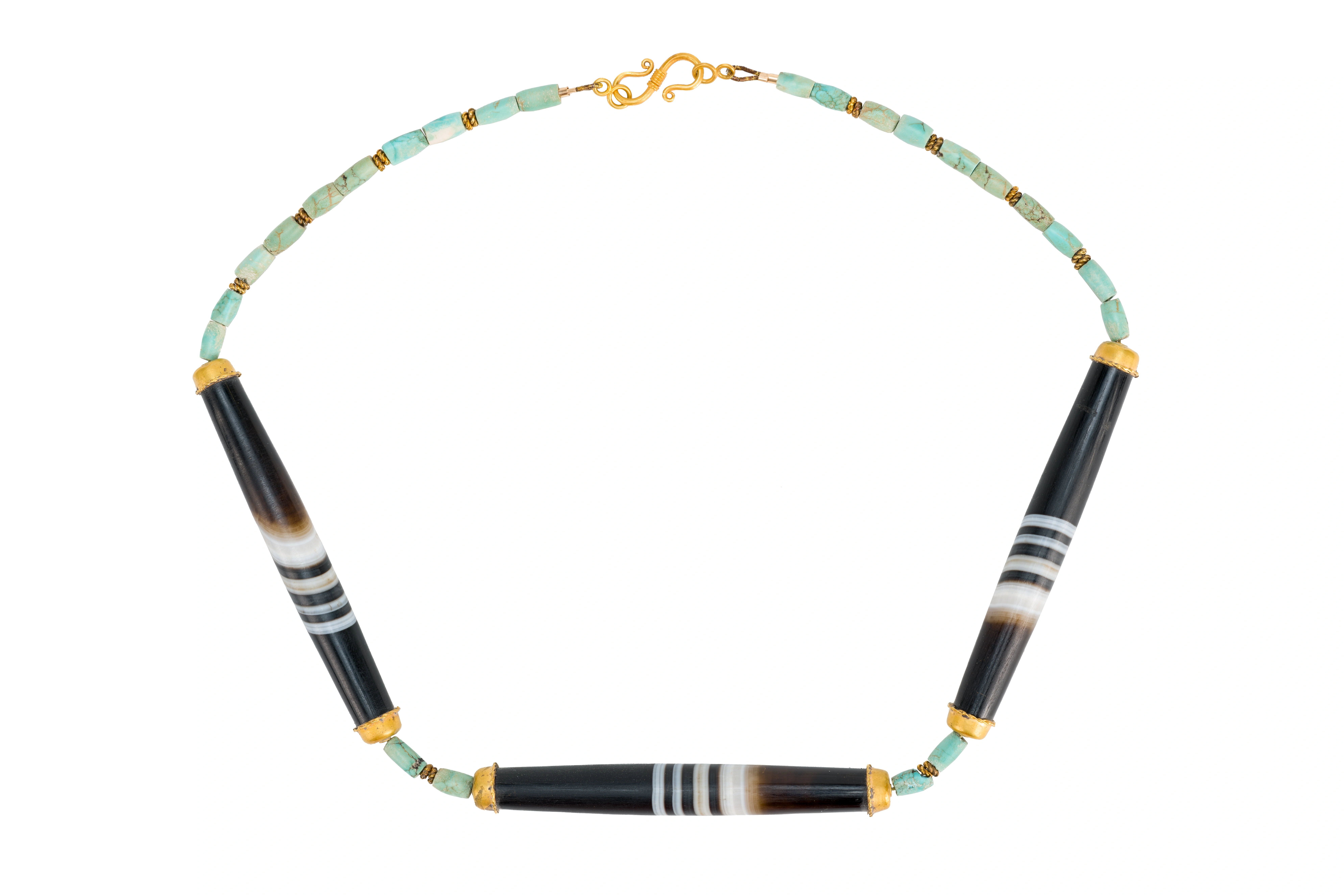
Necklace
1st millennium BCE. Central Asia. Carnelian, turquoise, onyx. Length: 55.5 sm
Audio guide
Description
Elongated cylindrical elements of dark onyx define the strict geometry of this necklace. Between them runs a rhythm of small turquoise beads and gold fittings. The piece dates to the first millennium BCE, a period when Bactria occupied an important position within early transcontinental exchange networks.
The contrast of materials is compositionally deliberate. Black onyx conveys depth and stability, turquoise introduces the characteristic blue-green tone associated with the region, and gold provides both structural support and symbolic significance, emphasizing status and sacred value.
Such ornaments likely belonged to members of the social elite. The minerals originated in mountainous regions of Central Asia and neighboring territories, reflecting integration into early caravan routes.
Within the section “Ancient Bactrian Civilization,” this necklace illustrates how aesthetic design and material value combined to form a visible marker of identity and cultural continuity.