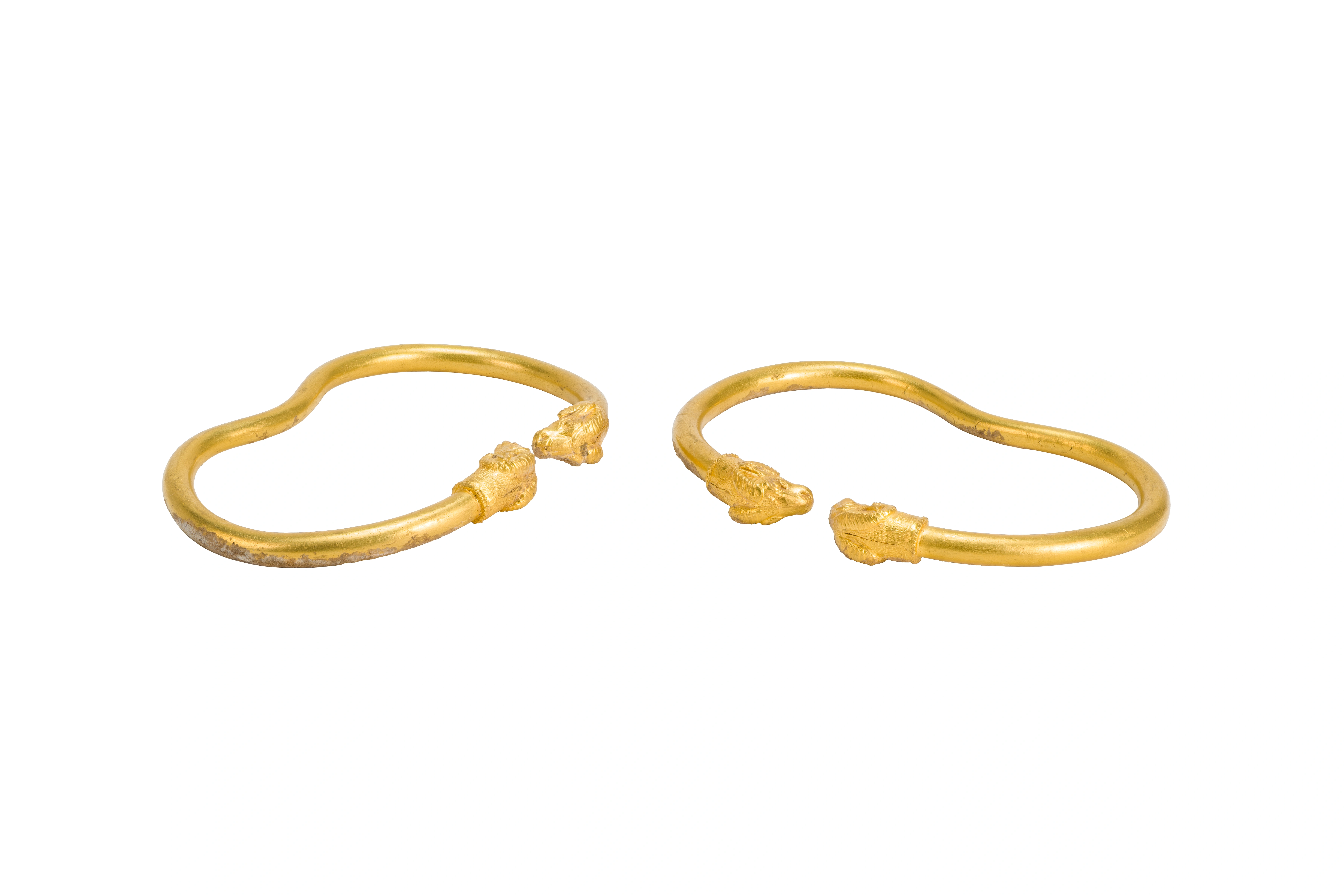
Bracelets
5th century BCE. Central Asia. Gold. 9.4 × 6.4 cm; 9.3 × 6.7 cm
Audio guide
Description
These gold bracelets date to the 5th century BCE, a period associated with the flourishing cultures of ancient Bactria.
This region, linked to the Bactria–Margiana Archaeological Complex and later political formations, stood at the crossroads of major trade routes and cultural influences.
The bracelets are formed as open rings with terminals shaped as stylized animal heads. Such motifs are characteristic of the steppe animal style, while also reflecting elements associated with Greco-Bactrian artistic traditions. This combination illustrates the cultural synthesis of a region where Western and Eastern traditions intersected.
Gold functioned as a symbol of wealth and elevated social status. Similar ornaments have been discovered in elite burials in Bactria, sometimes accompanied by inlays of lapis lazuli, carnelian, or turquoise. Their manufacture required advanced craftsmanship, including casting, careful surface finishing, and techniques such as granulation.
These bracelets are more than objects of adornment; they convey social rank and reflect Bactria’s role as a center of ancient trade and artistic exchange across Eurasia.