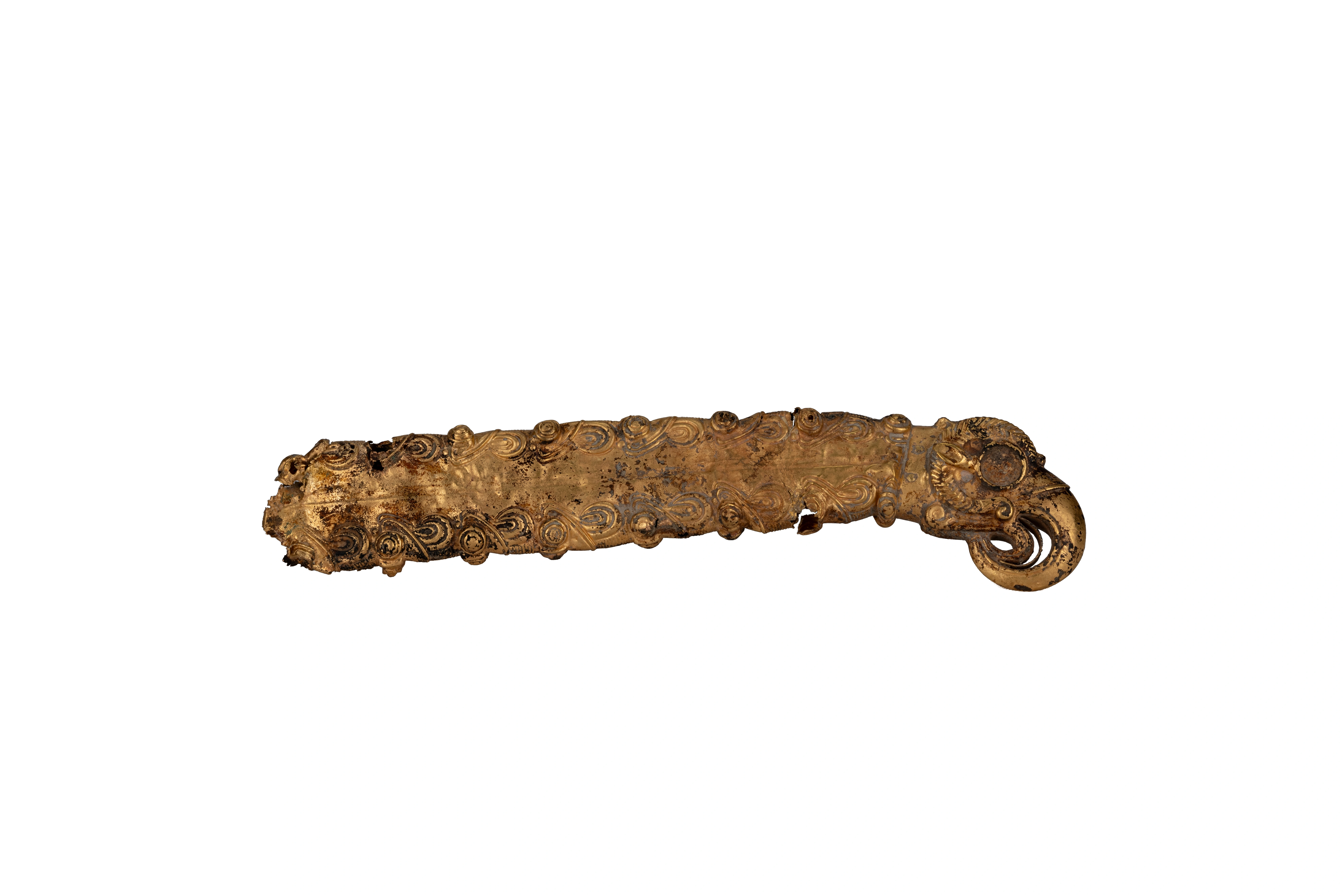
Scabbard
4th century BCE. Central Asia. Gold. 25 × 5.2 × 2.1 cm
Audio guide
Description
This golden scabbard dates to the 4th century BCE and represents a rare example of elite weapon craftsmanship from Central Asia.
This period was marked by profound geopolitical transformation. The campaigns of Alexander the Great’s Conquests reshaped the political landscape of the region. In such conditions, weapons served not only practical purposes but also functioned as symbols of power, authority, and military prestige.
The scabbard is made of gold and richly decorated with relief ornamentation. Particularly striking is the stylized head of a predatory animal at its end. Such zoomorphic imagery is characteristic of ancient artistic traditions of the region, where the animal style symbolized strength, protection, and sacred authority.
The rhythmic patterns and refined detailing demonstrate a high level of goldsmith craftsmanship. Objects of this kind likely belonged to military or tribal elites and may have accompanied them in burial contexts.
This scabbard testifies to an era when gold functioned as a language of power and weaponry embodied the political and cultural identity of ancient Central Asia.