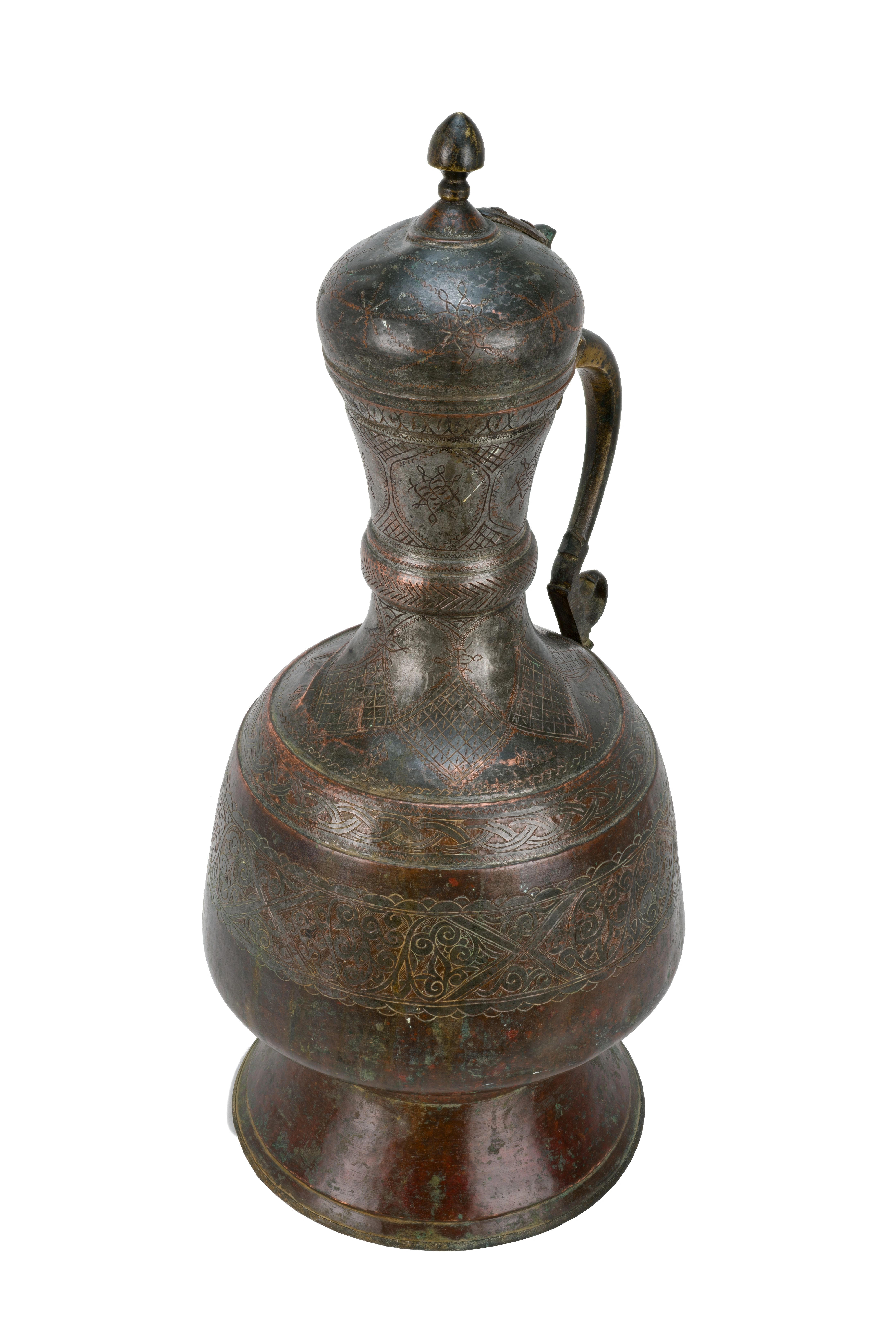
Choydish (Teapot)
19th century. Kokand. Copper. 63 × 28 sm. WOSCU collection
Audio guide
Audio available in: RU
Description
This object is a choydish, a traditional vessel used for tea, produced in Kokand in the nineteenth century CE.
Tea culture played an important role in Central Asian society. Tea was served during family gatherings, celebrations, and diplomatic receptions, and offering tea to guests was considered an essential expression of hospitality.
A choydish is a large vessel designed for storing tea or hot water before it is poured into small bowls known as pialas. Its wide base provides stability, while the tall neck and lid help retain heat.
This example is made of copper, a material widely used in traditional Central Asian metalwork. Craftsmen in Kokand were renowned for their skill in engraving and chasing metal surfaces. The vessel is decorated with delicate vegetal and geometric ornaments.
Objects like this were often used in chaykhanas, traditional tea houses where people gathered to converse, exchange news, and relax.
This vessel therefore reflects both the craftsmanship of Kokand metalworkers and the deep cultural significance of tea and hospitality in Central Asian life.