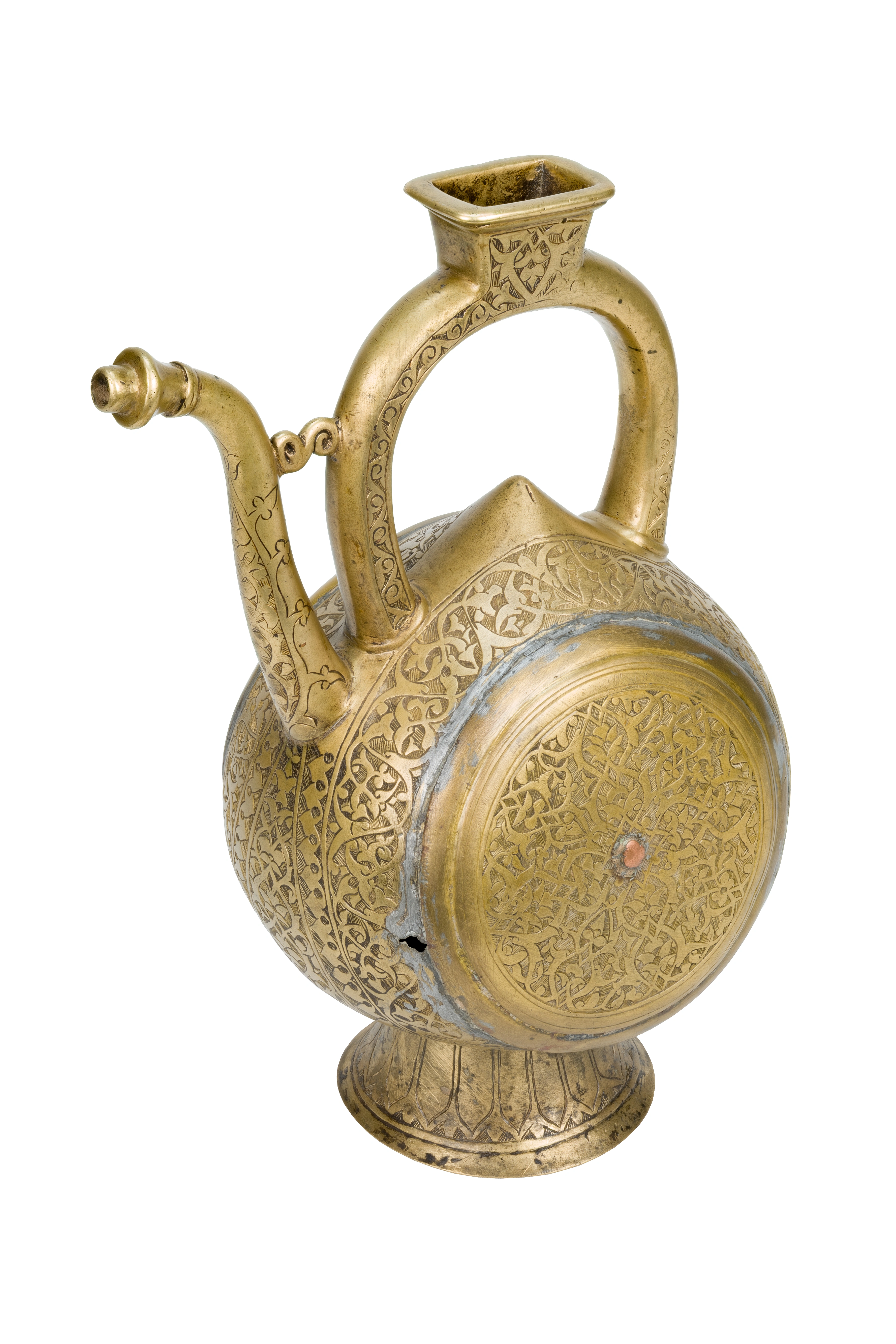
Kumgan (Water Ewer)
1718–1719. Iran. Bronze, brass; casting, molding, engraved decoration.т 28 × 18 sm. WOSCU collection
Audio guide
Audio available in: UZ
Description
This elegant kumgan or water ewer was produced in Iran in 1718–1719.
Such vessels were widely used throughout the Islamic world for washing hands and for ritual ablutions before prayer. They could be found in private homes, palaces, caravanserais, and religious institutions.
The form of this vessel is particularly striking. Its rounded body stands on a high foot, while a large arched handle connects the neck to the body. The long-curved spout allowed water to be poured in a controlled stream.
The surface is richly decorated with intricate engraved ornament composed of vegetal and geometric motifs. These patterns are characteristic of Persian decorative traditions and reflect the refined aesthetic of Islamic metalwork.
The vessel was produced using casting techniques in bronze and brass and then carefully finished with detailed carving. Such craftsmanship transformed everyday objects into works of decorative art.
Objects like this kumgan illustrate the high level of metalworking achieved in the Persian and Central Asian cultural sphere during the eighteenth century CE.