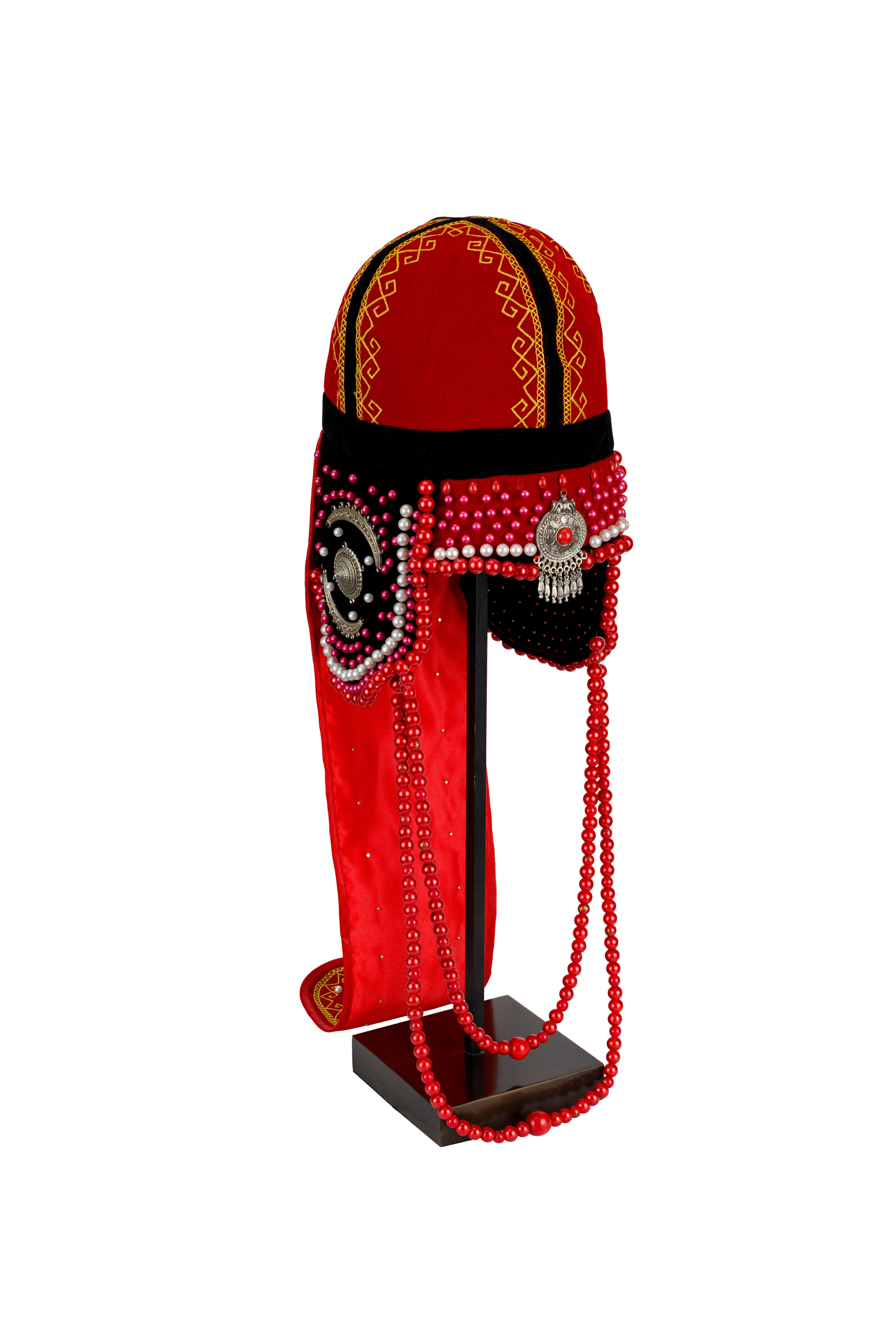
Saukele (Bridal Headdress)
20th century. Karakalpakstan. Cotton fabric. 71.5 × 20 cm
Audio guide
Audio available in: RU
Description
This object is a saukele, a traditional bridal headdress worn by Karakalpak women.
Such elaborate headdresses played an important role in wedding ceremonies and symbolized a woman’s transition into married life. After the wedding, the saukele was often preserved within the family as a treasured heirloom.
Its form resembles a rounded or helmet-like cap. The structure is based on a textile foundation reinforced by an internal frame that supports the heavy decorative elements.
The surface is richly adorned with coral bead strands, silver ornaments, and hanging pendants. One of the distinctive features of Karakalpak saukele headdresses is the dense arrangement of coral beads covering the frontal and side sections.
As the wearer moves, these strands gently sway, creating a dynamic visual effect. Black velvet bands and silver plaques add strong contrast and reflect the characteristic style of Karakalpak jewelry art.
Beyond its decorative function, the saukele also carried symbolic meaning. It was believed to protect the bride and mark her new social status within the community. Today, authentic examples are rare and represent valuable artifacts of Central Asian cultural heritage.