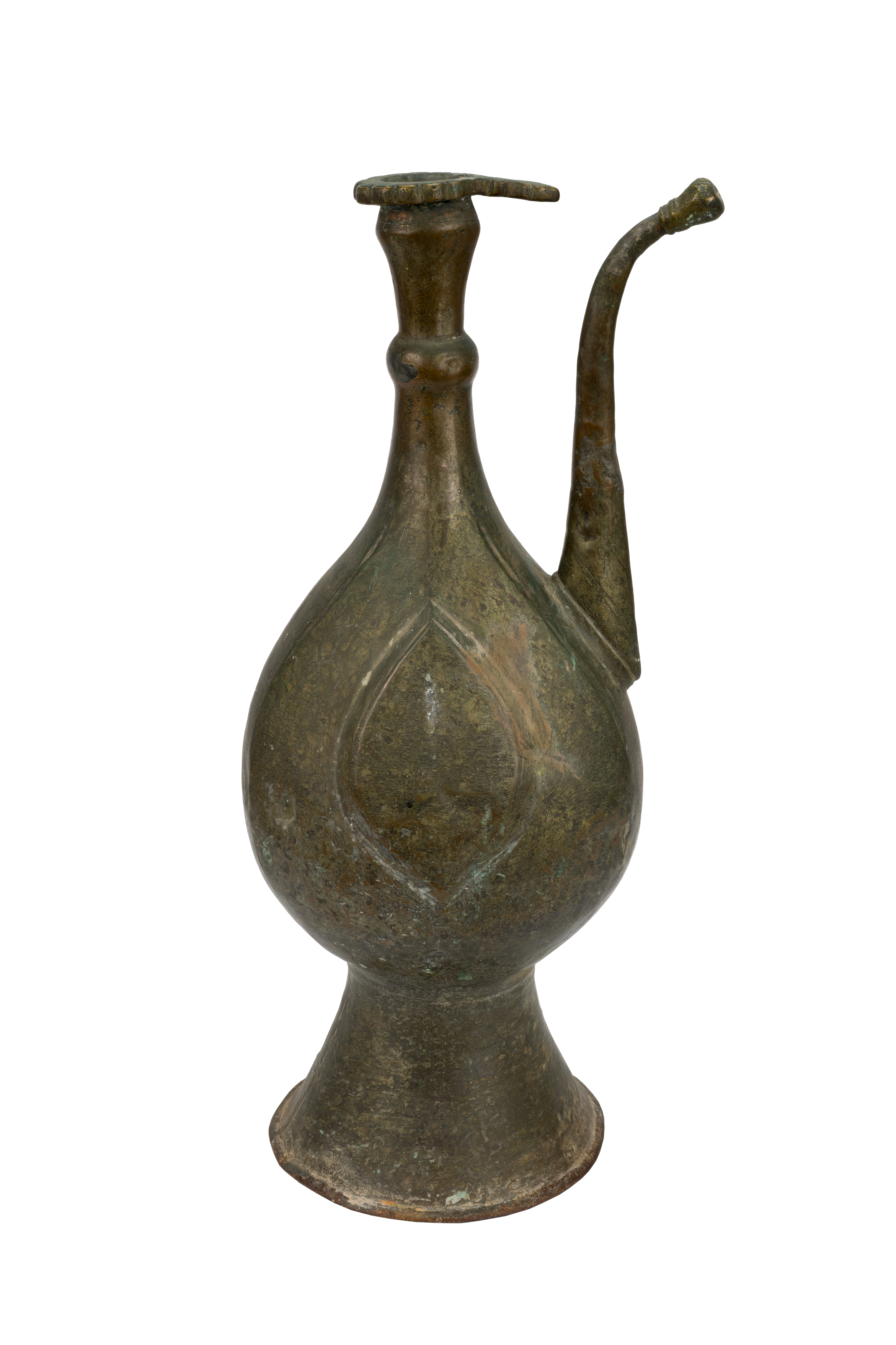
Kumgan (Water Ewer)
19th–20th centuries. Central Asia. Bronze. 44 × 17.3 cm
Audio guide
Audio available in: RU
Description
This object is a kumgan, a traditional water ewer widely used in Central Asia.
Such vessels were primarily used for washing hands or for ritual ablutions before prayer. In Islamic culture, physical cleanliness holds important ritual significance, which made the kumgan a common household object found in homes, caravanserais, and religious institutions.
The shape of the vessel reflects its practical function. The narrow neck allows controlled pouring, while the long-curved spout directs the stream of water precisely. The raised foot provides stability and facilitates its use during washing.
This example is made of bronze, a durable alloy commonly used in Central Asian metalwork. Metal vessels like this were sometimes decorated with engraved ornamentation, though even plain examples demonstrate elegant proportions and skilled craftsmanship.
Objects such as this kumgan were part of everyday life and illustrate the importance of ritual purity in the cultural traditions of the Islamic world.