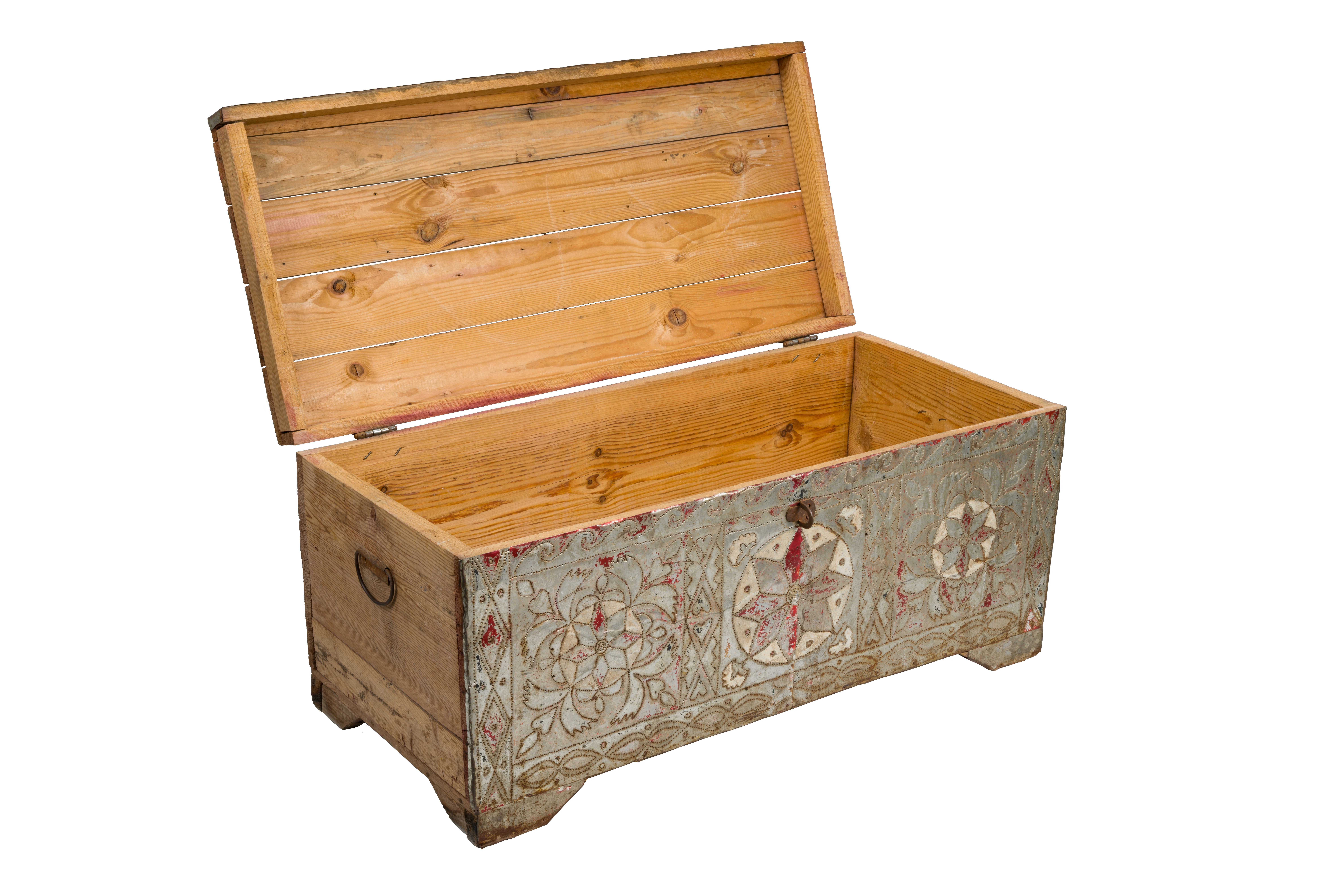
Chest
19th–20th centuries. Central Asia. Wood, aluminum. 100 × 47 cm
Audio guide
Audio available in: RU
Description
This object is a traditional Central Asian chest, known as a sandik, dating to the nineteenth–early twentieth centuries CE.
In traditional homes of Central Asia, chests played a special role in everyday life. Since furniture was limited, the sandik often served as the main household object, functioning as storage, seating, and decoration at the same time.
Inside these chests families kept their most valuable possessions: bridal dowries, silk textiles, garments made of atlas and adras fabrics, jewelry, and important family heirlooms. Many chests were passed down from one generation to the next.
The surface of this chest is decorated with painted vegetal ornament known as islimi. Flowing floral patterns and curling lines are typical elements of Central Asian decorative art and often symbolize continuity and harmony.
The structure is primarily wooden, while metal elements reinforce the corners and lid. The strong lock emphasized the value of the objects stored inside.
Thus the sandik was not only a practical container but also an important symbol of family memory and domestic tradition in Central Asia.