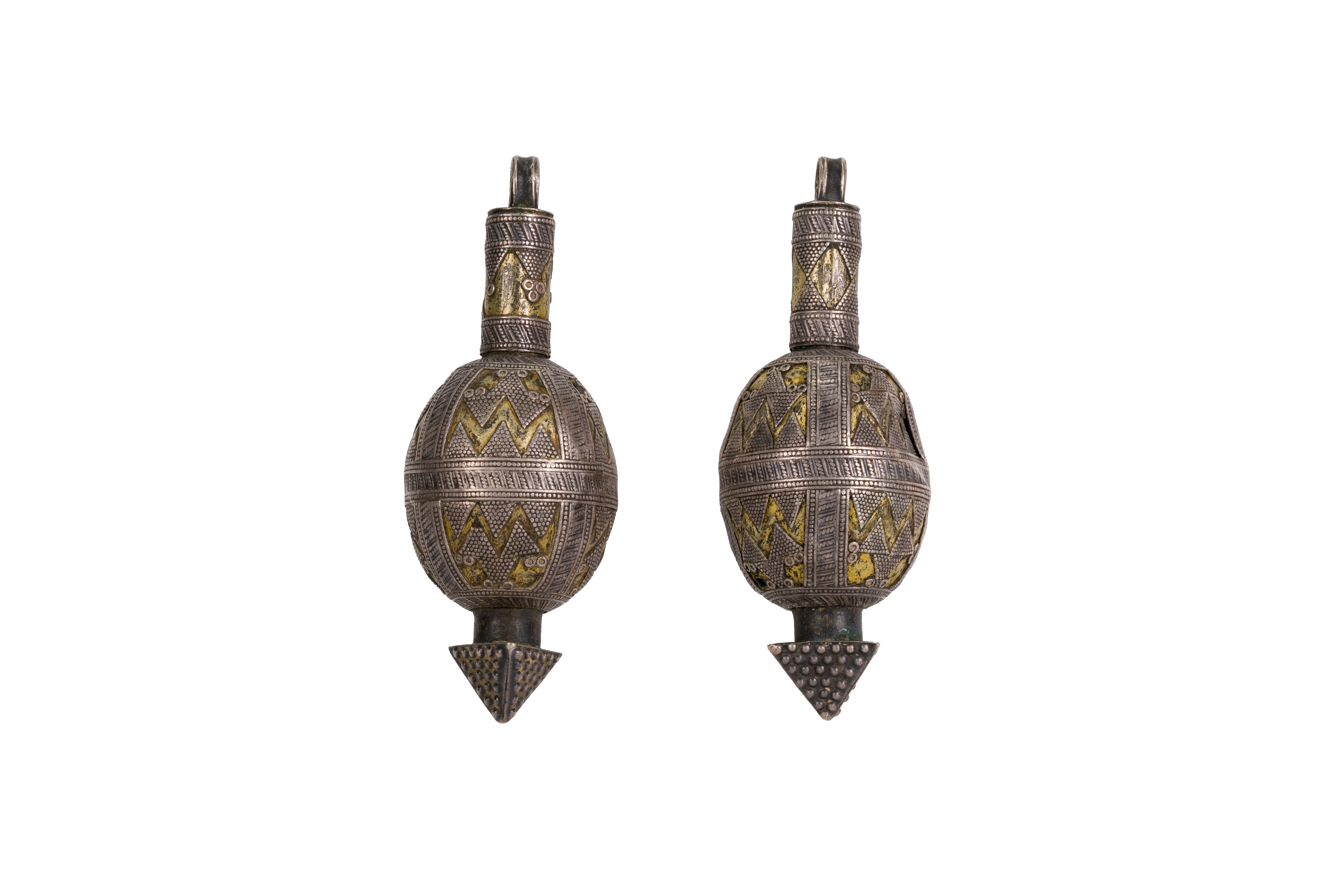
Tugme (Buttons)
1880. Karakalpakstan. Silver; gilded. 8.9 × 3.3 cm
Audio guide
Description
This object is a pair of decorative buttons, known as tugme, made in Karakalpakstan around 1880.
Large silver buttons like these played an important role in traditional Central Asian clothing. They served both as functional fasteners and as decorative elements that emphasized the status and wealth of the wearer.
The pieces are crafted from silver with gilded details. In Central Asian cultures, silver was traditionally regarded as a noble and protective metal, believed to guard against illness and the evil eye.
The shape of these buttons resembles a small suspended vessel or amulet. This resemblance is not accidental: many items of traditional jewelry were designed to combine decorative beauty with symbolic protective meaning.
Their surfaces are covered with fine engraved ornament, composed of floral and geometric motifs typical of nineteenth-century CE Karakalpak metalwork.
Such elements often formed part of festive or ceremonial garments, demonstrating both the skill of local jewelers and the aesthetic values of the society in which they were created.