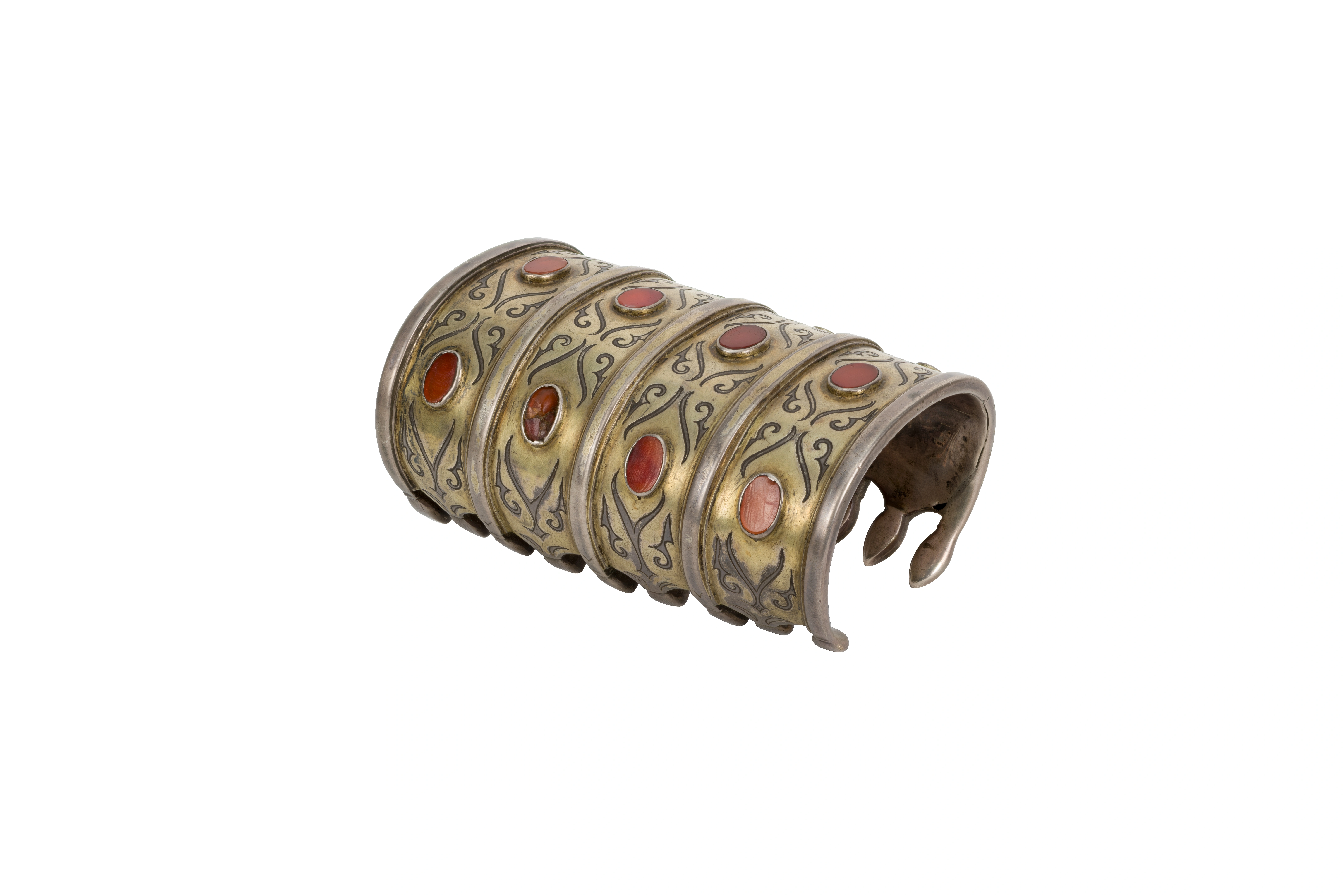
Kos bilizik (Bracelet)
Circa1900. Central Asian. Silver, gold. 11.4 × 7.5 cm
Audio guide
Description
This object is a traditional Central Asian bracelet known as kos bilezik, meaning a “double” or “paired bracelet.”
Such ornaments were widely worn among the peoples of Central Asia—particularly among Kazakh and Turkmen communities—in the late nineteenth and early twentieth centuries CE.
This example is a large, multi-segment bracelet composed of several horizontal tiers joined together to form a broad decorative structure. Because of its size, it covered much of the wrist and sometimes part of the forearm. It was often worn over the sleeves of garments as a prominent element of traditional attire.
The bracelet is primarily made of silver, a metal that held special significance in Central Asian cultures, where it was believed to possess protective and purifying qualities. Gold elements create visual contrast and emphasize the decorative features.
Each segment contains cabochon stones, commonly carnelian, traditionally associated with good fortune and protection from the evil eye.
Beyond its decorative value, such jewelry symbolized a woman’s social status and family wealth. Large silver ornaments like this were often preserved as family heirlooms and passed down through generations.