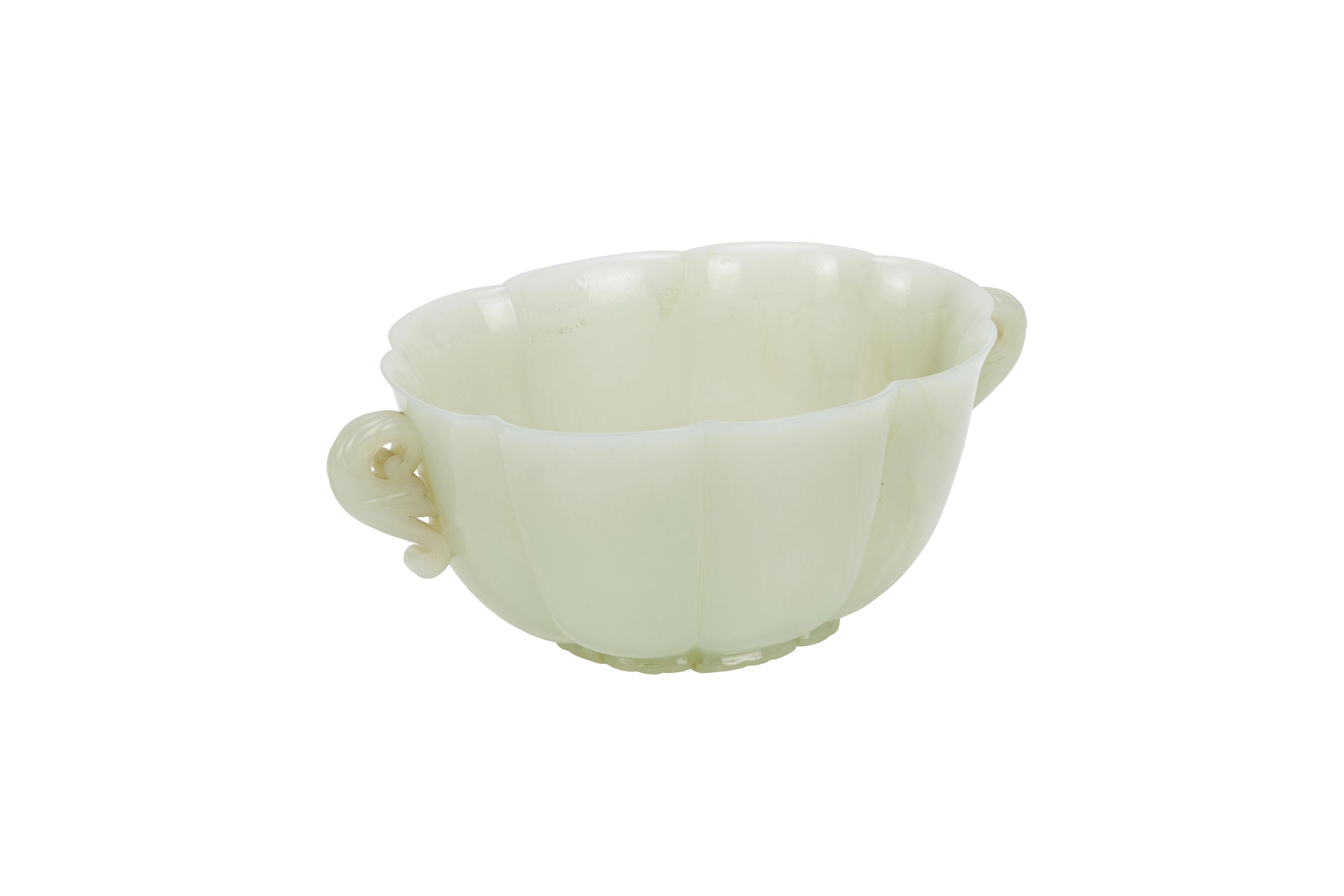
Cup of Aurangzeb
Baburid Period. Late 17th – early 18th century. India. Nephrite. 7.6 × 19 cm
Audio guide
Description
This object is known as the Cup of Aurangzeb, a jade vessel produced in India during the Baburid period, at the end of the 17th and the beginning of the 18th century CE.
Its name is associated with Emperor Aurangzeb, one of the last powerful rulers of the Baburid Empire. During this period, court artisans achieved remarkable skill in working with precious materials.
The cup is carved from jade, a stone highly valued at the Baburid court. Jade was believed to possess protective qualities and was sometimes thought to detect or neutralize poison. For this reason, vessels made from jade were often used in royal settings.
The form of the cup is elegant and restrained. Its gently rounded body, thin walls, and small handles create a balanced and refined silhouette. The carefully polished surface gives the stone a soft, translucent glow.
Such objects were typically produced for members of the imperial court and reflect the artistic synthesis characteristic of Baburid culture, combining Central Asian dynastic heritage, Persian aesthetic traditions, and Indian craftsmanship.