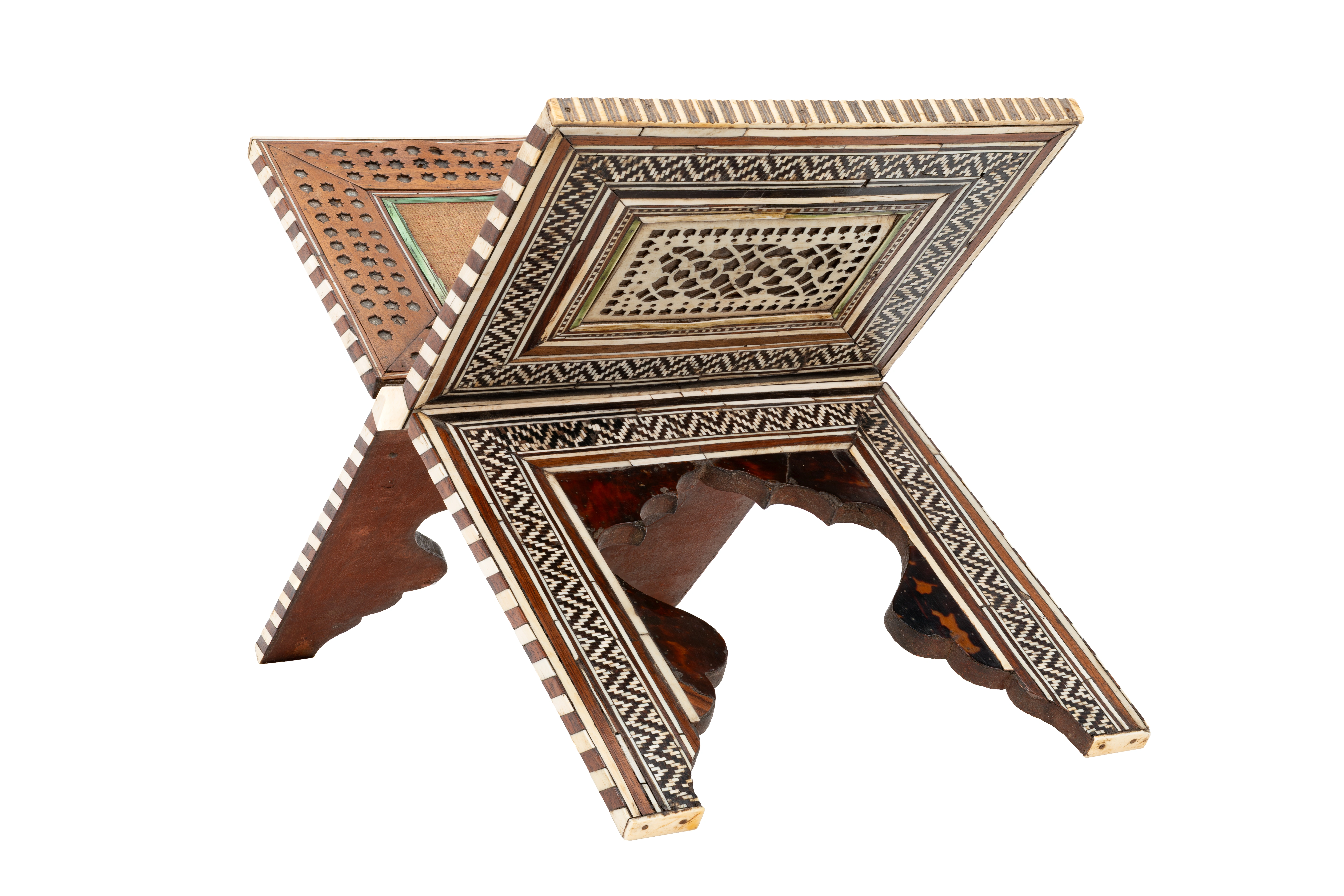
Lavh
17th–18th centuries. India. Wood, ivory, turtle shell. 42.× 22 cm
Audio guide
Description
This object is a lavh, a traditional Muslim book stand used for reading the Qur’an or other important texts.
Such stands were widely used across the Islamic world. They allowed a book to remain open at a comfortable angle during reading or study. A distinctive feature of classical lavh stands is their ingenious construction: they were often carved from a single piece of wood and designed to fold crosswise without metal hinges.
This example was created in India during the 17th to 18th centuries CE, in the period of the Baburid Empire. Its surface is richly decorated with inlay made of ivory and tortoiseshell, materials that indicate luxury and elite ownership.
The decoration consists of geometric patterns and delicate openwork carving. Such ornament is characteristic of Islamic decorative art, where repeating patterns symbolize harmony and the infinite order of the universe.
A lavh of this quality may have belonged to a scholar, a religious teacher, or a member of the courtly elite. It served not only as a practical object for reading but also as a symbol of learning, devotion, and respect for the written word.