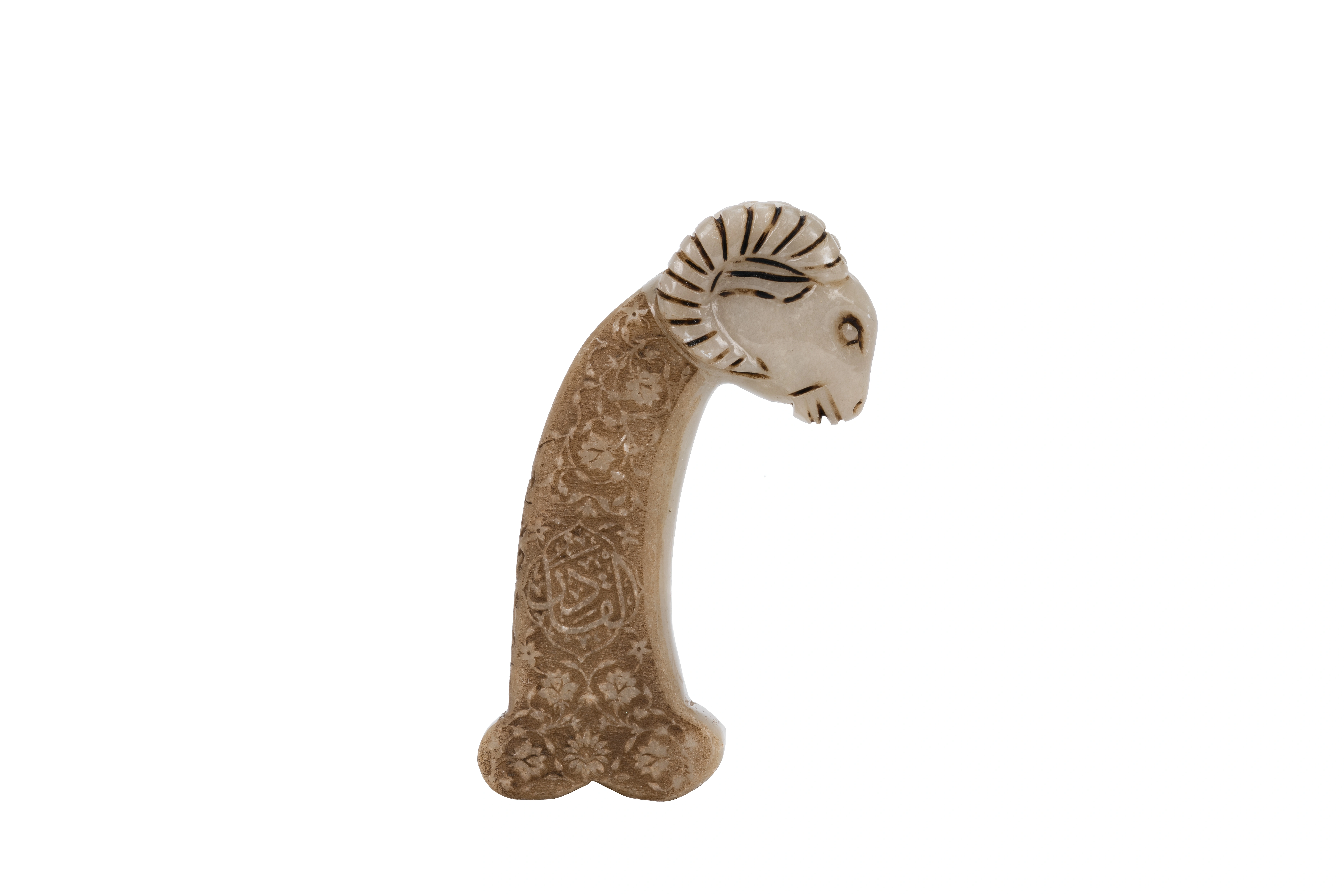
Dagger Hilt
Baburid Period. Late 17th–early 18th century. India. Nephrite. 13.4 × 5.5 × 2.5 cm
Audio guide
Description
This object is a dagger hilt created in India during the 17th–18th centuries CE, in the period of the ruler Zahir al-Din Muhammad Babur.
The hilt is carved from jade, a stone highly valued across the Islamic world and Central Asia as a symbol of strength, victory, and noble status. Craftsmen of the Baburid period were renowned for their ability to carve this exceptionally hard material, producing forms of remarkable smoothness and elegance.
The pommel is shaped as a ram’s head. Such zoomorphic motifs originate in the nomadic traditions of Central Asia and the Turkic cultural heritage from which the Baburid dynasty emerged. In symbolic language, the ram often represents courage, vitality, and strength.
Daggers of this type were rarely intended for combat. Within Baburid court culture they functioned primarily as symbols of rank and imperial favor. Emperors frequently presented such weapons to generals or princes as prestigious gifts.
This object reveals a synthesis of artistic traditions: the Persian form of the dagger, the refined Indian mastery of stone carving, and Central Asian symbolic imagery. Together they reflect the distinctive imperial style that flourished in the Baburid world.