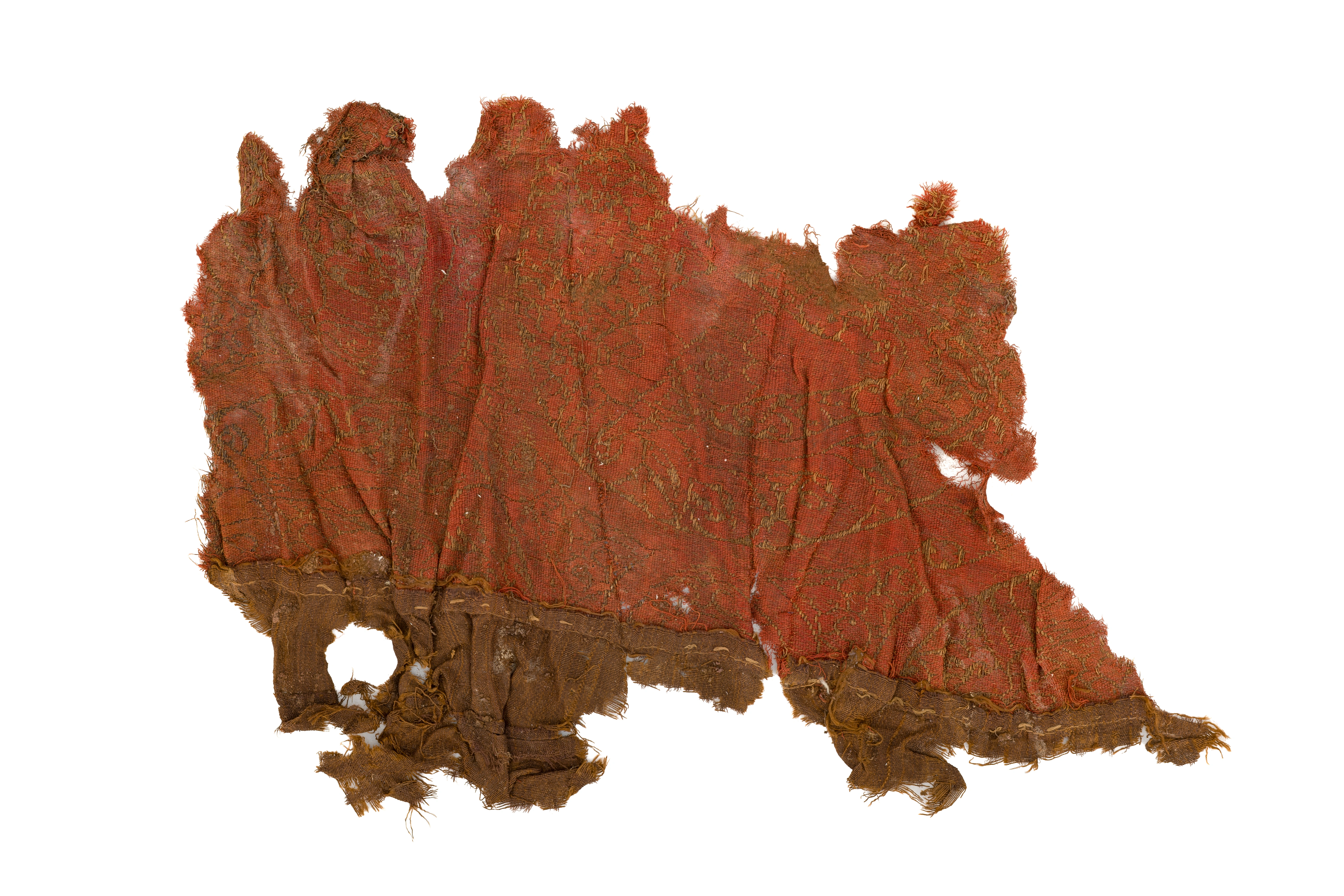
Fabric Fragment
18th–19thcenturies . Damascus. Silk. 30 × 21.5 cm
Description
The uneven edges and exposed threads of this fragment allow us to see the textile as a technological document. Before us is an eighteenth–nineteenth-century silk damask connected with Damascus, one of the well-known centres of production and trade in luxury textiles of the Islamic East. Damask was valued for its special weave: matte and glossy areas created the ornament without embroidery, directly through the structure of warp and weft.
On the preserved surface, terracotta silk and a repeating vegetal pattern are visible. Geometrized stems, diamond-shaped cells, and stylized buds continue the language of islimi, characteristic of courtly and urban textiles. The lower sewn strip of denser fabric suggests that the fragment may once have formed part of a garment, cover, or interior textile.
In Central Asia, such silks were objects of status, gift-giving, and exchange. Through trade routes they connected Syria, Iran, Mawarannahr, and the weaving centres of the Ferghana Valley. Wear, losses, and colour change are now no less important than the ornament: they preserve the history of use, repair, and long life of this textile. For this reason, a small fragment reveals a broad route of the region’s artistic culture and the taste of its age.