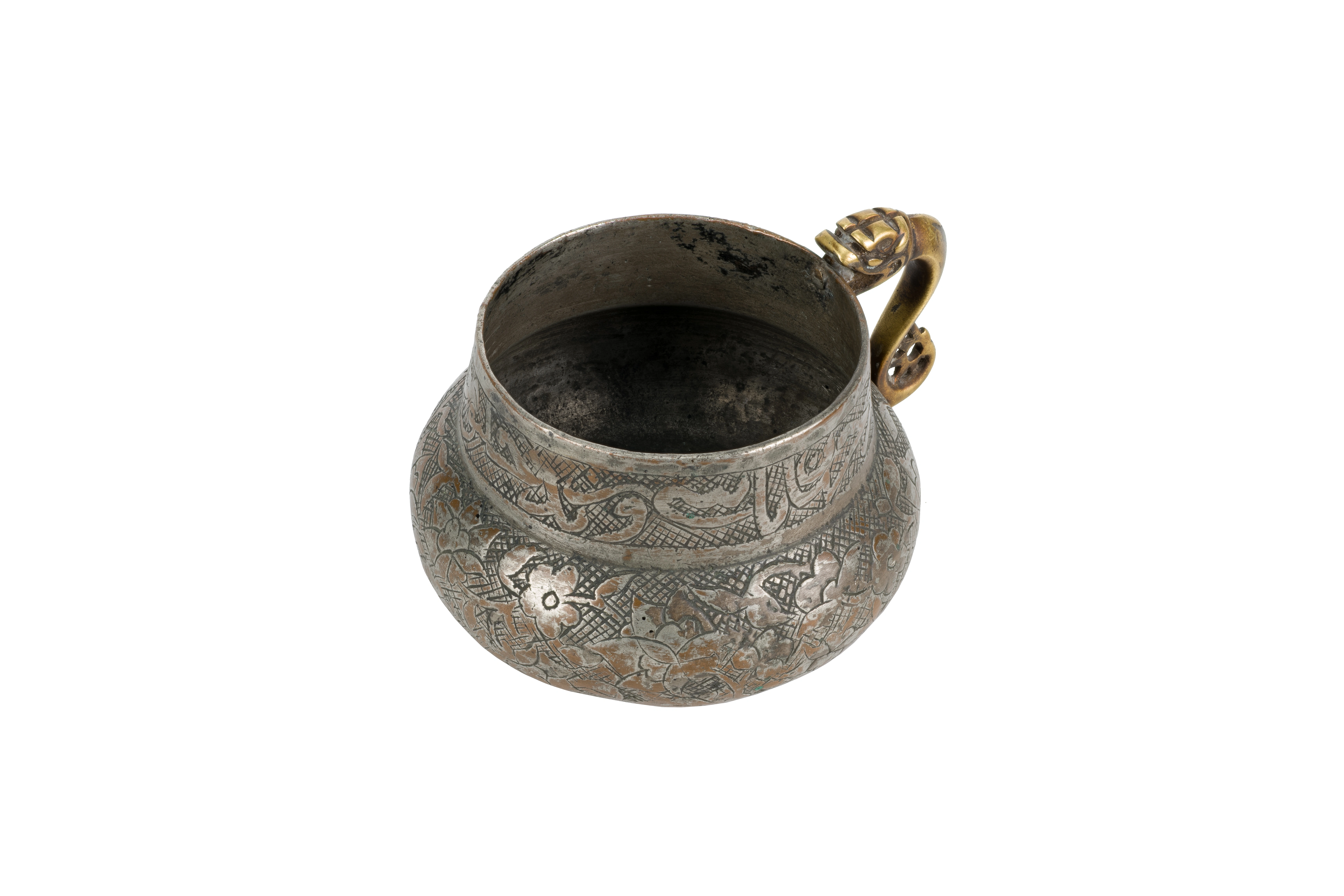
Small Jug
15th century. Central Asia. Brass. 7 × 9.9 cm. WOSCU collection
Audio guide
Description
Notice the silhouette of this brass jug. Such vessels were convenient not only in domestic settings, but also during travel or in places where people gathered.
For Central Asia, the fifteenth century was a time of active connections between the cities of the region. In the exhibition section “The Second Renaissance,” this period is often presented through political structures and cultural achievements. Yet an equally important element was the material infrastructure of daily life—water, food, domestic routines, and the customs of hospitality. Jugs were among the key objects within this system.
The distinctive feature of this object lies in the properties of brass itself. The metal combines durability with the possibility of repair. Even if the surface darkens and shows traces of use, the vessel retains its form and can serve for many years. Such objects reveal the practical logic of craftsmanship: to create a vessel capable of withstanding repeated use.
Through artifacts like this, the spirit of the era can be sensed not through the names of rulers, but through the rhythm of everyday practices. It reflects the simple actions repeated day after day in city households or during long journeys.