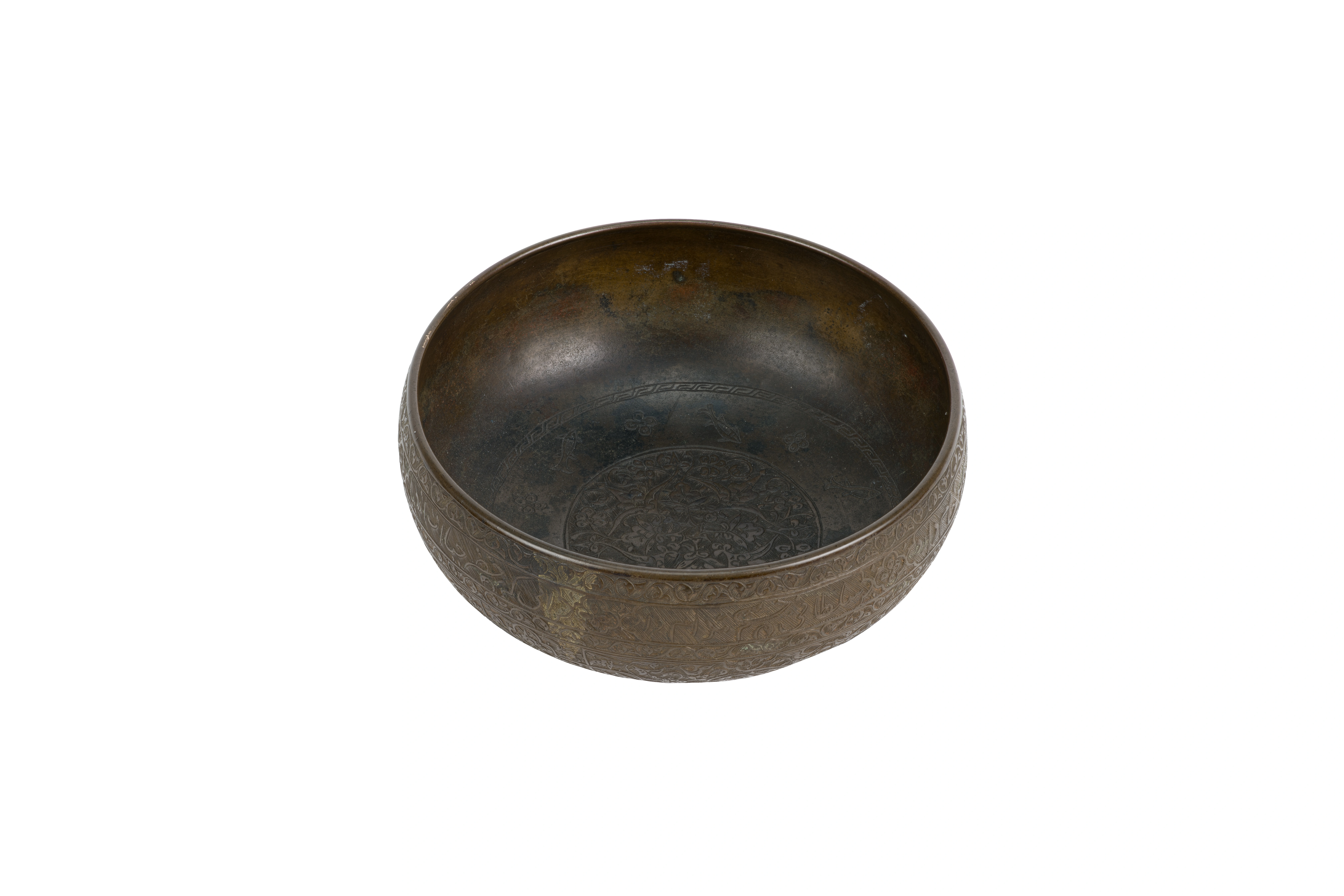
Engraved Bowl
Late 13th –14th century. Central Asia. Bronze. 14.1 × 5.5 cm
Audio guide
Description
This bronze bowl was created in Central Asia at the turn of the 13th–14th centuries CE.
Its form is simple and well balanced, with low walls and a gently rounded rim. Yet the outer surface is covered with finely engraved decoration, transforming a functional vessel into a work of decorative art.
Such bowls could be used for serving food, fruits, or sweets, but metal vessels also carried a sense of prestige and could appear in formal or ceremonial settings. Bronze was valued for its durability and for the deep sheen of its polished surface.
The ornament covering the exterior is composed of repeating patterns. Geometric and vegetal motifs of this kind are characteristic of the visual language of Islamic art, where rhythmic ornament often conveys ideas of harmony and the infinite order of the universe.
The production of such an object required considerable skill. After casting and shaping the metal, the craftsman engraved the intricate design by hand using fine chisels, creating a refined surface texture that combines technical mastery with artistic imagination.