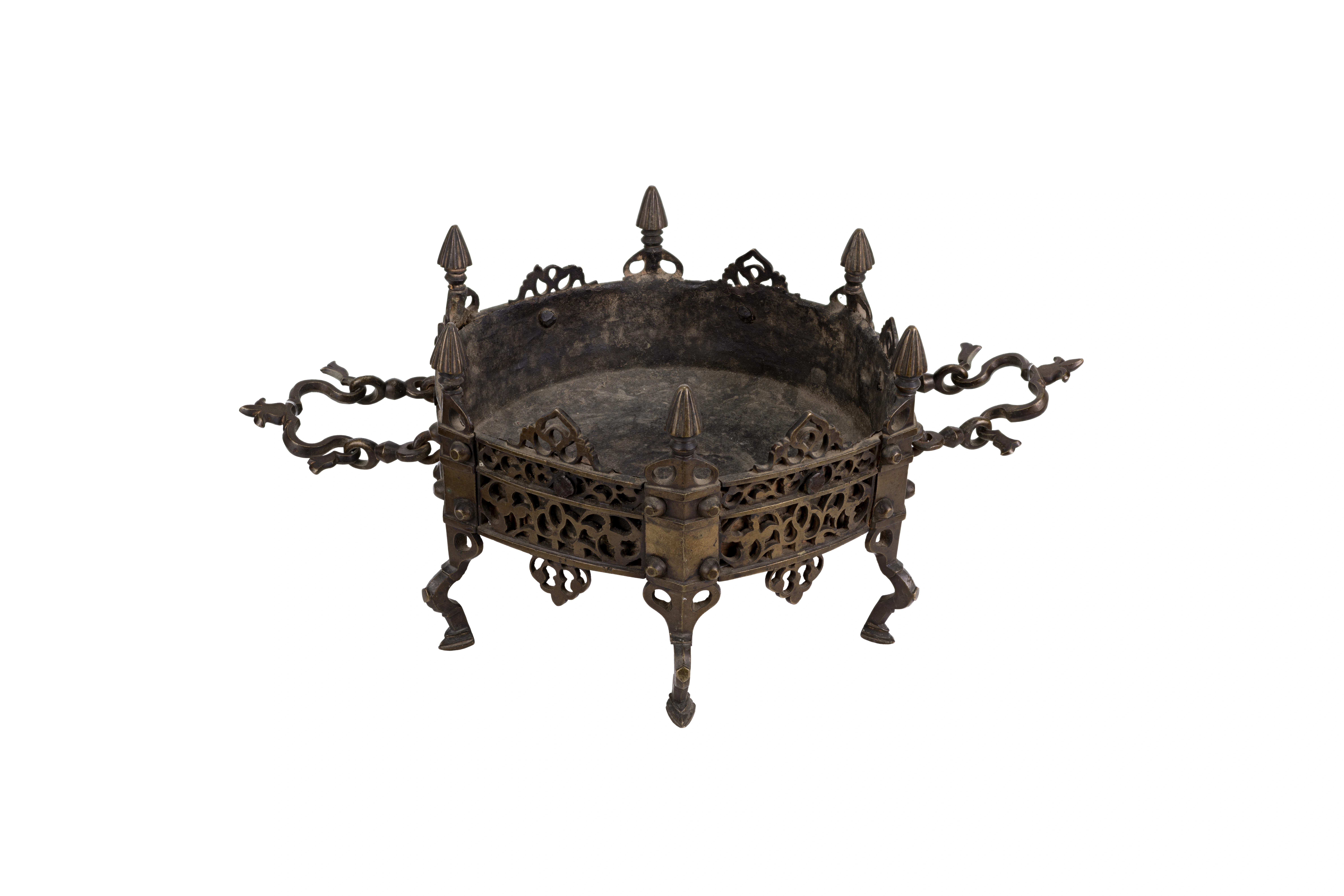
Brazier
16th century. Central Asia. Copper. 16 × 25 cm
Audio guide
Description
This object is a brazier—a portable heating vessel widely used in Central Asian households during the 16th century CE.
Its structure reflects practical design. The low circular body stands on several legs, allowing air to circulate beneath it. Decorative side handles made the brazier easier to carry, while pierced openings in the walls allowed oxygen to reach the charcoal inside.
Hot embers were placed within the brazier to produce heat during colder seasons. It could also be used for cooking or heating water. In many homes the brazier stood at the center of a room or courtyard, where family members gathered around it.
In the cultural world of the Timurid period, however, such objects could also acquire symbolic meaning. In the poetry of Alisher Navoi, everyday objects often become metaphors for inner emotional states. A brazier filled with burning coals becomes an image of a heart consumed by longing and love.
In one of his ghazals, Navoi writes in free translation:
“My chest is like a brazier filled with glowing coals on a winter night;
Yet it warms not me, but only the memory of the one who has gone.”
Thus even a simple domestic object could become a poetic symbol of human emotion.