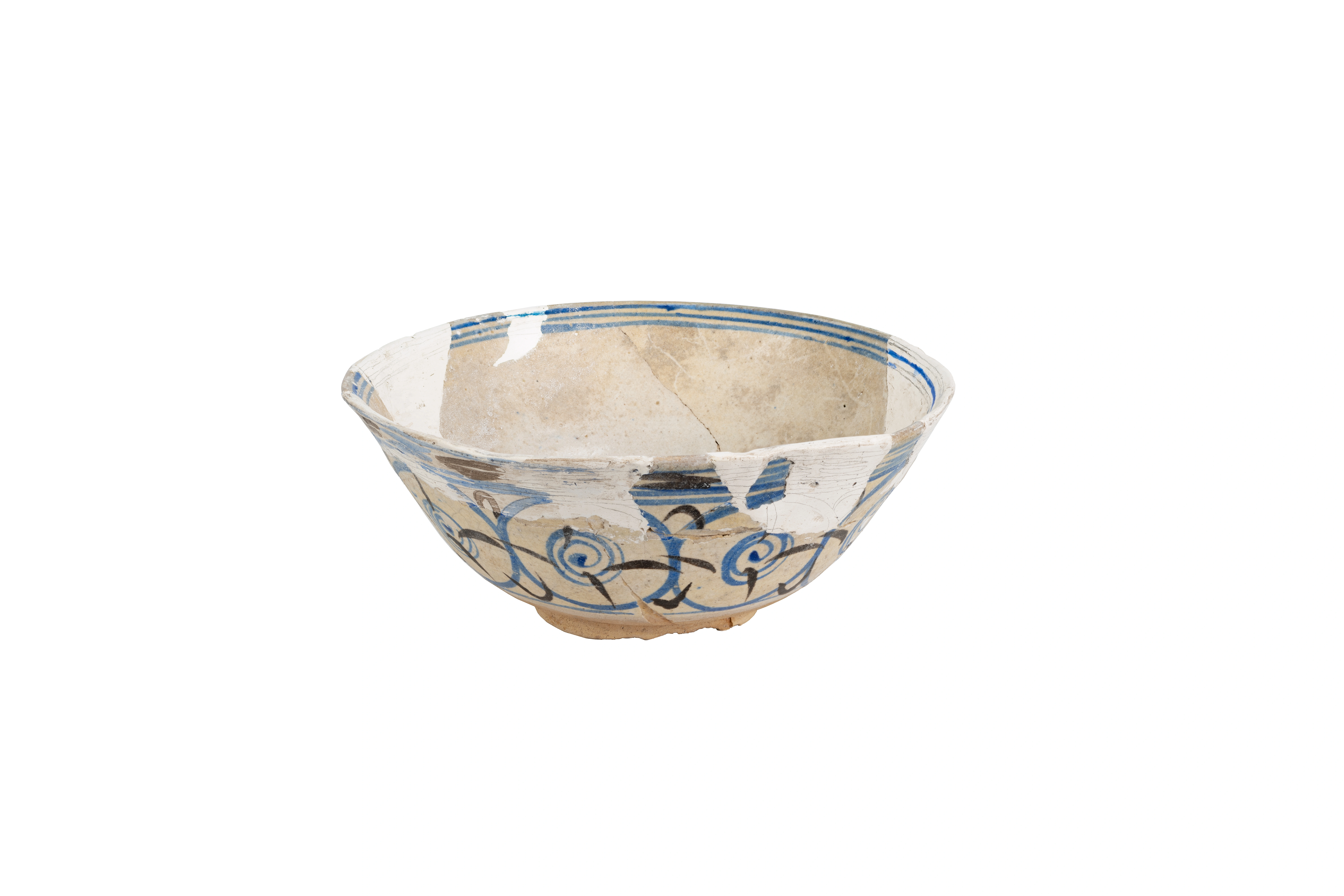
Big bowl
15th–16th centuries. Central Asia. Ceramic9.8 × 23.7 cm
Description
This large ceramic bowl from the fifteenth–sixteenth century belongs to the flourishing period of Central Asian craftsmanship, when the ceramic workshops of Samarkand, Bukhara, and Tashkent produced objects capable of rivaling the prestige of Chinese porcelain.
The composition is organized around a small vegetal motif placed at the center. In Islamic decorative tradition, the center of a vessel was often understood as a symbolic source. The ornament would only become fully visible once the bowl was emptied, suggesting a metaphor of gradual revelation.
The fine black outlines framing the cobalt decoration reflect the influence of manuscript illumination and calligraphic aesthetics. Such precision required a highly controlled painting technique.
The greenish tones visible on the interior surface result from the chemical composition of the glaze, including copper compounds that could alter color over time.
Its size suggests use for shared dining or serving fruits and sweets, activities closely associated with the social and intellectual life of Timurid urban society.
This object demonstrates how Central Asian ceramics combined aesthetic refinement, scientific awareness of form, and the values of urban Islamic culture.