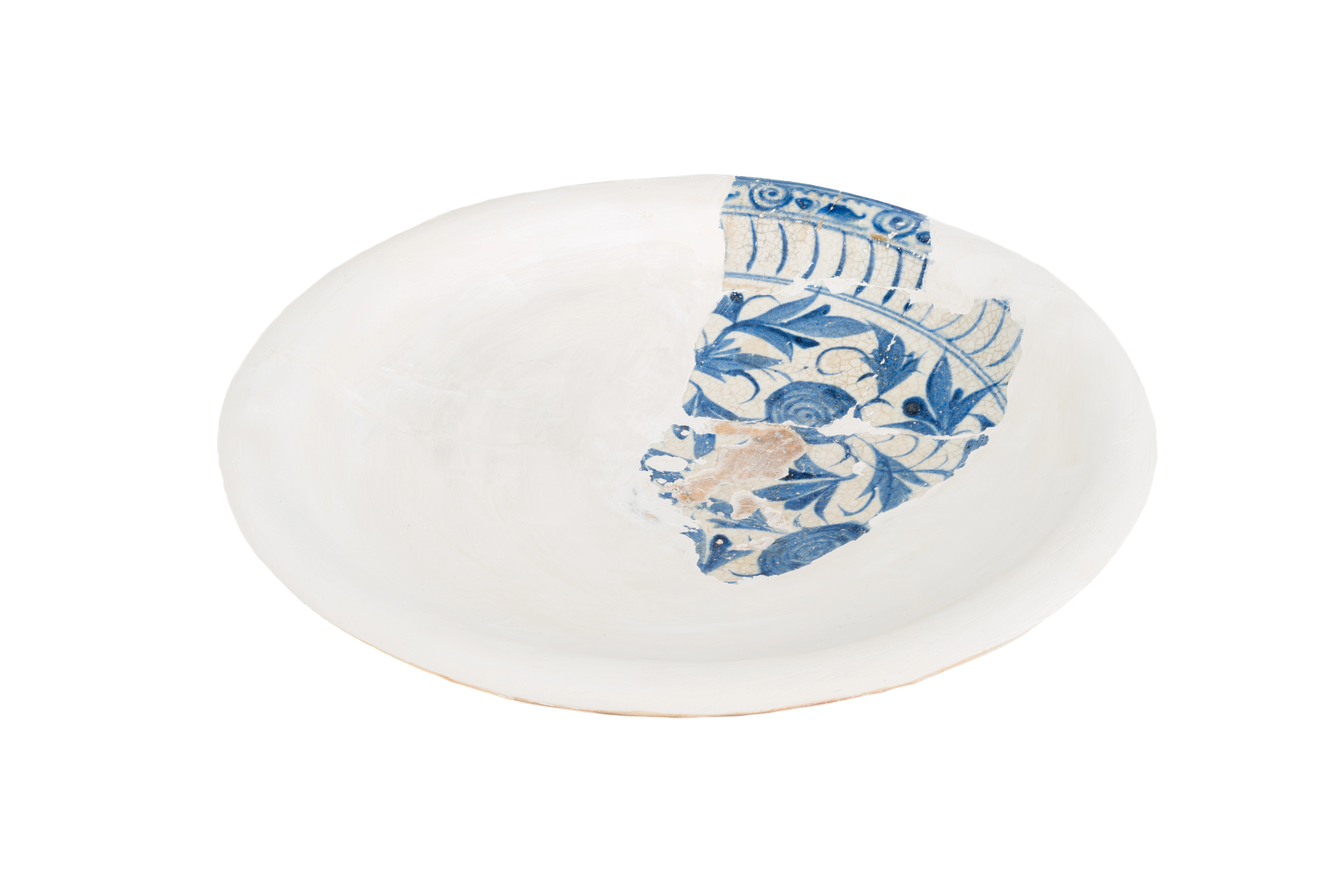
Plate
16th century. Tashkent. Ceramic; engobe, colorless glaze. 7.5 × 41.5 cm. WOSCU collection
Audio guide
Audio available in: UZ
Description
This large ceramic dish from sixteenth-century Tashkent demonstrates the continuity of artistic traditions that developed during the Timurid period and continued under subsequent political dynasties. Even a partially preserved example such as this reveals important aspects of regional ceramic production.
The decoration consists of vegetal scrolls with gently curving stems and leaves, reflecting the long-established islimi ornamental tradition. Such motifs symbolized vitality, the continuity of nature, and the harmony of the universe — key visual concepts in Islamic artistic thought.
The design was painted in cobalt pigment over a white engobe and covered with a transparent glaze. This technique produced strong visual contrast while also protecting the surface, illustrating the technical continuity of Central Asian ceramic workshops from the fifteenth into the sixteenth century.
The large size of the dish is also significant. Vessels of this scale were commonly used for shared meals, an important aspect of social life in Central Asia. Dining from a common dish reflected values of hospitality and communal identity.
This object illustrates how the aesthetic language formed during the Timurid era remained influential in the artistic culture of the region in the centuries that followed.