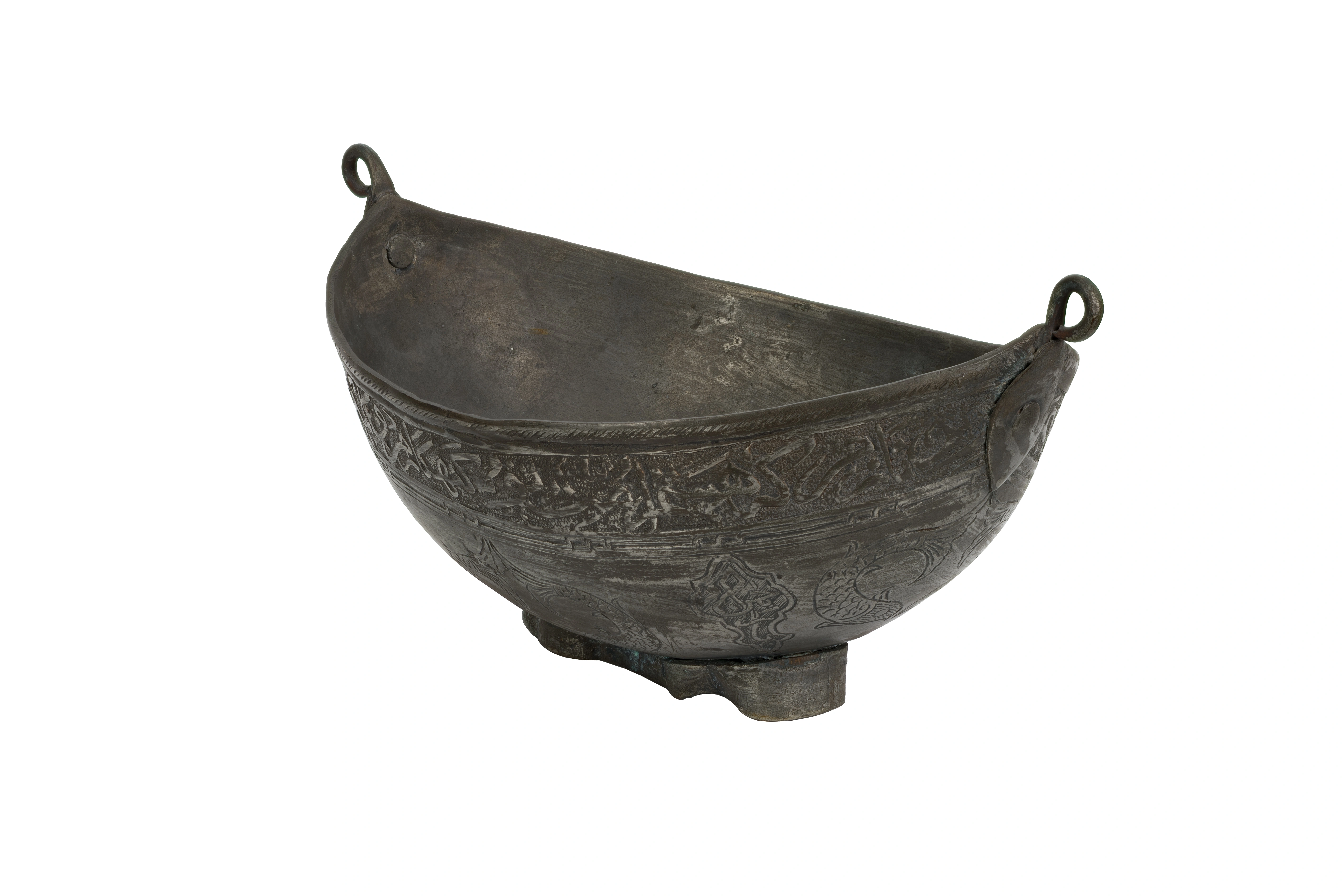
Kashkul
15th century CE. Central Asia. Bronze. Height: 11.9 cm. Length and width: 24.9 × 15.2 cm
Audio guide
Description
This object is a kashkul, a vessel associated with the practices of Sufi brotherhoods.
Its elongated, boat-like form allowed it to be carried by hand or suspended from a belt or chain. Such bowls were used by dervishes to collect alms and also served as symbols of voluntary poverty and the renunciation of worldly possessions.
In the 15th century CE, Sufi communities were active across Central Asia, contributing to religious life, education, and social organization.
The kashkul’s simple material appearance reflects ideals of modesty. At the same time, its form is carefully constructed, combining stability with portability.
This object is not merely a utilitarian vessel, but a visual expression of a spiritual path in which external simplicity embodies inner discipline.