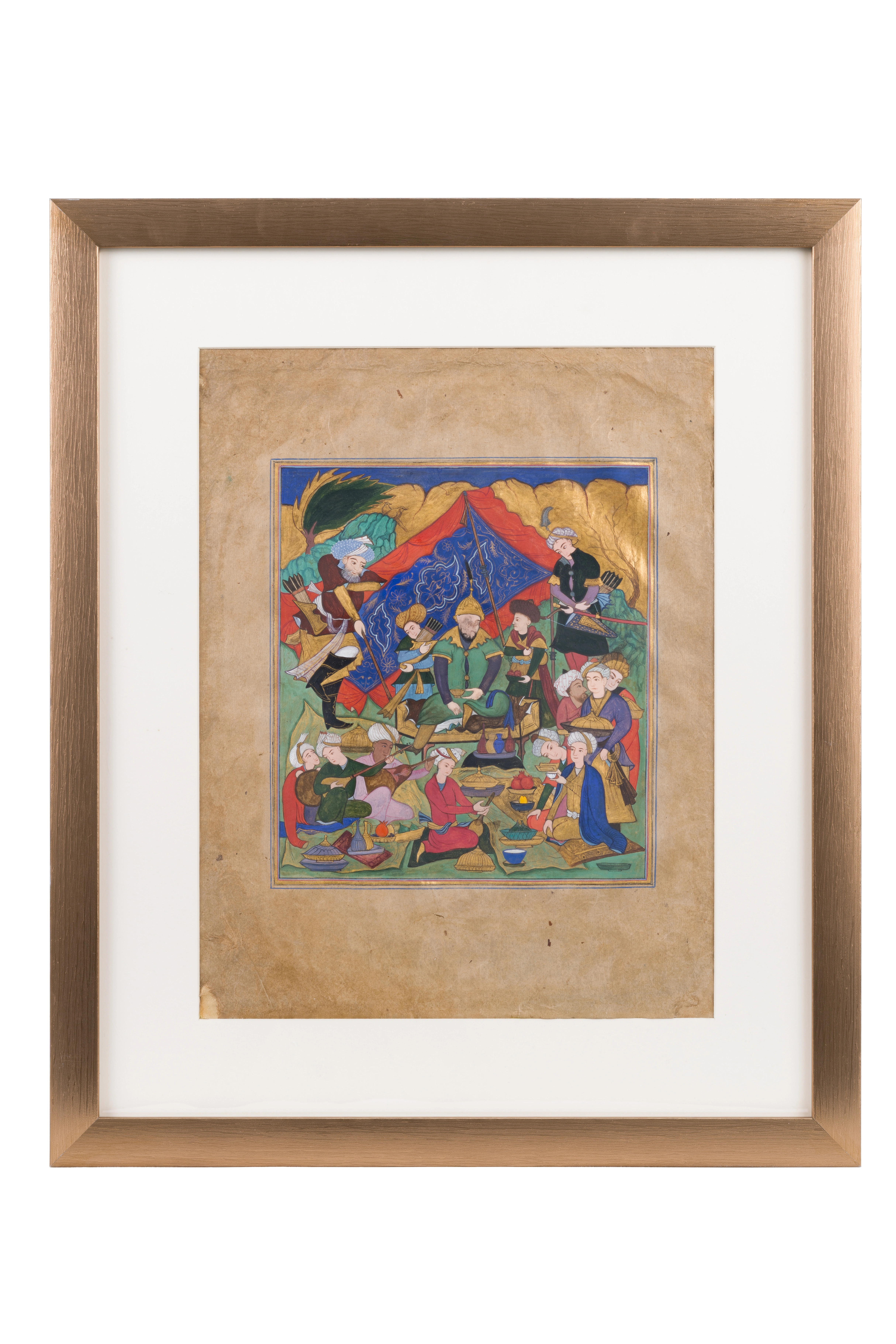
“Amir Temur at the celebration near Samarkand”
Miniature from “Zafarnama” by Sharafuddin Ali Yazdi. 1628. Paper. 23 × 30 cm
Audio guide
Audio available in: RU
Description
This miniature, produced in the late 17th century, illustrates the famous Zafarnama, the chronicle of Amir Timur written by the historian Sharaf al-Din Ali Yazdi. Although created nearly three centuries after Timur’s lifetime, it reflects the enduring historical memory of his reign.
The scene depicts Timur during a ceremonial festivity held in one of the gardens surrounding Samarkand. Such gardens symbolized prosperity and were often understood within Islamic culture as earthly reflections of the Qur’anic image of paradise.
The composition emphasizes hierarchy and order. Timur occupies the central position, while courtiers and attendants are arranged according to strict protocol. This reflects the concept of adab – the refined code of conduct that structured courtly life across the Islamic world.
The miniature also highlights the Timurid tradition of courtly gatherings, where music, poetry, and formal banquets formed part of political and cultural life rather than mere entertainment.
This artwork demonstrates how centuries later the image of Temur continued to be perceived as a symbol of the power, order and cultural flourishing of Samarkand.